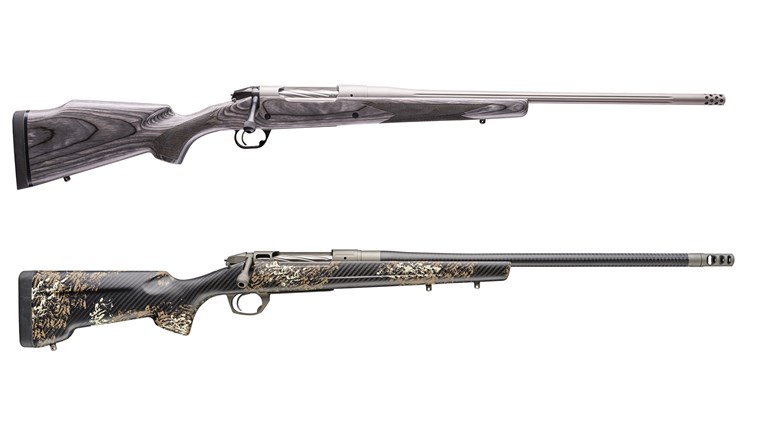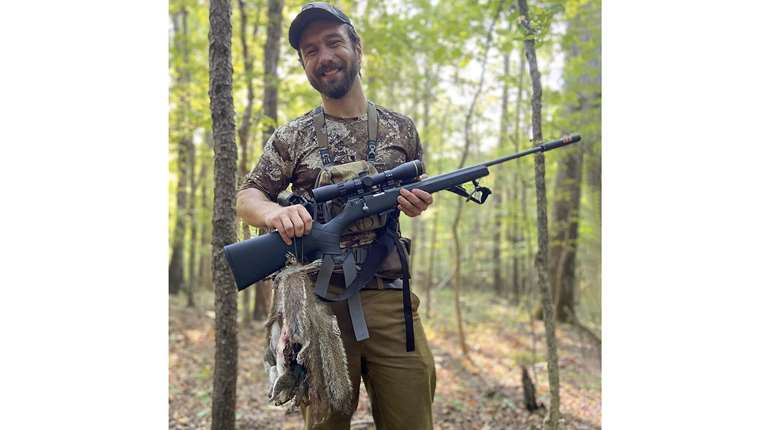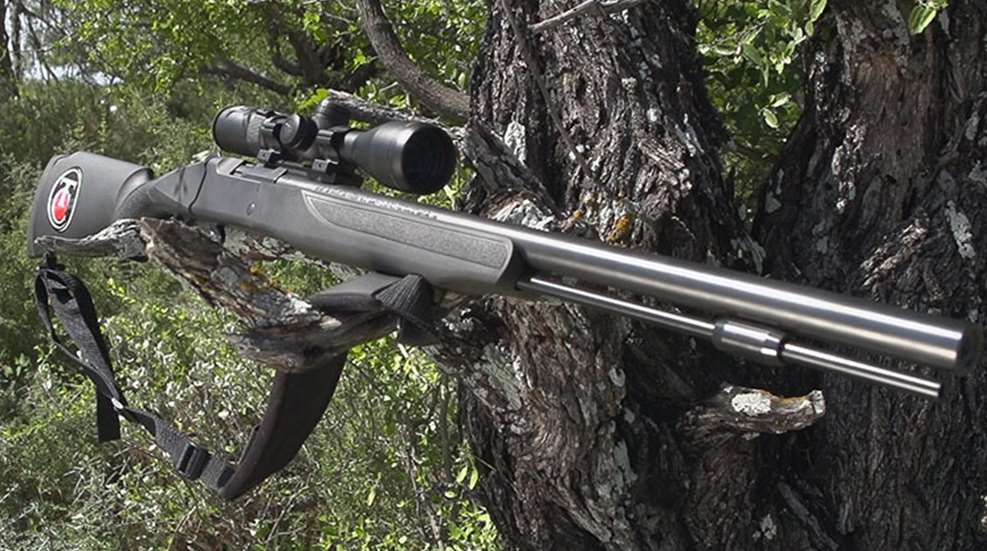
At first glance, Thompson/Center’s new Strike muzzleloading rifle resembles a rather elegant over/under shotgun, with its break-open action and the thumb-operated opening lever located on top of the receiver. The long, sleek trigger guard also suggests some kind of shotgun heritage, with extra room permitting the use of gloves on a cold fall morning. The noticeable difference in diameter of the Strike’s barrel and the ramrod mounted below it cast doubt on the shotgun relationship. And seeing the excellent Vortex scopes mounted on the factory furnished scope base confirmed we were hunting big game. Here are three things that really impressed me about the Strike:
 1. The design of the breech area is incredibly simple and functional. T/C calls it the Adapt Breech system. With the gun open, there is easy access to the breech collar, which unscrews from the barrel. Threads are on the outside of the barrel, which allows easy cleaning thus preventing any buildup of black powder residue. With the breech collar removed, the primer adaptor can be removed and anything in the barrel pushed out the rear of the barrel by the ramrod. If you forget to load powder before seating the bullet, (and I did just that during our sight-in session,) open the gun, remove the collar and use the ramrod to push everything out the breech.
2. The Strike is a striker-fired weapon, so there is no external hammer to cock or, even worse, to de-cock. There is a cocking slide mounted on the tang that when pushed forward, cocks the rifle. If you don’t shoot, simply press the release button on top of the cocking slide and it moves rearward de-cocking the rifle. Couldn’t be simpler. The ignition system, a 209 shotgun primer, can safely remain in place. We loaded the primers after entering our stands and removed them before getting back in the truck to go home. When not hunting, rifles stayed charged in the lodge’s rifle rack with primers removed.
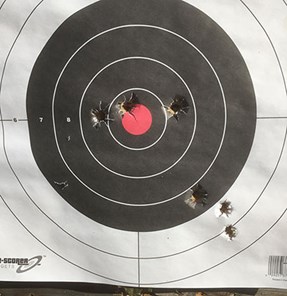
3. The Strike’s trigger pull was about 4 pounds and crisp enough for me to fire a 3-shot group of about 1.5 inches when sighting in. Check the picture of my 100 yard target. Our host had installed the Vortex scopes and settled on a load of 110 grains of BlackHorn 209 with a T/C sabot bullet. We simply did the final “dialing in,” got comfortable with the loading procedure, and went hunting.
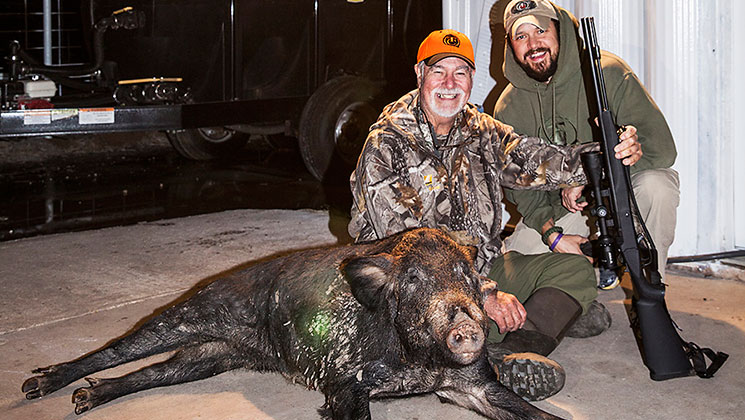
During my four days on the Chain Ranch, I harvested two pigs and a whitetail doe. The doe managed to walk about 30 yards to the edge of the clearing before going down. The larger boar made it about 10 feet, while the smaller pig simply dropped on the spot. Given the slow reload capability of a muzzleloader, this is the kind of performance you want when hunting.
I fired 10 shots through the Strike during my stay at the Chain Ranch, without any cleaning of the rifle. T/C has reason to be proud of the Strike’s Armornite finish; the gun still looked (and functioned) like it was new at the end of the hunt. All reloads in the blind were done using nothing more than the Strike’s ramrod, and there were no difficulties encountered, nor were any other specialty tools needed. The Strike has a 24 inch barrel, but it didn’t seem that long, even in the confines of a blind. It felt amazingly handy when on the move.
If your idea of muzzleloading involves a coonskin cap and making sparks with flint on steel, the Strike may be too 21st century for you. But if you want meat in the freezer, take the new Strike afield.