By 2030, the U.S. government wants 20-percent of the country's energy demands to be met by wind energy. The rush to meet this goal—which we're a heck of a long way from achieving—has exposed much hypocrisy.
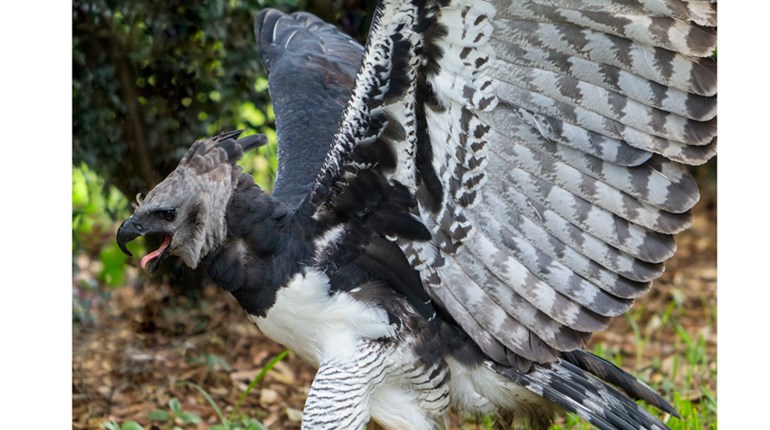
Here's the biggest contradiction: While the U.S. Fish and Wildlife Service (USFWS) recently suggested that lead ammo is affecting eagle populations (see the NSSF's rebuttal here), the government apparently has no problem killing eagles in the name of wind power. On December 9, 2013, the Department of the Interior (DOI) approved a regulation to provide wind companies with 30-year permits to kill eagles, including bald eagles, without prosecution by the federal government.
According to the USFWS' own data, wind turbines kill an estimated 67 golden eagles at one San Francisco wind facility alone. Nobody denies that wind turbines kill birds of prey (they also likely impact upland birds and waterfowl); but the fact the government would actually sanction killing eagles defies logic.
So, in April the American Bird Conservancy filed a lawsuit.
“Eagles are among our nation’s most iconic and cherished birds. They do not have to be sacrificed for the next 30 years for the sake of unconstrained wind energy,” said Dr. Michael Hutchins, National Coordinator of ABC’s Bird Smart Wind Energy Program. "Giving wind companies a 30-year pass to kill Bald and Golden Eagles without knowing how it might affect their populations is a reckless and irresponsible gamble that millions of Americans are unwilling to take."
I couldn't agree more. The original proposal was for five-year permits—far more reasonable given we don't know what the full impact of the turbines will be.
In response to the initial proposal, the USFWS's statement to the Federal Register read: "[a permit of any longer than five years] would be incompatible with the preservation of the Bald or Golden Eagle."
The government has left no doubt that wind energy is coming. One day it may even prove a good renewable energy source. But are we comfortable allowing its rapid implementation to outpace our knowledge of its full impact?