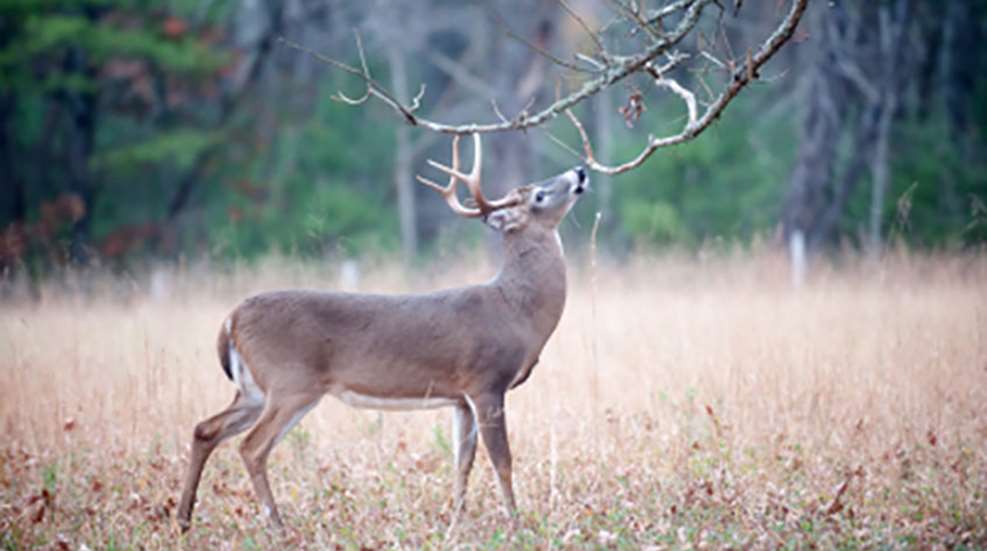
To avoid danger and stay alive, a whitetail uses its ability to detect faint odors more than any other sense. Without argument, its nose is its greatest aid in survival; however, it can also prove to be its undoing when it comes up against a hunter who develops the right strategy of combining attractant and cover scents. To do this, a hunter needs to know what to use, when to use it and then execute a plan that will put a buck at total ease and even pull him in for an easy shot. Here’s how to build your own easy-to-follow scent plan for big buck success.
Time Your Scents
First, you have to use the right scent for the right phase of the rut you’re hunting. I still see a lot of guys who use that generic bottle of doe pee pulled from a discount store shelf throughout the season and expect it to bring bucks running as the rut hits fever pitch. I’ve also seen hunters who dropped top dollar on doe in estrous scent and started dumping the stuff out as early as mid-October in the honest belief they were going to trick bucks into thinking they were the first doe ready to mate. Again, with the foolish notion that bucks would come running. Both types of hunter are missing the point and not getting the real benefits from attractant scents that can be had.
“It’s important that a hunter use a scent that is believable to the deer,” says Mike Mattly, public relations manager of Code Blue scents and an avid Iowa deer hunter. Here’s what you need to use and when to use it.
Doe Urine—Basic urine from a doe is good throughout the season, but mostly during the earliest weeks, before the rut when bucks are still in bachelor groups and not yet super competitive. More than anything, doe urine will reassure deer as they pass through an area that everything is all right. A relaxed deer is much easier to hunt than one on edge. This serves the same purpose throughout the season and can bring curious deer in on a trail dragged with the scent. As the rut recedes and deer begin to fall back into feeding patterns, doe urine is a solid go-to scent.
Buck Urine—A quality buck urine used in conjunction with scrapes (real or mock) or in other high-traffic areas is a good transition attractant leading up to the rut. Aggression in bucks is building and they are becoming more competitive. The smell of an intruder in their space, mixed with the sound of deep grunts and rattles, can draw them near in an effort to locate the interloper. Now is the time to challenge a buck.
Doe Estrous—Not until you are within two weeks of the peak of the rut do you want to use the higher-dollar doe estrous scents. As soon as you notice bucks beginning to chase tail-wagging does and your trail cams pick up increased activity, you want to drape the area around your best stand with estrous scent. Use it both on a drag into your stand and around your setup to act as a cover to scent and as an attractant. Use this throughout the key phase of the rut until you detect the rutting urge beginning to wane and then push it a few days more. Not all does will come in or go out of estrus at the same time, so by being one of the last ones, you may pull that one buck still seeking.
Tarsal Gland—Fuel both a big boy’s rage and sexual drive by busting out a little tarsal scent from a buck, along with that doe in estrous. Drip them both in mock scrapes along an existing scrape line or mud-worn deer trail and stay at the ready. Both work well on a drag. Use throughout the rut peak. Code Blue’s Gravedigger line of scent-impregnated soils are ideal for scrape use.
Scent Setup The Right Way
Don’t spend money on scents only to fail in using them in a way that will maximize possible results. There’s a trick to placing the scent around your stand.
Be Realistic—A lot of hunters expect to hang scents out and then watch as deer come running in to check them out. To anyone who has hunted with scents, however, that just isn’t the case. Scent locations serve more to get a deer just walking past to stop and check it out, giving a hunter a better chance at getting a stationary, broadside shot.
Be a Drag—Using a scent drag soaked in the proper scent serves two purposes: One, it helps cover your own scent you may leave behind when walking in and two, it can serve to catch a buck’s attention as he is cruising by and draw him in a little closer. Again, I don’t want to oversell the latter. A heavily placed scent trail doesn’t mean a buck is going to come running right into your stand along that path. More often than not, it will peak his attention so he will work around the area trying to catch more scent to confirm what he hopes is an actual doe.
Use Wicks—Sure, cotton balls in plastic canisters work, but they can also alter the smell of scents when combined with whatever material the canisters are made from. Wicks are made expressly for the job, and many today come with their own containers where you can store them free from contamination. The containers also help to avoid fewer sloppy spills.
Minimize Scent Locations—I used to put four or five scent bombs in a big circle around me to cover every direction. Not necessary, says Wildlife Research Center’s Ron Bice. “All you need are two wicks,” Bice says. Hang one to your left and one to your right in order to catch anything passing by. If it makes you feel better, hang one directly in front of you as well. Bice also warns to never hang scents behind you or in spots where you won’t be able to make a shot.
Keep in Range—You also don’t want to hang them farther than you can shoot. Place them adjacent to shooting lanes or likely travel routes within shooting distance of your stand, so when a deer stops to check it out, you can take the shot.
Higher is Better—Scent bombs placed on the ground may seem like they would be more realistic, but bottom-line is, they are also less effective. Instead, hang them at least five or six feet from the ground in order to be better caught by gentle breezes and thermals, thereby expanding the chance to draw a curious (or agitated) deer into your setup. When creating mock scrapes or enhancing a real one, use a scent dripper. This will both deposit scent on the ground where a deer will expect it and catch the higher breezes where the smell can be caught from farther out.