For those of you who are young to remember when deer hunting did not involve aerial photographs, Google Earth, trail cam videos, cell phone cameras and anything to do with the internet, it may shock you to realize that us old codgers killed a lot of deer without any of that high-tech gear. In my decades of traveling the country as both hunter and hunting guide, it has amazed me how you young dudes are so dependent on electronics and social media that you often fail to remember that in deer hunting there are some old-school principles that will—not might, but will—make the difference between punching a tag and eating tag soup. Hunting real deer is not a video game with a reset button. Screw up just once—especially when trying to kill a mature buck—and it is game over.
Here are some old school skills that are as important and valid today as they were when bread was a dime a loaf, gas a quarter a gallon and people got their news by reading a newspaper, not on their smart phones.
Watch the Wind: I don’t care what the celebrity hunters and advertisements tell you, you cannot “forget the wind, just hunt.” If a deer gets downwind of you, the odds are it will smell you. If it smells you, it is out of there. Wearing activated carbon clothing that adsorbs odors, using scent-eliminating sprays, washing clothes in unscented detergents and showering using unscented soaps and shampoos will certainly reduce the amount of scent you put out, and this can give you an advantage. But the best scent-control program of all is hunting with the wind in your face.
Hide in Plain Sight: Deer cannot see color as we do, but they can detect contrasts and they do see movement extremely well. I always chuckle when I watch a cable TV hunting show and see the celebrities decked out in their fancy camo clothing—with their shiny faces and hands exposed. Think deer cannot see that, especially if it wiggles? If they don’t look up you are good to go—but sometimes, they do look up. Camo up everything, and set stands so you are in the shade, surrounded by as much natural cover as possible.
Pre-Hunt Preparation: My old college basketball coach used to tell us that our practices were going to be so hard they’d make the games seem easy. I never could figure out what he meant by that—until the season began, and by the end of the second half we were still running full bore and the other guys had their tongues dragging. We also made a high percentage of our free throws. None of this happened by chance. It all happened because we worked very hard before the games ever began.
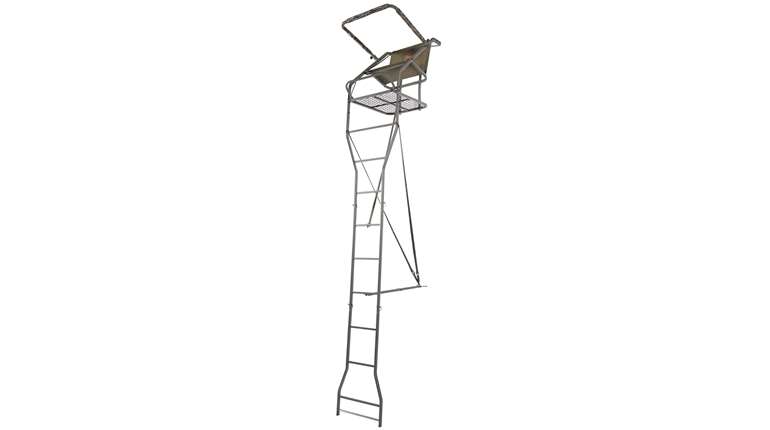
The same is true in deer hunting. The very best hunters I know meticulously prepare their gear before the season. They make sure their electronics have new batteries, all potential squeaks and groans in their stands have been lubricated, the lenses on their optics are cleaned and all the screws and bolts on their bows and rifle scope mounts tightened. They leave nothing to chance, controlling those things they have control over, knowing that they cannot control the weather or the deer.
Have an Escape Plan: Many hunters set a new stand without giving any thought to one of the most important parts of deer hunting—how do I get to and from the stand without spooking any deer?
Not spooking any deer—young bucks, does, mature bucks, it doesn’t matter—is critical to your chances, especially if you are hunting a relatively small piece of property. It doesn’t take much for a 5-year-old doe to pick you off while on stand, or when you are leaving—especially in the dark. Once she does, you can bet the farm she’ll avoid the spot like the plague, taking with her the rest of the herd, as well as any mature bucks cruising for estrous does. Thus, when you set your stands, make sure you have an access/egress plan that will allow you to get out of there with minimal disturbance.
Make the Shot: Everything you do in deer hunting is designed to put you in position to get a quality shot opportunity. The question then becomes, can you make it? Have you practiced with your firearm or bow enough to know—not think, but know—you can make the shot when the time comes? What about shots that are not exactly textbook? Have you thought about worst case scenarios? The number one complaint I hear from guides and outfitters in America is that their clients can’t shoot. Don’t be one of them.
And last but certainly not least... Never, Ever Give Up: As my old mentor used to say, you can’t shoot one sitting in front of the TV. If you are not in the woods your odds of shooting a deer are zero. Just because the weather is lousy or you’ve hunted for several days and not seen anything any good, don’t give up; all it takes is that magical 30 seconds when a good buck appears out of nowhere, walks past your stand and you hammer him. Nothing in hunting is more important than the two P’s—patience and perseverance.