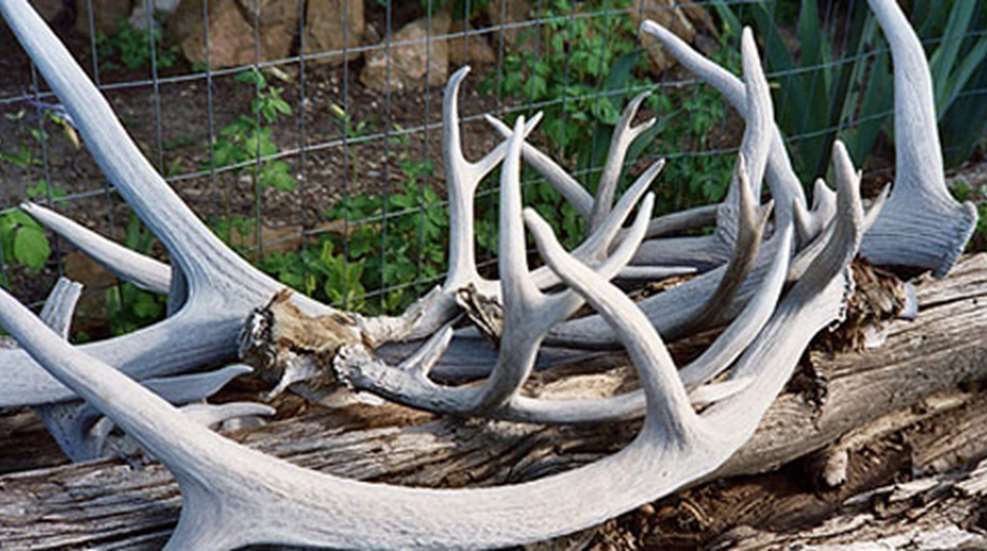
A lot of hunters crash the horns a few times, pull in zero bucks, go home, throw the horns in a spider-webbed corner of the garage and holler, "That's it, rattling doesn't work!" Well, it sure won't if you give up that easily. Hang in there, keep cracking and remember these five keys. I believe your rattling luck will soon change.
1.) Best Time to Rattle- "The peak of the rut is far and away the best time to rattle in the most bucks, large and small," says Mickey Hellickson, chief biologist for the King Ranch in Texas. The man has the numbers to prove it: During one of his studies he and his team rattled 60 times on peak-rut days and pulled in 65 testosterone-addled bucks. That's a response rate of 108 percent.
Granted, that was South Texas, where the buck-to-doe ratio is one-to-one and where rattling has always worked best. You certainly won't rattle up 60 bucks in your woods, but you might pull in an 8-pointer or 10-pointer if you crack the horns most every day from November 5 to 20. Bust one of those rut-crazed bucks with your bow or gun and you'll have the season of your life.
2.) Don't Be Shy- When you sit down to rattle with no deer in sight, go for it. In one research project, Hellickson and his crew made 85 sets, rattled hard as they could for one to three minutes at a time and pulled in 81 bucks. They tried 86 quieter sequences and attracted only 30 bucks. Crashing the horns heavy and beating the ground from time to time with an antler was nearly three times as effective.
3.) Best Time of Day- In Hellickson's studies over the years, nearly 70 percent of bucks have responded best to the horns between 7:30 and 10:30 a.m. "Cool mornings with cloud cover and little or low wind speed are best," he says. It's a no-brainer; rattle early.
4.) Don't Rattle Blind- "Rattling blind can work, but we've found that your odds shoot way up when you see a buck and rattle at him," says Mark Drury, who hunts and films giant whitetails across the Midwest. Say you see an 8-pointer trolling head down on a ridge 100 yards away, or ducking into a ditch after a doe; rattle at him with short, hard horn bursts. If you see a shooter follow one hot doe into a thicket or patch of woods, sneak downwind of those deer if you can, set up 100 to 150 yards away and rattle hard, again in short bursts. "Lay down the horns and get ready," says Drury. "Chances are better than you think that the buck will pop out of the cover, look and give you a shot, especially if you're gun hunting."
5.) Play the Wind- "I cannot emphasize this enough: Little guys might charge in and look, but older bucks will either sneak in to your rattles from somewhere downwind or they will come in upwind, circle to a downwind side and try to smell the fighting deer," says Gary Roberson, outfitter and rattling pro from Menard, Texas. Set up in a blind or stand with good background cover and be sure you can see well to either side downwind (some elevation really helps you spot bucks). "You've got to shoot a big deer before he slips in behind you and smells you," adds Roberson.