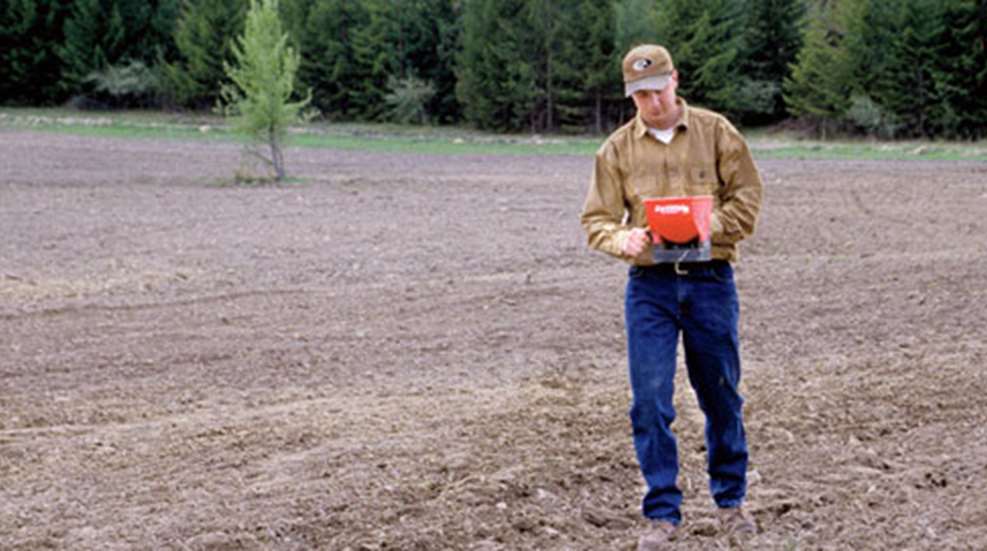
Wildlife habitat expert Neil Dougherty is a master at turning so-so small properties into big-time “deer scapes” where the herds are healthier, the bucks older and bigger and the hunting just plain better. Try 10 of Neil’s secrets to upgrade your spot.
1. Hunting Plots
Scatter food plots of about 1 acre each across your ground. Design and build them to take advantage of thick cover and the predominant winds in the area in deer season. Neil’s theory is that the closer you plant to a thicket where a mature buck can pop out to feed with his nose in the wind, the better the chance you’ll see him in daylight hours.
2. Create a Deer Buffet
Give them a salad bar. Neil recommends you plant 60 percent of your plots with a perennial like a clover/chicory mix that will provide a steady food source for three to five years. Plant the other 40 percent with a fast-growing, tasty annual like oats or wheat.
3. Plant Logging Roads
“Planting 1,000 yards of logging road is like putting in a 1-acre food plot,” notes Neil. Logging roads are already open and easy to access, so it’s a no-brainer. Clover tends to grow best on north-south roads that get three to four hours of sun each day, but plant and fertilize as many sections as you can for maximum food and edge for deer.
4. Fertilize Natural Plants
Check sunny road edges for blackberry bushes and other briars and brambles. Deer love ’em! Fertilize the browse once this year with 10-10-10 fertilizer to make it even sweeter.
5. Don’t Neglect Mowing
Mow your plots (and planted roads) two to four times this summer to stimulate new clover growth and to help kill grass and weeds. Neil says to mow when the plants get about 12 inches high. Don’t cut too low, just clip off a third to half of the plants.
6. Factor in the Sun
“If you’re in a hot, dry region, plant some of your plots up against a western edge of tall trees so they won’t burn out,” says Neil. Also, leave a few large trees in the middle of a plot to provide some shade to cool down the field.
7. Find Hidden Gems
Scour old farm fields and clear-cuts for hidden fruit trees, like wild apple and persimmon. Open up the trees by clearing away tight brush; prune a few limbs and pour some fertilizer over the roots. “A tree should make some soft mast just in time for bow season, and you’ll have a new hotspot,” says Neil.
8. Create Hidden Places
For a long-term investment, plant a double or triple row of pines along a county road and on the western edge of a field or food plot. In a few years, the pines will shield deer from cars. The taller and thicker the trees grow, the safer the does and especially the bucks will feel moving and feeding in daylight. The pines will give deer shade in summer and a wind break in winter.
9. Create Sanctuaries
One of the best land improvements doesn’t take a drop of sweat. Study an aerial photo, pinpoint some of the thickest, roughest cover and terrain and designate it a buck sanctuary. No hunting, no walking, no nothing in there year-round! As Neil points out, a good sanctuary is so gnarly a buck feels safe and hidden if you walk or drive an ATV by at 50 yards. He recommends that 20 to 30 percent of your land be in sanctuary.
10. Create a Boundary
Strap a chainsaw to your ATV and ride the property lines. Stop and saw trees and logs here and there 20 yards or so inside your boundary. Establish a trail that wends the entire perimeter. Use the trail for 90 percent of your access when planting and mowing, scouting and going to and from your treestands. By not driving and walking all over the interior of your ground, you’ll hold more deer and more big bucks.