I don't know how many rifles I've tried and tested over the years, but the number is enough that I've forgotten about many of them. There is one specific rifle, however, that I'll never forget. I've taken it to the range and into the field more than all the others combined. It is my go-to rifle, the one I grab without thinking when I need a deer or bear gun. Every big-game hunter has one of these. This is the story of mine.
On Aug. 12, 2014, I will have owned my Winchester Model 88 for 21 years. The exact date remains clear in my mind because it's my birthday. My grandfather gave me the rifle the day I turned 16, just as he would do with three other 88s for my brother and two cousins. Although he didn't need it very often, Grandpa put much value in the quick follow-up shot. In Pennsylvania, where I grew up hunting, semi-automatic rifles were not legal for deer in most cases, and a slick-running lever gun was as good as it gets.
Even today, with the fortunate opportunity to use just about any rifle on the market, I turn to my 88 more often than not. In my mind, a lever-action rifle that shoots and handles more like a bolt gun is still as good as it gets.
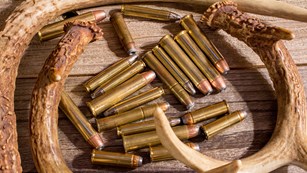
Winchester must have been thinking the same thing when it introduced the Model 88 in 1955. Instead of having a tubular magazine like most lever guns, which limited ammo selection to flat-nose bullets, the 88 got a four-round, detachable-box magazine that allowed the use of aerodynamically superior spitzers. The company chambered the rifle for some pretty hot rounds back in the day, especially for a lever action. The .243 and .308 Win. are still among the most popular cartridges with hunters, and although far less common, the .284 and .358 Win. are impressive in their own right even today.
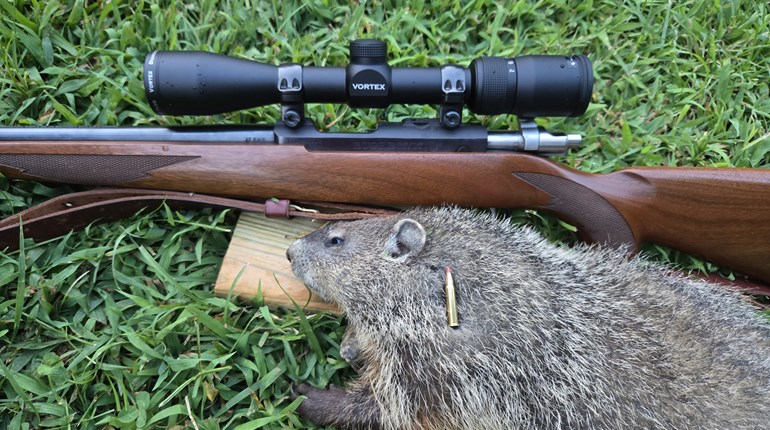
To take advantage of the better ballistics offered by the faster cartridges with pointy bullets, Winchester made the 88 compatible with a scope. Its hefty, three-lug, rotary bolt threw cases to the side. The 88's buttstock didn't have nearly as much drop as those found on conventional lever-action rifles; the comb was high enough to get a good cheek--instead of chin--weld.
All of this stuff is why I'm still in love with my 88. There are other reasons beyond its technical attributes. For one, the rifle is a joy to carry. And by carry, I don't mean slung over my shoulder. The 88 lies effortlessly in my palm with the rest of my right hand cradling its stock near the magazine. That magazine makes the rifle easy to load and unload; I carry a spare, loaded magazine in the left pocket of my pants, just in case I need more than five rounds on a bear drive. Finally, I don't think there is a better, more streamlined-looking rifle than the Model 88 with its full-length, walnut stock and low-slung receiver. I will admit the rifle's trigger is horrible, but just like with anything loved, faults are not only overlooked but accepted.
According to Winchester serial-number records, my 88 was manufactured in 1960. It was in good condition when Grandpa gave it to me; now I'd guess it's more like fair. There's a big gouge halfway up the stock, compliments of an ice-covered rock in the middle of Rothrock State Forest, along with untold other scrapes and scratches. Much of the finish is gone from the wood. The bluing on the inside of the lever and on the bottom of the magazine has turned to a wonderful gray patina, the result of carrying--and shooting--the rifle a lot. I plan to do those same things with my Model 88 a whole lot more, which is exactly what Grandpa had in mind more than two decades ago.
If you have stories about your Model 88, share them below. They'll never get old here.