Why Do Mallards Nest in Town?

by
posted on April 28, 2014
** When you buy products through the links on our site, we may earn a commission that supports NRA's mission to protect, preserve and defend the Second Amendment. **
dogs_ah2015_fs.jpg (26)

While many ducks require specific habitats for nesting and survival, the mallard is like the whitetail deer of the waterfowl world. He is highly adaptable, widely spread (even internationally) and an aggressive breeder. Which is why so many resident populations of mallards are found, yet localized pintails or teal are rare events.

The phenomenon is due in part to mallard hens' non-picky nesting habits. It's amazing all the seemingly inhospitable places you'll find them this time of year: on rooftops, in gardens, tucked away amidst professional landscaping or commonly even in flowerpots. According to Ducks Unlimited, as long as hen mallards' three basic needs are met—adequate nesting cover, nearby food, and proximity to water—they'll pop out eggs just about anywhere, even in town.

Take, for instance, this hen photographed by my buddy Tyler Coleman in downtown State College, Pennsylvania:
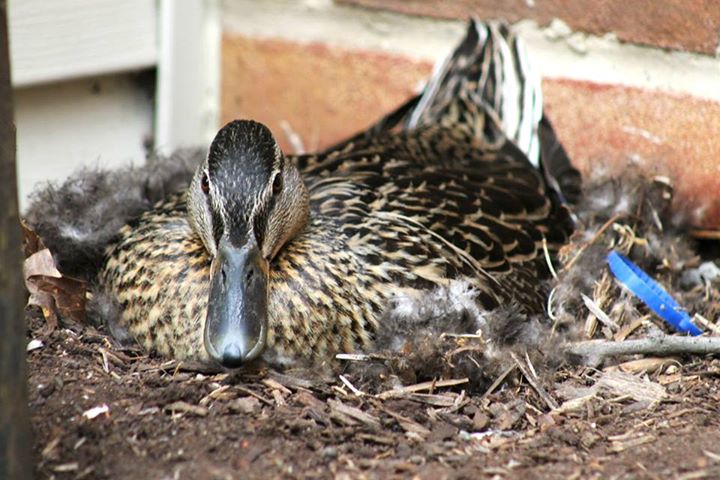
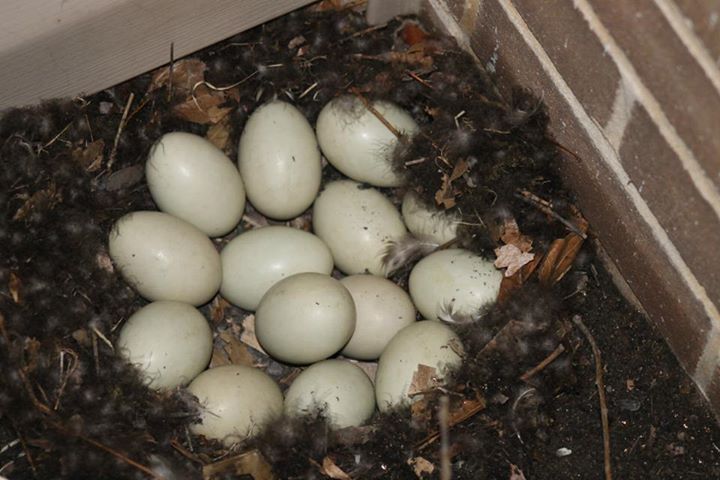
The hen laid a whopping 14 eggs beside the foundation of a college apartment complex. Given that average clutch size is 12, we can assume city life has been good for her health. Tyler found another hen nearby with 9 eggs, positioned similarly along the side of the building.

It's actually not a bad nesting strategy, given that there's less likelihood of encountering predators in town, save the occasional feral cat. If you do spot a duck nesting in your lawn or garden, keep in mind the cycle may repeat itself the following spring. Mallards are philopatric, which means that when a hen nests successfully, she'll often return to the same site next year.

Latest

Lead Photo 2
Lead Photo 2

Top 10 Rimfire Loads for Hunters

Phil Massaro loves rimfire rifles of all shapes and sizes, and enjoys the majority of rimfire cartridges available. Here is his top ten of the latter, in no particular order.

Tips for Waterfowl Hunters to Safeguard Against Bird Flu

The Michigan Department of Natural Resources (DNR) has issued a reminder for waterfowl hunters that applies throughout the nation. Following a few simple step can protect yourself and domestic animals from highly pathogenic avian influenza (HPAI), which is commonly known as bird flu.

EchoCore Suppressors Win Awards, Sign with Silencer Shop

In its first year of public evaluation, EchoCore Suppressors made an immediate impact at the 2025 Silencer Summit, taking first and second place in the 5.56mm category with its Sector 5.56 Full Size and Sector 5.56 Compact suppressors. On the heels of this, EchoCore has signed an exclusive distributorship agreement with Silencer Shop. 

New to the Flyway: Waterfowl Gear Roundup

Check out our roundup of the best of this season's waterfowl gear.

Chevron Commits $450,000 Wetland and Mottled Duck Conservation

Chevron recently continued its commitment to restoring and enhancing critical wetlands along the Louisiana coast by partnering with Ducks Unlimited (DU) to enhance private lands for waterfowl and other wildlife through the Louisiana Mottled Duck Project and the USA Rice-DU Rice Stewardship Partnership.

Behind the Scenes: Hard Truths of Conservation

Hard Truths tackles misconceptions about hunting and conservation, but these ambitious goals require filming in tough conditions and in remote areas alongside some of the world’s most dangerous wildlife.

Interests


Get the best of American Hunter delivered to your inbox.