My Texas friends called it a “watering trough,” though to me it looked more like a round swimming pool built with concrete walls 21/2 feet high. The “trough” was large enough to park a delivery van inside it, and it was also a favorite place of local wildlife.
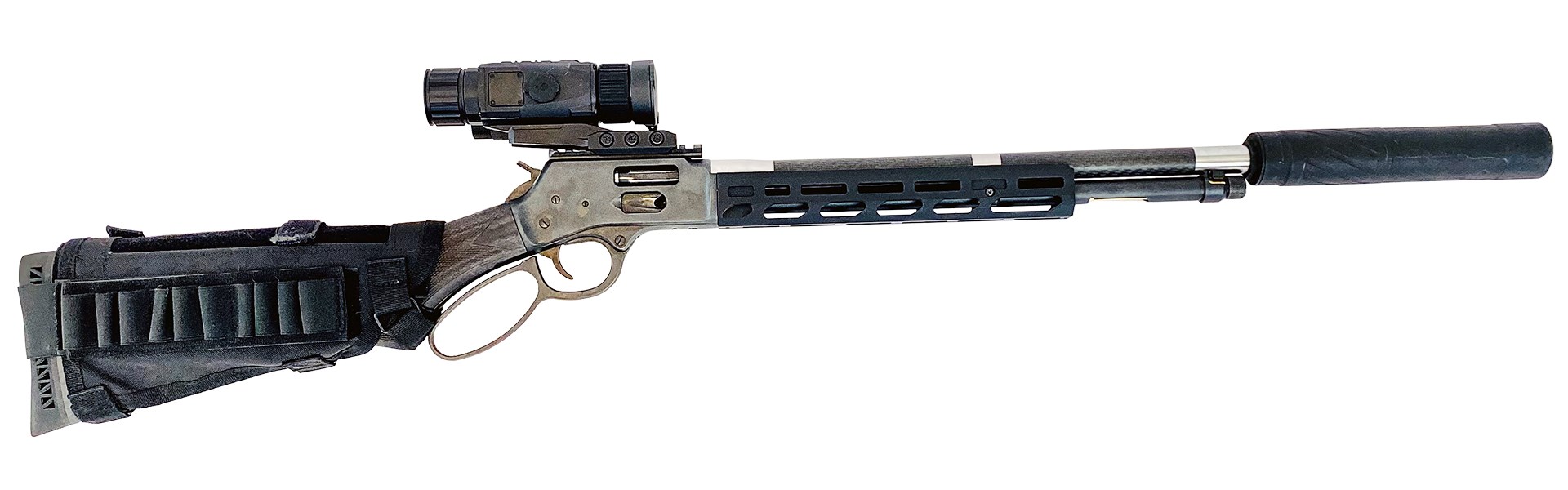
Midafternoon, and I was hunting the Lower Panhandle of Texas, near Rotan, on a large working cattle ranch, my first sit to kick off my combo hunt. Combo in that I sat inside my blind with a Ravin Crossbow and a Henry SPD HUSH lever action chambered in .357 Mag. My Henry was outfitted with a suppressor and a thermal scope.
If a likely whitetail buck showed up, I’d fill my tag with the Ravin. But once night hit, my plan had me in the blind for another two hours to see if feral hogs might stop by for a drink at the trough. At that point, my thermal-equipped HUSH would get busy.
Meantime, I watched various wildlife come in for water. It started with a flock of Rio Grande turkeys busting in, clucking and chirping angrily in their rush to the water. At least a dozen of the big birds hopped up onto the concrete ledge to drink; with their bald heads and hunched shoulders they looked like prehistoric relatives of the buzzard family.
Whitetail does followed a half-hour later, a pair of yearlings and their momma, and they were soon joined by a spike buck and a fork. The deer propped their front hooves on the concrete ledge, their long necks stretched out for the aqua.
Just before dusk, a racoon popped out of the mesquite, a strange wobble to his gait. He climbed up the backside of the trough and onto the ledge and then I understood the wobble. His front left leg was missing, sheared off at the trunk of his body. I felt bad for the little guy, but he actually got around just fine, drank his fill of the cool water, cleaned his face with one wet paw then scampered down the concrete side of the trough.
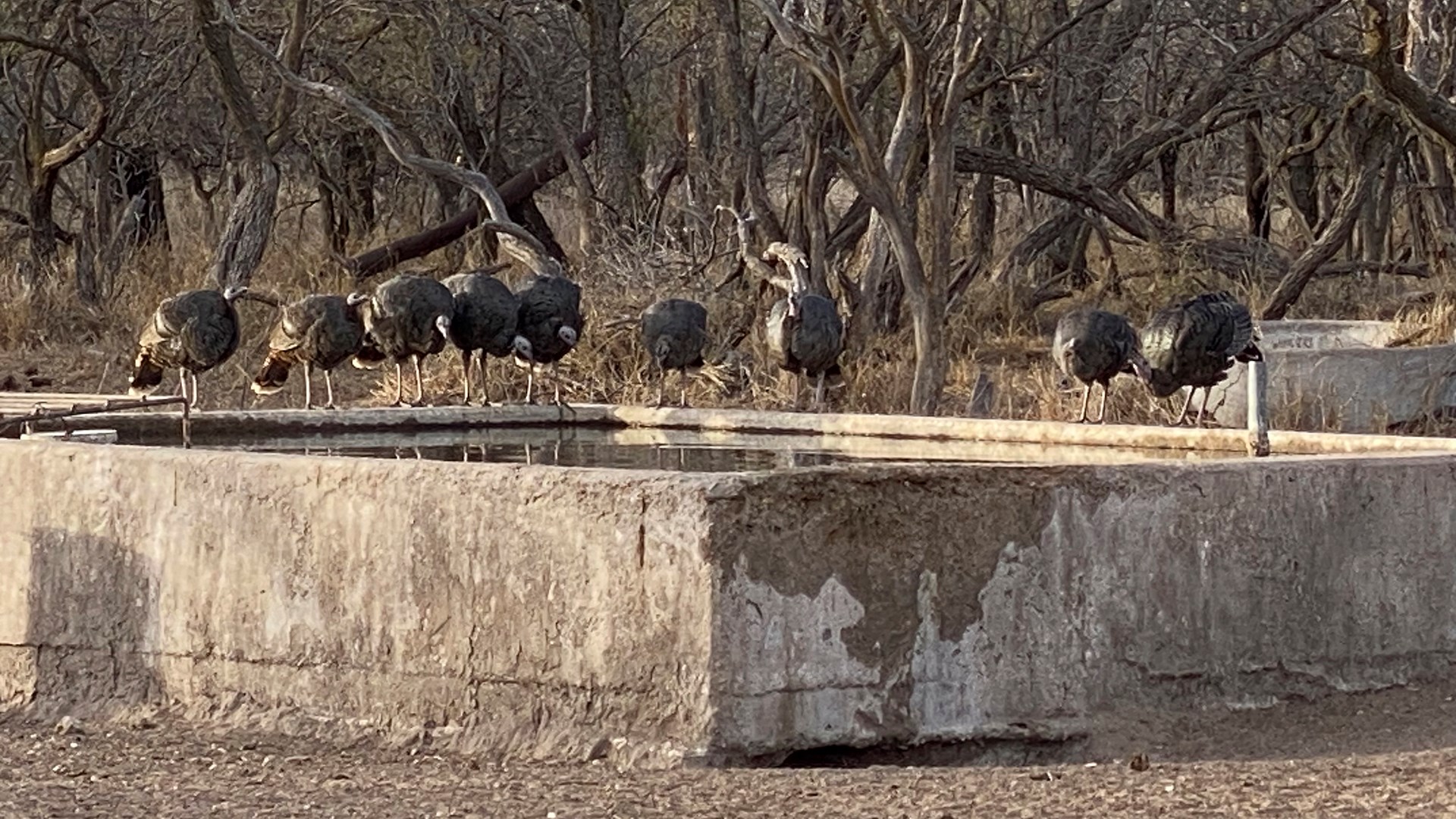 The author set up the first two nights in Texas near a watering trough, where wildlife including turkeys and deer and coyotes appeared, but no hogs.
The night came on suddenly, a brief reddish sunset glowing over the treetops and then the light flicked off. The trees and brush beyond the trough went very dark, though the trough walls themselves radiated white in the gloom.
I switched on my handheld thermal and began scanning the brush.
Maybe 15 deer appeared in the next half-hour, some to the water, others to just hang out. One was clearly a buck with a nice wide rack and tall tines, but of course deer hunting hours were over. At one point, I heard hogs grunting off in the mesquite far to my left. I switched on the DNT Hydra thermal atop my rifle, laid the lever action over my lap and scanned with the handheld for a wild pork heat signature.
But not that night.
My ride back to the ranch house showed up an hour later, and I headed in for a late dinner.
Actually, this started off as a deer crossbow hunt with good friend and hunting outfitter Craig Archer, who runs TBD Outdoors. TBD offers deer (whitetails and muleys), turkey and wild hog hunting in Kent County, Texas.
But if I’m hunting Texas, I always bring along a thermal-equipped rifle (or two) to spend many nighttime hours on my favorite hunt: feral hogs with thermal.
For this hunt, I used a Hydra 640x512 35mm Multi-Function Thermal Scope from DNT Optics. “Multi” as the thermal functions as a scope, a handheld or a clip-on to a daytime scope. I also went suppressed, and used a Banish 46 V-2. I needed hunting ammunition, and from past experience I knew the Federal Premium HammerDown .357 Mag. load was deadly.
Afternoon No. 2 at the watering trough was much the same as the first one, minus the three-legged racoon. Nighttime, though, got a little more intense.
The first hog appeared about 30 minutes after dark, poking out from the brush line and to my left a couple hundred yards away. It looked like a lone boar and good-sized. He nosed around the brush line forever, it seemed, moving towards the trough and then away, towards and away. Eventually, he disappeared back into the brush. Next, two smaller hogs jumped out of the brush in the same area as the lone boar. But they were on a mission and trotted straight ahead, cutting into the trees far to my left, never closer than 150 yards and always moving.
For the next hour, it was just me and the night, nothing moving, me scanning for a heat signature every 10 minutes or so, checking social media on my cell phone and getting bored. I was about ready to call Craig and ask for a ride back to the ranch house when my handheld picked up a white heat spot moving along the line of the trough’s concrete edge.
I powered up the DNT thermal and shouldered the rifle.
A minute later, the triangular-shaped head of a coyote peeked over the concrete edge, drew back and disappeared. Then the yote stood tall, front paws on the ledge as it leaned forward to drink. I lined up the thermal’s green reticle on the coyote’s head and squeezed off a round. He dropped back immediately. I waited a few minutes to exit the blind then made a wide circle in the direction of the trough. Through the DNT Hydra I saw the yote piled up next to the concrete wall.
One down.
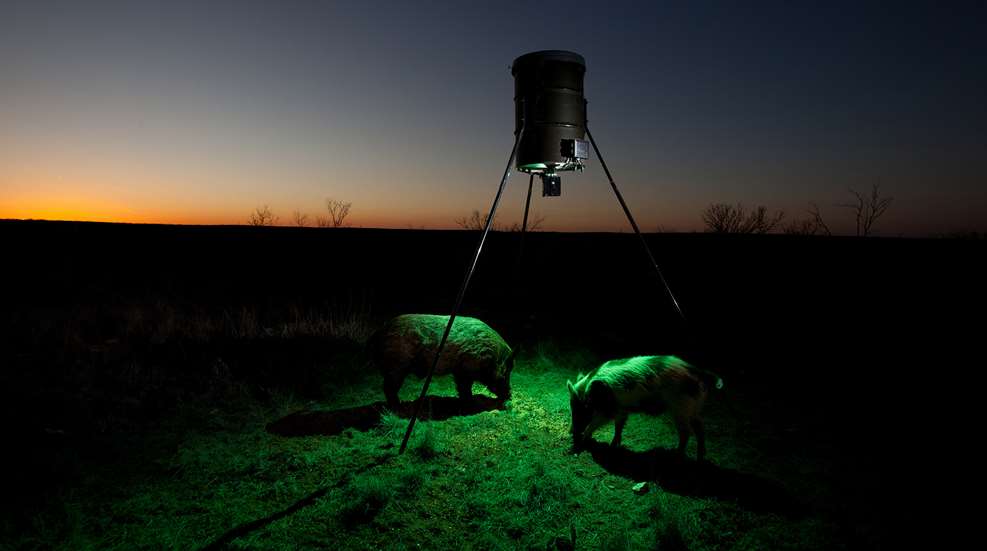
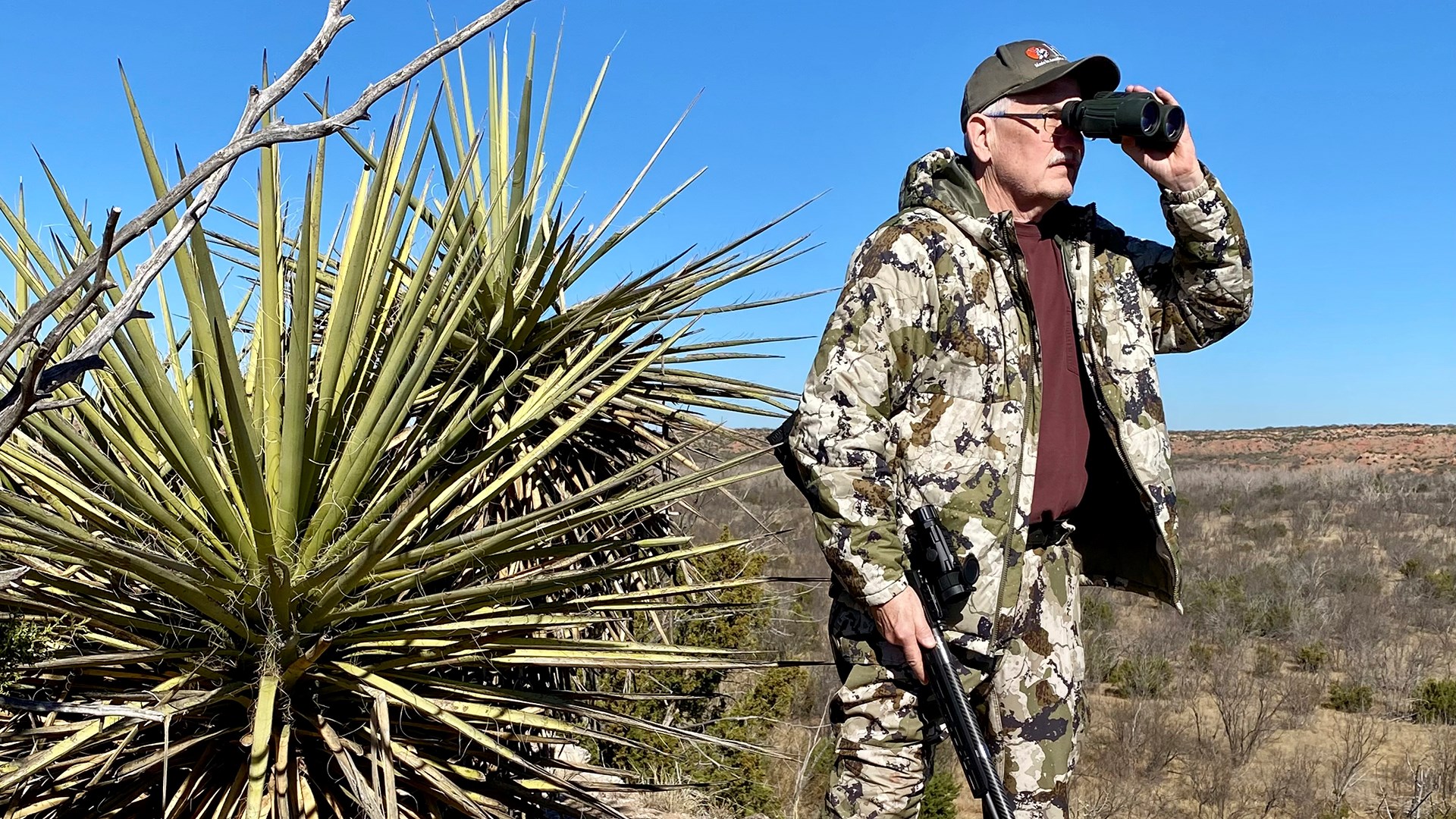 Three nights of night hunting delivered only two hogs. But it wasn’t for lack of trying as the author had thermal optics in hand, as he always does in Texas.
My plans changed for the next night, with Craig and I deciding I needed to try a different blind. Right after lunch, one of the guides was going to drive to the feeder near the blind, fill the feeder and pull the game camera’s SD card.
I asked to go along.
One thing I’ve learned in a dozen years of thermal night hunts is to daytime-scout the areas I’ll be night hunting, if at all possible. Yeah, that’s pretty basic advice. But it’s also very easy to forget because the high-tech nature of thermal leads people to believe they simply have to head out at dark and scan some hogs and yotes. That can work. But it’s a big help to know the area you will be hunting, the game trails and other frequently used areas.
Another lesson I’ve learned: Take along a handheld thermal if at all possible. Using a rifle-mounted thermal scope to scan is not only awkward, it uses up your scope’s battery.
I’ve also learned that, contrary to what some people insist upon, hogs are not night blind. I’ve been busted by hogs more than once at zero-dark-thirty doing a stalk, even with the wind 100 percent in my favor. Bright starlight and especially moonlight will get you seen.
Now, hogs may not know exactly what they are seeing at night. Maybe I just looked like a tall, black spot in the night. But I was a dark spot that wasn’t supposed to be there, and the hogs took evasive action.
And a hog’s nose works perfectly fine at night. I make sure to know and use the wind anytime I’m walking or stalking.
I got to my new blind an hour before dark and settled in. This was my last night hunt, and I was still hog-less, so I needed to give this last sit some time, and asked Craig to give me four hours. The blind fronted a line of high, red rock cliffs. Hogs liked to work their way along that rock face and often hit the feeder on their way through.
The feeder went off just before dark, a scattering of corn kernels and yellow corn dust fanning out over the ground. I broke out my Leupold LTO-Tracker handheld thermal a few minutes later when a hog grunted off in the distance. But that hog never showed up.
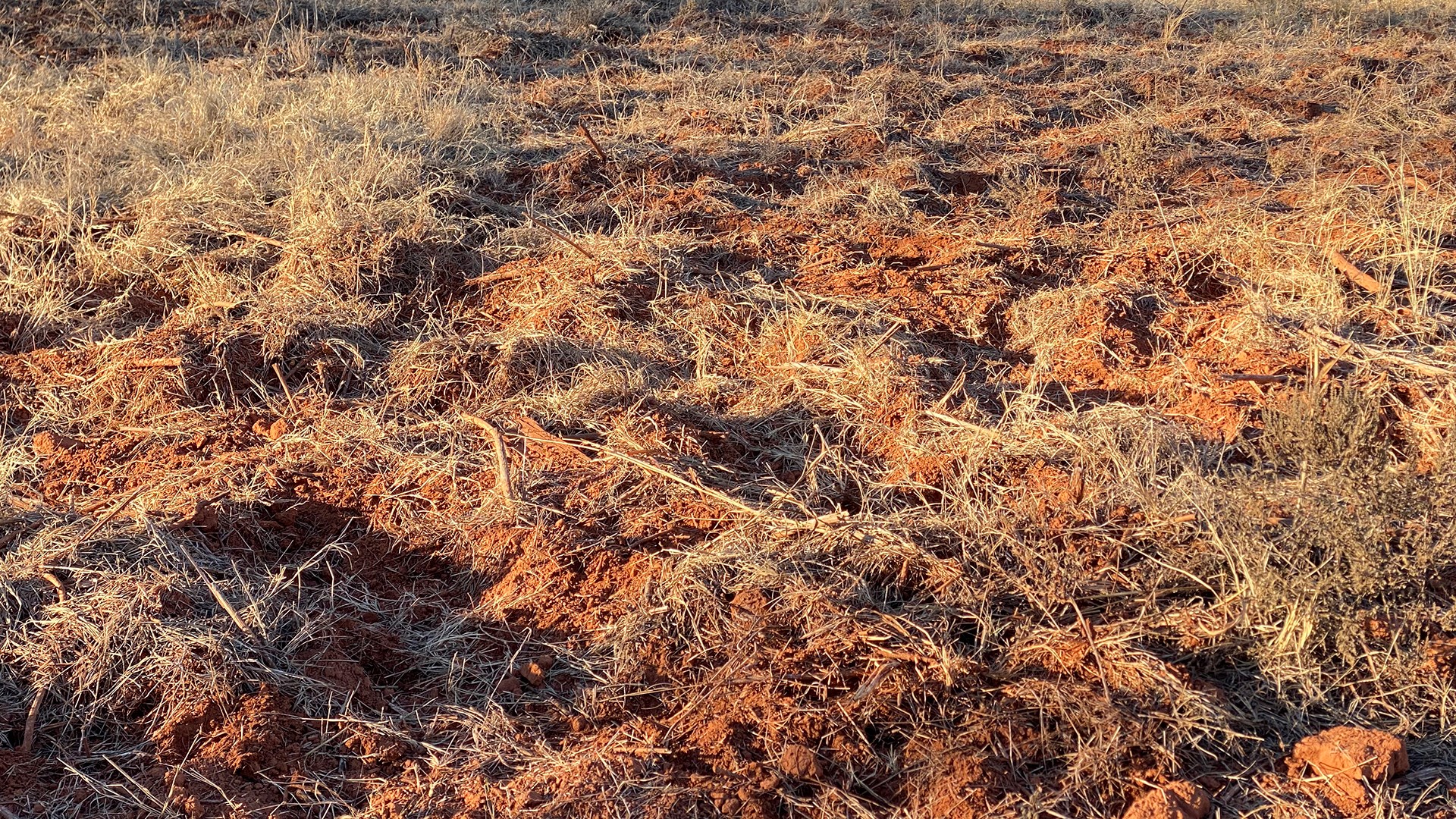
A couple hours in, with nothing to report but three deer, I decided it was time to take a walk. And I knew where to walk, thanks to the time I’d spent scouting this area earlier that afternoon when the guide dropped me off while he checked other feeders and game cams. I walked the ranch road running parallel to the rock face and poked around in the brush and mesquite on either side. I soon found a game trail cutting across the gravel road and headed down it. It didn’t take long before I found a large area of hog rooting. It looked like a moonscape of red earth and potholes, twisted up vegetation and hog tracks.
I struck out in the other direction, crossed the ranch road and discovered another rooting location, this one among tall, tussocky grasses and brushy cedars. I got back on the road, and a few hundred yards down spotted the trunk of a cedar smudged with the local red soil. The narrow trail next to it told the story: Pigs crossed the road here and their soiled bodies bumped up against the tree.
I aimed for these three locations on my night hog hike.
Scanning with my handheld, I walked slowly and quietly down the road. When I was near the first rooted-up location from earlier in the day, I stopped for a long scan. Nothing.
I moved on and within a few minutes heard some soft grunting. Hogs off the road to my left. I checked to make sure my DNT thermal was on and thumbed back the hammer on the HUSH, put the handheld in my pants pocket and held the rifle at port arms as I eased towards the grunting sounds.
I hadn’t taken more than 10 steps when a pig squealed. Not a scared, time-to-run squeal. More of a curious, “What’s that?” squeal.
I shouldered my rifle and saw a pair of hog backs glide through tall grasses. I moved forward, still holding the rifle up, and a pig maybe 50 yards away grunted loudly. I heard branches cracking as it (apparently) stood up from its resting place. I swung the thermal’s green reticle onto the hog’s head and fired. Suppressed though the rifle report was, pig mayhem ensued with squeals and screams. Heat signatures of hogs dashed through the brush and disappeared well ahead of me. I remembered that this road curved to the left just up ahead, trotted to the curve and stopped, my rifle at the ready.
A hog dashed across the road, followed by a pair of hogs and then a half-dozen of them. No shots possible. Then a hog popped onto the road, paused and looked around as if to find the other hogs.
I fired.
I found this hog, a young, lighter colored sow, by tracking its blood trail into the brush. But I couldn’t find the first hog. So, I marked the area with some paper towel in my pocket, weaving it into a tree branch near the roadway. (Craig and I returned in the morning. We found the first hog under a spreading cedar.)
On the drive back to the ranch house, I set up my next night hog hunt here!
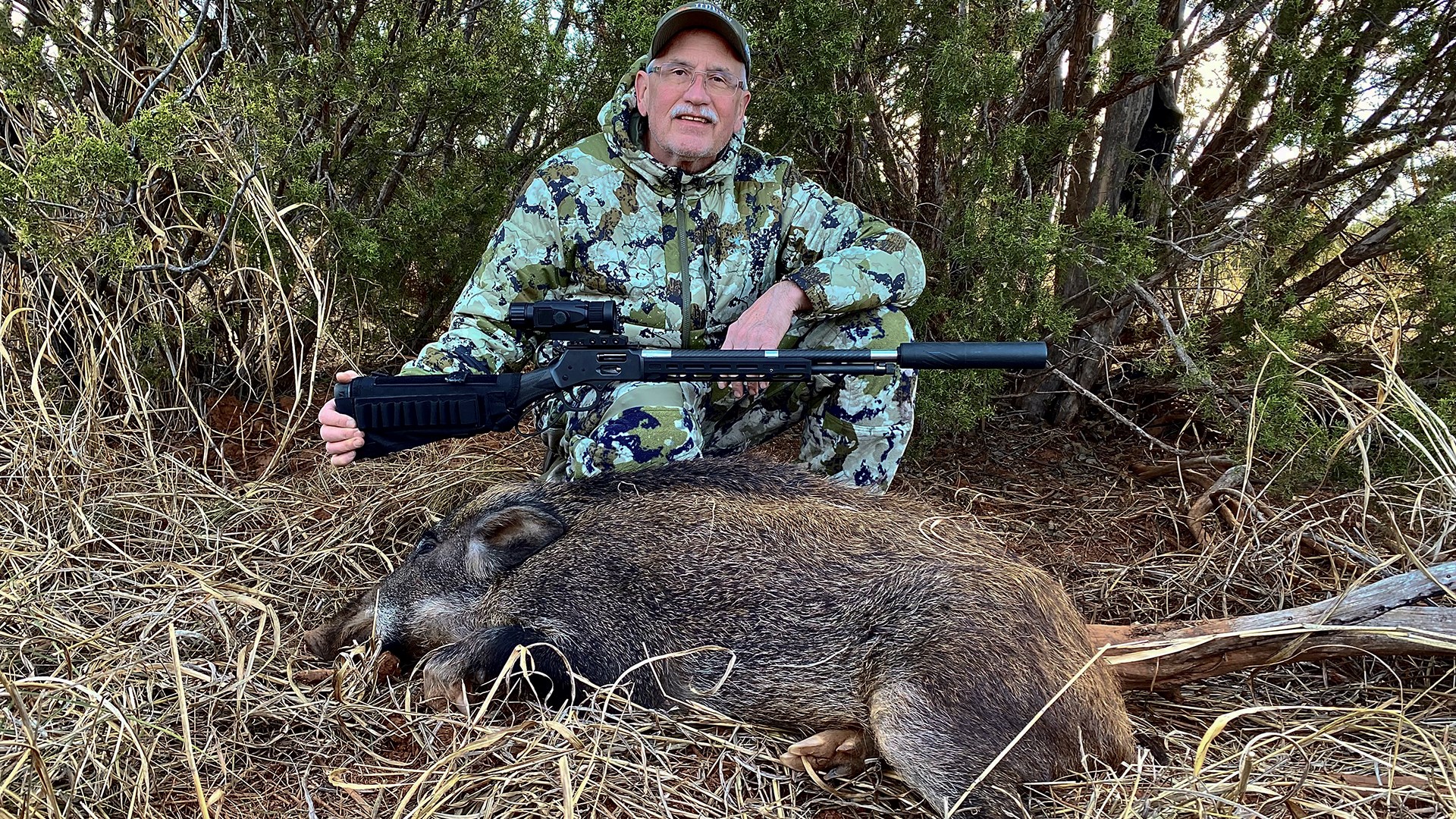
Guns and Gear for Night Hogs
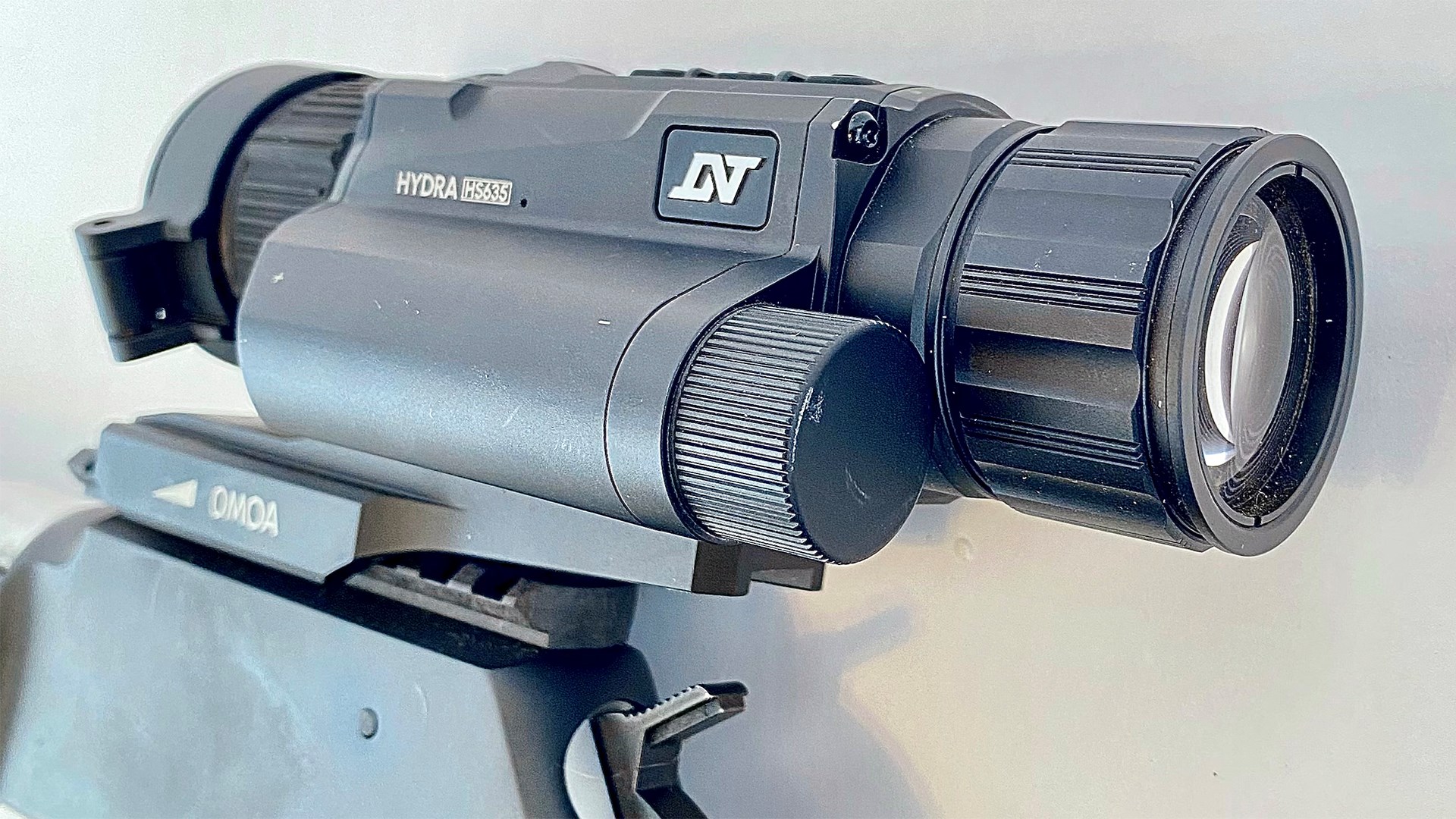
DNT Hydra 640 Thermal Scope
The Hydra 640 HS635 35mm thermal riflescope features 640x512 resolution, 12x12um pixel size, 50 frames per second refresh rate and an NETD rating of <18mk. I found the images very sharp, the controls precise, including the one-shot zeroing system. The Hydra housing is CNC-machined from an entire block of aircraft grade aluminum.
With a 1024x768 micro-OLED display and a rapid-adjust eyepiece, the Hydra featured eye relief of approximately 2.5 inches. In my time running the unit in the field, the display window and the overall ergonomics made it feel much like a daytime scope. Powered by a single and rechargeable 18650 battery, it can also operate on an external power pack. It carries an MSRP of $2,221.99. us.dntoptics.com
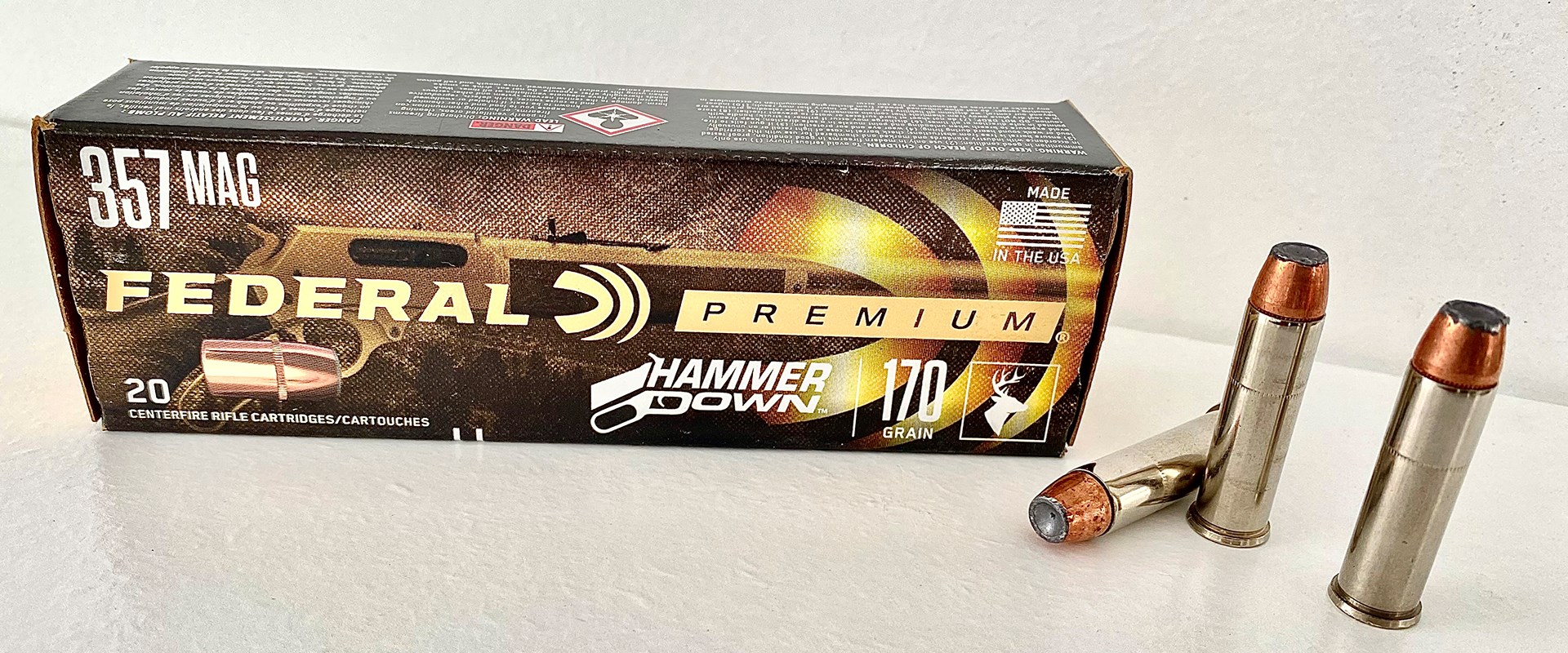
Federal Premium HammerDown
Designed to do great things through lever-action-length barrels, HammerDown was actually a cooperative venture between Federal and Henry. No surprise, then, that HammerDown in .357 Mag. drilled sub-1-inch groups of five at 50 yards with the HUSH.
Featuring a 170-grain bonded hollow-point bullet and a nickel-plated case, HammerDown loads worked flawlessly in the Henry. With a 20-inch barrel, this load produces muzzle velocity of 1600 fps. Federal lists a box of 20 .357 Mag. for $38.99. federalpremium.com
Henry SPD HUSH Lever Action
SPD stands for Henry’s Special Products Division, the gunmaker’s high-tech focused R&D initiative. Hush stands for Henry’s Ultimate Suppressor Host. HUSH lever guns are purpose-built to run suppressed, and feature a skeletonized, M-LOK aluminum forearm, a carbon-fiber tensioned barrel and a receiver-mounted Picatinny rail for the easy mounting of an optic.
My .357 Mag. HUSH weighed just 6.4 pounds empty and even with a suppressor fit nicely within a hunting blind. Ammo capacity was seven-plus-one. HUSH series rifles are available in .30-30 Win., .357 Mag./.38 Spl., .44 Magnum/.44 Spl., 45 Colt and .45-70 Gov’t. for an MSRP of $2,000. henryusa.com
Book a Texas Hunt
For a Texas-style hunt, contact TBD Outdoors at 214-301-3434.