North Dakota
The North Dakota Game and Fish Department is asking hunters to help in its effort to manage upland game birds by collecting feathers from harvested birds and providing them for study. Birds included in the state’s upland game wing survey, which has been underway for decades, are ring-necked pheasants, sharp-tailed grouse, gray partridge (commonly referred to as Hungarian partridge), turkeys and ruffed grouse.
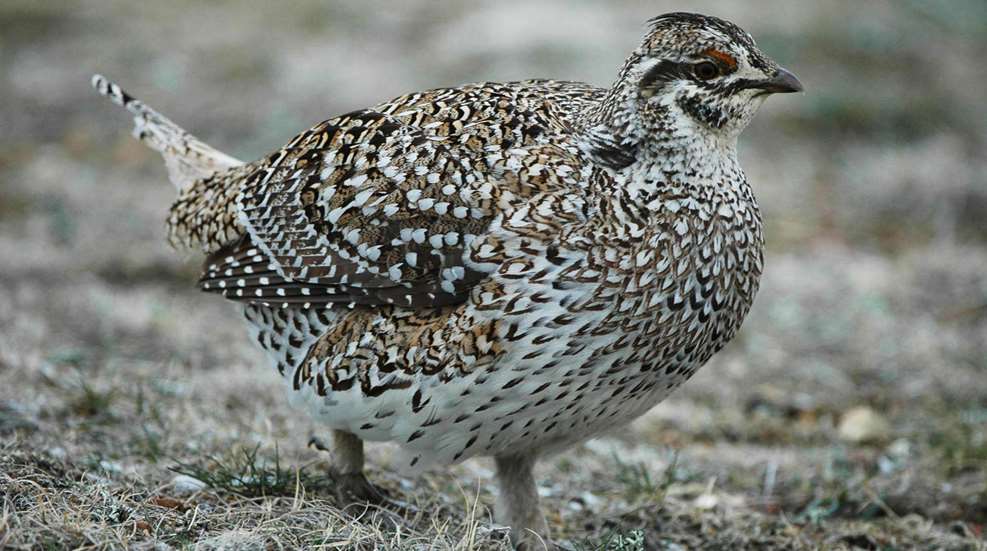
Collecting enough pheasant samples is typically never a problem, but securing sufficient sharptail and partridge feathers can be. Biologists will take as many of those feathers as they can get. The more collected, the better the data. They not only allow the determination of sex and age ratios, but survival, nesting success, hatch dates and overall production.
Hunters interested in receiving wing envelopes should visit the Game and Fish website, or contact the Department’s main office in Bismarck by calling (701) 328-6300 or e-mailing [email protected]. Wing envelopes are also available at the Game and Fish District offices in Devils Lake, Jamestown, Riverdale, Dickinson, Williston and Lonetree Wildlife Management Area near Harvey.
Minnesota
One state over, the Minnesota Department of Natural Resources is also asking hunters to send sharp-tailed grouse feathers. “In northwestern Minnesota, prairie chicken booming grounds are disappearing, sharp-tailed grouse dancing grounds are increasing and interbreeding between the species seems to be increasing,” it explains on a webpage dedicated to the recently launched study. “Interbreeding results in hybridization, which occurs when two different species mate and produce offspring that is a hybrid of both species. These prairie-chicken/sharptail hybrids are fertile and can breed with prairie chickens or sharptails, which can mix the gene pool of both species.”
Hunters are asked to pluck five to 10 tail feathers from each harvested bird, place them in a separate envelope and mark it with the county in which it was taken. By mailing it to Grouse Research, DNR Regional Headquarters, 1201 E Highway 2, Grand Rapids, MN 55744, biologists can analyze the DNA.
Missouri
The Missouri Department of Conservation is asking hunters during its archery deer and turkey season, or fall firearms turkey season, to voluntarily submit turkey feathers. It is seeking two specific wing feathers and three to five breast feathers. A chart and full details are on this webpage.
There is no cost to participate. After tele-checking the bird, simply visit that URL, fill out the form and a postage-paid envelope will be mailed.
Nationwide
With limited budgets, the professionals who manage wildlife often rely on the aid of hunters to collect enough samples for statistically reliable modeling. Sportsmen are encouraged to consult their state’s regulations before opening day to determine if similar programs are underway in their area and to participate whenever possible.