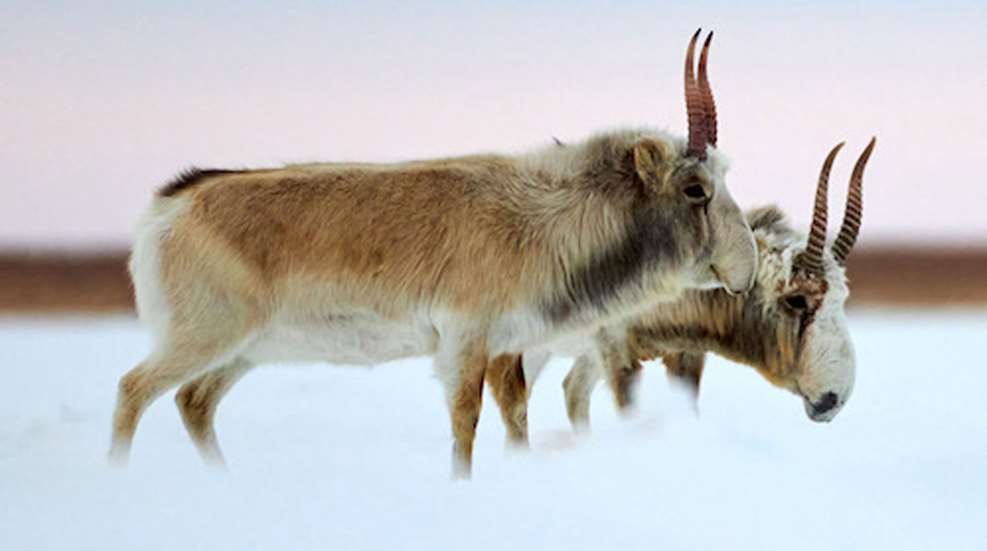
The Saiga (antelope) in Kazakhstan has rebounded from dangerously low numbers and has been recognized as a success by the international body governing threatened and endangered wildlife. The Convention on International Trade in Endangered Species of Wild Fauna and Flora (CITES), consisting of 184 countries, has declared that Saiga are now eligible for sustainable use programs in the Republic of Kazakhstan. This is a dramatic success and a powerful opportunity to continue Saiga conservation.
The Kazak government proposed the new status for Saiga based on detailed evidence. A strong majority of nations that are Parties to CITES agreed. The Wild Sheep Foundation (WSF) is a close partner with Kazakhstan and other Central Asian countries and supported the development of the proposal. CITES met last week at the 20th Conference of the Parties (CoP) in Samarkand, Uzbekistan.
“The saiga population in Kazakhstan has increased nearly 200 percent, from a population of 21,000 in 2003 to an astounding 3.9 million in 2025,” said Kurt Alt, Conservation Director for International Programs for the Wild Sheep Foundation. “Abundance in a species requires expansion in conservation programs for continued success. Abundance creates problems and opportunities for rural communities. The CITES outcome enables control of continued growth through scientifically regulated hunting. Revenue from hunting goes back into programs that extend the success of saiga conservation.”
The successful vote at the Conference was the result of concerted efforts to inform participants about the species' incredible recovery. The Ministry of Ecology and Natural Resources of the Republic of Kazakhstan and the Ministry of Ecology, Environmental Protection and Climate Change of the Republic of Uzbekistan hosted a special side event on the first day of the CoP, focused on Saiga. The Ministries presented scientific data on population dynamics, the socio-economic impacts of overabundance, and Kazakhstan’s rationale for recommending lifting the zero-export quota.
“Following the Ministry’s presentation, Mr. Brian Nesvik, director of the USFWS, was the first to heartedly endorse the Kazakhstan proposal, setting the stage for other delegates from Europe, Africa, and Arab States to find a way to support the proposal,” Alt continued.
With 111 votes in favor, seven against, and 14 abstentions, the proposal was accepted. Parties highlighted Kazakhstan’s success in sustained conservation efforts for Saiga, noting their transparent and collaborative work to ensure sustainable, legal, and traceable trade.
“WSF recognizes Director Nesvik and the USFWS for their leadership in supporting sovereign nations in science-based management of species,” offered Gray N. Thornton, President and CEO of the Wild Sheep Foundation. “The USFWS showed understanding of what it takes to conserve wildlife on landscapes where people live and work, and when a successful and sustainable population is achieved, what it takes to secure that species’ future.”
Most Popular