Ruling on Great Lakes Wolves a Starting Point for State Management

by
posted on September 16, 2017
** When you buy products through the links on our site, we may earn a commission that supports NRA's mission to protect, preserve and defend the Second Amendment. **
michigan_wolves_f.jpg

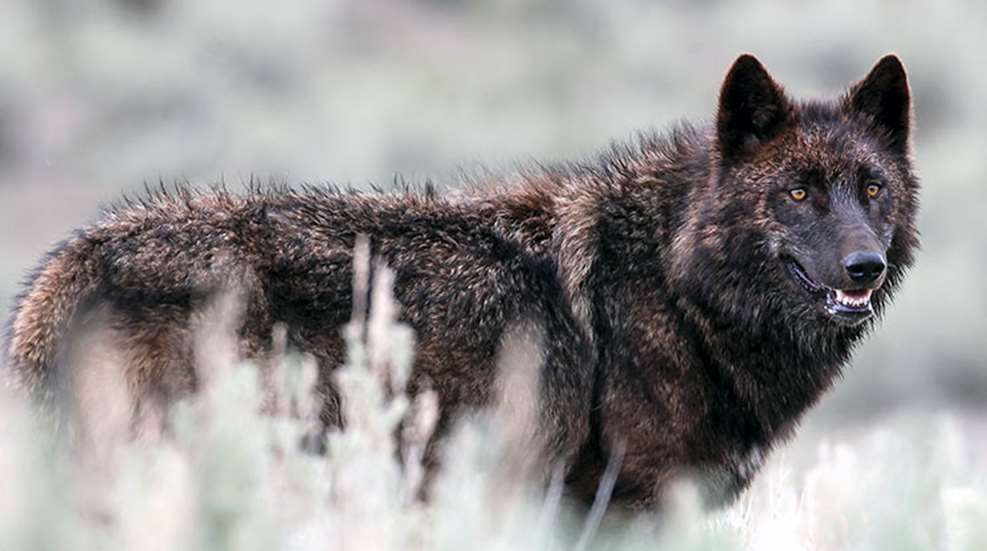
On Aug. 1, the U.S. Circuit Court of Appeals in Washington, D.C., handed down its 54-page ruling on Great Lakes wolves: Gray wolves will remain protected under the Endangered Species Act (ESA) and state management will not be allowed. While the ruling doesn’t immediately remove federal protections from wolves in the Western Great Lakes states of Michigan, Wisconsin and Minnesota, the court’s decision regarding the important issue of a “distinct population segment” (DPS) is a win for sportsmen.

The court opinion states “aspects of the Segment Policy plainly work in both the listing and delisting directions. … The Solicitor’s Opinion, formally adopted by the Service, has now explicitly interpreted the Act to allow the segment tool for delisting.”

In short, this ruling means anti-hunting organizations such as the Humane Society of the United States (HSUS) can no longer argue, as they did in a 2014 lawsuit, that wolves must recover across their entire historic range before delisting can occur. The “segment model” of management can be allowed under the terms of the ESA.

That is indeed a win for proponents of state-managed wolf populations. The court determined that whether there are wolves in regions outside the core recovery area is irrelevant, as the wolves in the core Western Great Lakes are not only secure, but thriving. “Further, for all six of the States with no wolf plans, the Service reasonably concluded that the deaths of any wolves that might enter those States would be so minimal as to pose no threat to the segment’s survival,” states the ruling.

Precedent like that is important in what will surely be more legal wrangling as states with huge wolf populations—Minnesota, for example, with a current wolf population of more than 2,700—try to regain control of their own natural resources.

Latest

LEDE Help Protect
LEDE Help Protect

Hunting on State Parks Helps Protect Biodiversity

Michigan’s Department of Natural Resources (DNR) recently issued a reminder on how hunting helps preserve biodiversity on its 103 state parks. The statement, however, applies nationwide.


First Look: Swarovski AT/ST Balance

Swarovski Optik is setting a new milestone in the world of premium compact spotting scopes with the AT/ST Balance.

#SundayGunday: TriStar Raptor II

The early season may be over, but as most waterfowlers know, the best is yet to come. The month of January is prime for duck hunting, and with that in mind, we want to showcase a new shotgun from TriStar arms that has proven to be a reliable workhorse in the duck blind: the semi-auto, gas-operated Raptor II, featuring enhanced furniture, modern finishes, and a dollar-to-gun ratio that is off the charts. Learn more about it in this exclusive video.

Flint and Tinder Launches Realtree Edge Camo Pajama Collection for the Holidays

Flint and Tinder, the American-made apparel brand owned by Huckberry, has unveiled a highlight of its holiday collection—the Flint and Tinder x Realtree Edge Camo Pajama Collection. A limited release for this holiday season, this line delivers cozy comfort with an outdoors edge for those who love to blend in and unwind.

Recipe: Air Fryer Spice-Crusted Venison Roast

Venison is ideally suited for air frying, especially tender cuts such as the loin, inside or center round or top sirloin.

Florida’s First Bear Hunt in a Decade Opens Dec. 6

A Florida court denied a temporary injunction last month that would have stopped the state’s first black bear hunt since 2015. One hundred and seventy-two hunters, who paid for the opportunity to help manage the black bear population, can head afield in search of a Sunshine State bruin beginning Saturday. 

Interests


Get the best of American Hunter delivered to your inbox.