Quick, name an Oregon optics company. Nope, take another guess, and maybe another. Over the past few years Oregon has turned into a hotbed of hunting optics, and one of the newest players is Kruger Optical. Its engineering and assembly headquarters is in the small town of Sisters, 15 miles southeast of the Three Sisters Wilderness, named for a trio of tall volcanic peaks.
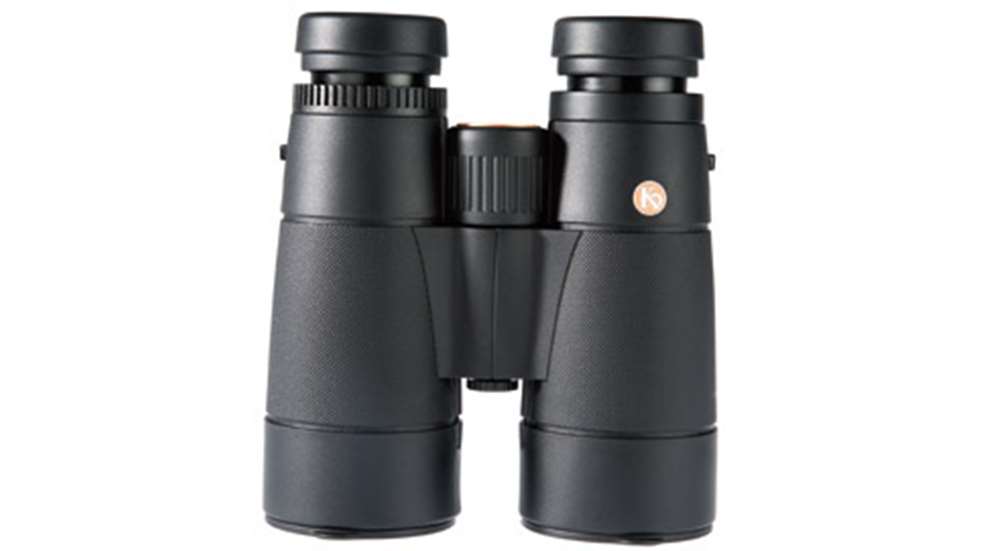
Kruger offers a variety of very affordable hunting optics. Recently I tested the 10x50 Backcountry roof-prism binocular and 4x-16x-40mm K4 riflescope. Kruger’s suggested retail price for the Backcountry is $317 and for the K4 $195, though a Web search turned up both at slightly lower prices.
In recent years I’ve learned not to judge optics only by price, since I’ve been surprised too many times. The Backcountry binocular was initially field-tested during spring black bear season in southwestern Montana. Over several days, my wife, Eileen (also an optics writer), and I carried various full-sized 10x binoculars into the nearby mountains to compare their optical performance.
The first day we carried the Kruger we also took along a well-regarded $900 European-made 10x42 that’s always performed well in open-country hunting. We traded the two binoculars back and forth throughout the day, comparing not only views of mountain meadows where bears might feed but other wildlife, including deer, elk and birds.
Both of us concluded the Backcountry was just as sharp and bright as the Euro-glass, probably because of the slightly larger objective lenses and slightly greater actual magnification. (If the Euro is a 10x, the Kruger is an 11x.) With straps and lens covers both binoculars weighed slightly more than 2 pounds, so there was no disadvantage in carrying the 10x50.
Color transmission was also slightly better in the Backcountry, and it didn’t cause Eileen any discomfort even during long periods of glassing. She’s more sensitive than me to eyestrain caused by misalignment or “doughnut vision.” There’s always a slight rim of unfocused view even in the very best binoculars, but if the fuzz-ring takes up the outer third of the field, many people develop eyestrain due to their eyes constantly attempting to focus the entire view. The Backcountry’s field of view is quite clear except for a very thin ring at the very edge, and the long 20mm of eye relief was appreciated by two hunters who wear glasses. The screw-in eyecups have a halfway notch for flexibility.
The Backcountry felt solid, with no discernible slop in the adjustments, even after considerable spring bear glassing and summer prairie dog shooting. Neither was as rough as typical Alaska hunting, but we didn’t baby the binocular.
After three months of intermittent field use, I froze the Kruger overnight, then dunked it in a sink of warm water. It’s impossible to keep all atmospheric moisture out of sealed and purged optics after they leave the factory, and there was a slight amount of interior fogging that quickly dissipated, but no tell-tale air bubbles rose from any of the seals.
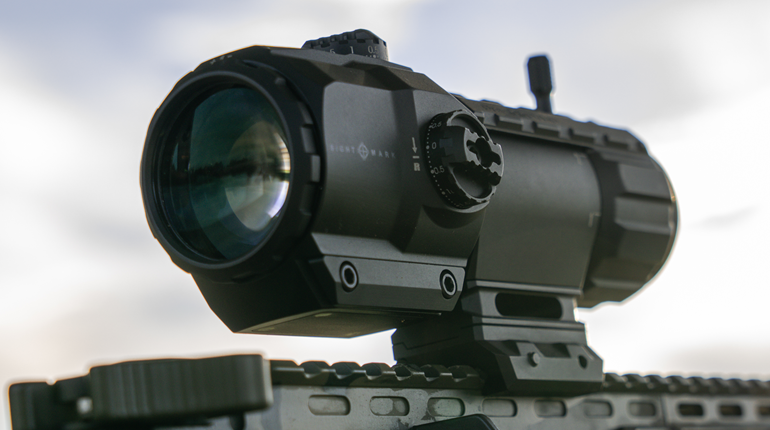
The 4x-16x-40mm K4 riflescope is a typical 21st-century model with a 4x zoom ratio, adjustment turrets designed to be twirled in the field and a side-focus knob. It was first tested on a Remington 700 BDL in .17 Remington, where the adjustments proved quite repeatable as long as they were cranked at least four clicks past where needed then clicked back again, eliminating backlash.
The optics rated a “6” on my nighttime optics chart, a series of 10 alternating black-and-white lines that begin 1 inch wide at the top of the chart and end up 1⁄6-inch wide at the bottom. Scopes are rated by the smallest line seen clearly at 25 yards when illuminated by a 100-watt light bulb placed 25 yards from the chart. So far all scopes have tested between “5” and “8,” the 3/8-inch and 1/8-inch lines; the "5" was an uncoated Weaver from the 1950s, the “8’s” all were $1,000-plus scopes from the 2000s. A rating of “6” is typical of modern multi-coated scopes in the sub-$500 range, and matches many scopes costing more than twice as much. In the field the K4’s optics proved entirely adequate for shooting tiny rodents at extended ranges.
After varmint season I mounted the K4 on my Heym SR-21 .300 Winchester Magnum to see how it held up against real recoil, using a very accurate handload with the 168-grain Barnes Triple Shock at 3200 fps. The Sierra Infinity program calculates the recoil energy at 32 ft.-lbs., more than enough to shake up defective scopes.
Shooting the square mostly resulted in small groups—except for a couple of times when I forgot to click past the setting desired. In both instances the shot landed about an inch from where it should have, but a second shot went exactly where desired. The adjustment clicks averaged 1/4 inch, as advertised, at a lasered 100 yards.
After shooting the square, I shot three, three-shot groups to see how well the scope held zero. (In my tests many inexpensive and even high-priced scopes have failed after 20-40 rounds on a .300 magnum.) The three final groups measured .57, .75 and .51 inch, center to center, and the 16x magnification let me know one shot in the .75 group was pulled slightly. All three groups landed in the same place.
Advertised eye relief is 3.75 inches. In a flashlight test, with the scope’s quick-focus ring turned all the way in, it measured 4.5 inches at 4x, 4.25 at 10x and 3.75 at 16x. The K4 also passed the freeze/dunk test. There isn’t any weight listed on Kruger’s website, but on my scale the scope went 14.2 ounces, no more than many 3x-10x scopes.
Kruger engineers all its optics in Oregon then has some products and all of the parts made to specifications in Asia. Many are assembled in Oregon, including the K4 riflescopes. Based on the two optics tested, they appear to be a very good deal. In fact the Backcountry 10x50 is the best bargain in a roof-prism binocular I’ve ever tested. It’s not just good for the price, it’s plain good.