Know-How: Shooting the Bull

by
posted on August 29, 2016
** When you buy products through the links on our site, we may earn a commission that supports NRA's mission to protect, preserve and defend the Second Amendment. **
shooting_the_bull_f.jpg

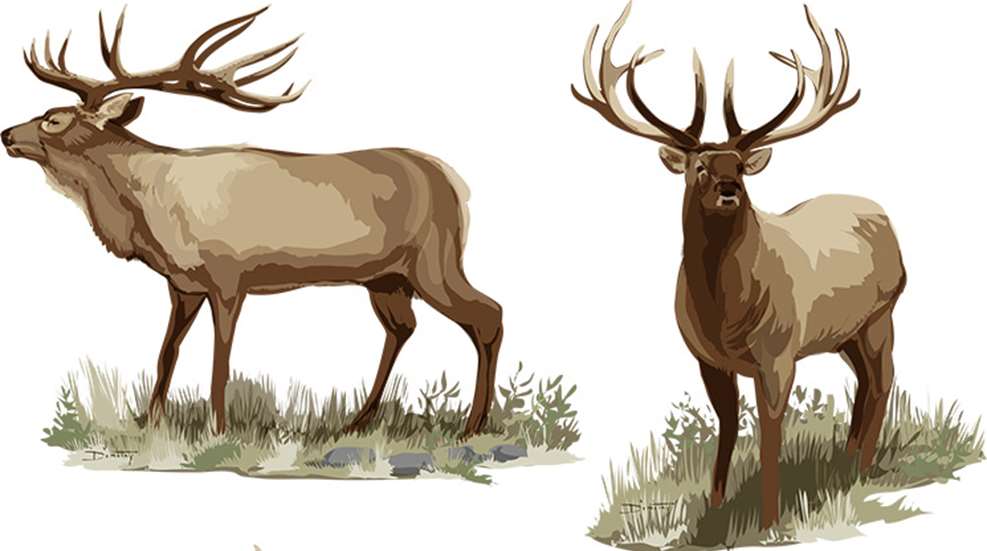
A bull elk weighs 700 pounds and doesn’t easily surrender its spirit. Mud-caked hide, massive bones, second-to-none cardiovascular efficiency and mountainous terrain make these beasts extremely tough to recover if not hit perfectly. So bowhunters should only attempt ideal shots.

The ideal bow shot and the one that offers the largest margin for error is taken while the elk stands broadside, slightly downhill from the shooter. Aim at the crease formed by the foreleg and chest, 3 inches below centerline. Perfectly executed, the arrow will destroy the aorta and perforate both lungs before exiting low behind the offside shoulder so that blood pumps to the ground. This animal will expire in seconds.

An elk’s lung area is roughly 12 inches wide by 12 inches high when broadside. An elk’s humerus (foreleg bone) does not run vertically from chest to backbone, but rather at an angle toward the neck before angling back and up to meet the scapula. This structure forms a pocket—protected only by ribs and the triceps muscle—that exposes the heart and lungs to arrows. Just don’t hit too high.

But what if the bull doesn’t turn broadside? Quartering shots are acceptable if the angle isn’t too extreme, as a one-lunged elk is often a lost elk.

“If I can’t envision a double-lung pass-through, I won’t take the shot,” says Oklahoman Bill Bolin, who’s taken 30-plus elk with his bow.

Yet elk often come in looking for the caller and present a head-on shot. This angle immediately reduces the vital zone to the size of a grapefruit. It’s not ideal, but it can be done.

“If the elk is downhill and facing me with his head up, I’ll aim at the base of the neck,” explains Bolin. “But it’s got to be close, so I know I can hit heart.”

Latest

Nomad 30 Lede 2
Nomad 30 Lede 2

#SundayGunday: Dead Air Nomad 30

This week on #SundayGunday, we’re checking out the Dead Air Nomad 30, the 30-caliber hunting stalwart of Dead Air’s suppressor lineup. The stainless-steel can tips the scales at less than a pound, despite being rated for calibers up to .300 Norma Magnum, and 4400 ft.-lbs. of energy. For more on the Nomad 30, check out this exclusive video.

Eye on the Future of Hunting and Conservation

The dedication to passing on the enthusiasm and understanding of hunting’s role shows in the number of courses, seminars and special hunts already on the calendar with various state game and fish departments, and conservation organizations. Here are a few that crossed my desk just last week, but there are dozens of others—likely a few near you.

Funding Boost for Migration Corridors

On Feb. 11 Secretary of the Interior Doug Burgrum announced nearly $8 million would be added to the Western Big Game Seasonal Habitat and Migration Corridors grant program’s base funding of $2 million this year.

Winter: Prime Time for Small Game Hunting

Chasing rabbits and squirrels with friends is the perfect way to pass the cold winter days.

Kovix Suppressors Moves Headquarters to Montana

Kovix, a titanium suppressor manufacturer, has announced the company had relocated headquarters to Kalispell, Mont.

Proposed Oregon Petition Would Ban All Hunting

A petition to ban all hunting in Oregon is getting close to making this year’s ballot. Proponents of the PEACE Act (an acronym for “People for the Elimination of Animal Cruelty Exemptions Act”) are reporting they have amassed about 100,000 of the 117,173 signatures needed for the petition to make the November ballot.

Interests


Get the best of American Hunter delivered to your inbox.