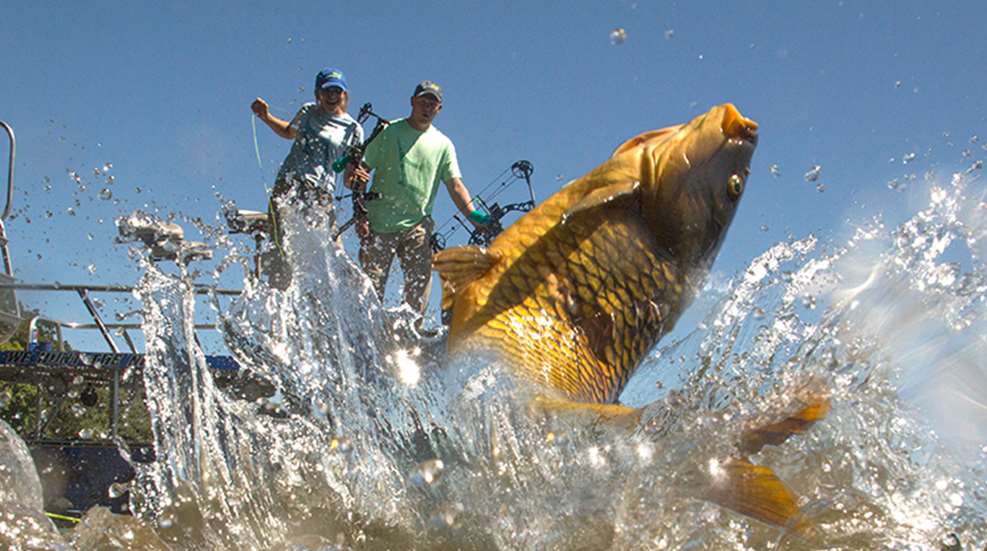
Is it hunting, or is it fishing? To me bowfishing is more like hunting for fish with a bow, but whatever you call it, nearly all sportsmen agree it’s wildly fun. Just don’t assume it’s easy.
Historically, bowfishers have targeted non-game species like carp, but I suspect there’d be more participants if better-eating species were legal.
Newsflash! In portions of the tidal Potomac River, blue catfish and snakeheads have been deemed invasive and therefore can be legally bowfished there. Both species are challenging and delicious, and by hunting them you’re helping Maryland’s conservation efforts. Here’s how.
While anyone can venture to the middle section of the Potomac, find a public boat launch and fling arrows, this sport is specialized and the river’s tides are so influential that it’s best to hire the expertise of a professional like Capt. Bob Wetherald of Mid River Guide Service. Wetherald offers nighttime bowhunts for blue cats and snakeheads from March to October.
Wetherald uses an 18-foot, flat-bottom johnboat for its stability and ability to navigate shallow water. It’s customized with banks of LED flood lights, spotlights, safety rails, Yeti coolers and shooting platforms to maximize bowfishers’ success while ensuring their safety. Then it’s all about finding the fish and hitting them.
“During the nights most of the catfish move to the flats to feed,” says Wetherald. “But big fish over 20 pounds prefer channel edges adjacent to the flats in sparse grass were they can ambush a meal.”
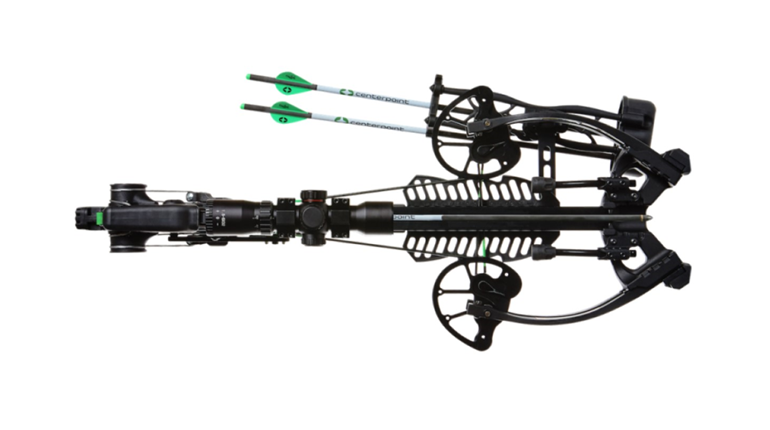
Bowfishing equipment is also specialized. While any bow with an arrow attached to it by a string can work, archery companies cater to bowfishermen with specifically designed gear. Although shots come at ranges from 1-20 feet, the typical shot is a few feet from the boat at a 45-degree angle downward into a couple feet of water. Aim for the large meaty area just behind the gills, but any shot that harpoons the fish in the head or body is effective. Achieving such might be easy if it weren’t for a phenomenon of light called refraction.
Refraction occurs when light waves of the same frequency traverse from one medium to another medium at an oblique angle. Air and water have different refractive indexes. Physicists could write volumes on it, but what fish hunters should know is this: When viewing a fish in water at any angle greater than straight down, the fish will actually be lower than perceived by the shooter’s vision. To understand this, fill a glass bowl full of water and stick a pencil into it at an angle. You’ll see that light waves are bent by the water so that the pencil’s tip is not where it appears to be.
So to hit an underwater fish with an arrow, the fish hunter must aim low. How far low depends on the angle to the fish (the distance to the fish and its depth below the shooter), and that’s an art best mastered via experience. If the fish is within inches of the surface, for example, you’ll learn to shade mere inches low. If it’s a couple feet deep and 5 yards distant, you might aim 2 feet below it.
Aiming is best accomplished either instinctively or by using the “arrow gap” technique. Sights are impractical. The gap technique is a method to gauge your aim by looking at the target in relation to the tip of the arrow. An inch of perceived gap between the tip and the fish might translate to the arrow impacting a foot below the fish at a certain distance, but everyone’s perception is different. With trial and error you’ll figure out what works for you, provided you keep a consistent grip and anchor point. Like most archers, my anchor point is the corner of my mouth, and I use this as a reference for how far to draw the bow back during each shot.
When you connect with a fish, refrain from raring back on the bow as some fishermen instinctively do as if setting a hook. Instead, keep steady pressure on the line and reel. Larger fish are best landed by net or gaff.
Once in the boat, place the flopping fish directly in an ice chest. If the arrow is buried in the fish, thrust it all the way through. Then unscrew the arrowhead to fold down the barbs or remove it altogether to allow backing out the arrow. Then slam the cooler lid shut and high-five your buddy.
If you’re like me, bowfishing—or fish hunting—is like shooting doves for the first time: It’s great fun with friends amid wonderful weather, and if you nail a few fish out of many attempts, you’re doing good! If you miss—and you will—simply reel in the arrow and take another crack.