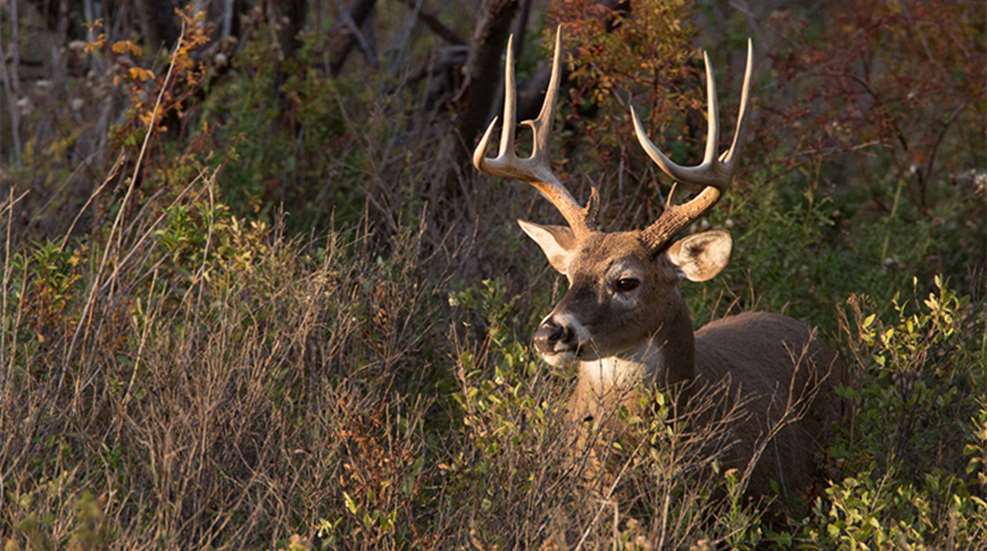
There’s no time of year whitetail hunters enjoy more than the rut; that narrow window of time when bucks drop their guard and are willing to show themselves at any time of day as they pursue receptive does. But across the country, deer season kicks off well before the rut begins. On opening day, bucks have a much less busy schedule; they’ll concentrate on finding food and water, sleeping and avoid being killed and that’s about it.
Whitetails actually spend a good portion of their day bedding and resting. On average, deer spend between 65 and 75 percent of their time bedded. Those numbers will be lower during the rut and higher during the bitter winter months, but on average a whitetail buck spends three-fourths of his day snoozing; and, in fact, that’s exactly what the deer are doing—snoozing. Prey species like whitetails have adapted an extraordinary ability to rest for short periods and reap the benefits of sleep without dropping into a very deep sleep. Even a dozing deer can instantly bolt and run if they see, hear or smell danger.
Science in teaching us more about the bedding habits of whitetail deer, too. An article published in the journal The Southwestern Naturalist in 2008 examined the movement and behavior of deer across all age classes throughout the year. Bucks were shown to have great fidelity to their home range, and moved very little in the late summer and early fall period leading up to the pre-rut. In short, whitetail bucks find a bedding site they like, and will spend the bulk of their time there during the first weeks of hunting season.
The late deer researcher and writer Charles Alsheimer probably spent more time observing bedded deer than anyone in history, and ultimately made several key discoveries. For starters, Alsheimer noted that bucks seemed to favor a bedding position that placed their back toward the prevailing wind. This behavior, Alsheimer suggested, was a defensive mechanism that allowed deer to see any predators approaching from in front and smell predators approaching from behind. That way, deer can bed and rely on their sense to alert them if danger approaches. Even when bucks are napping, they never truly drop their defenses.
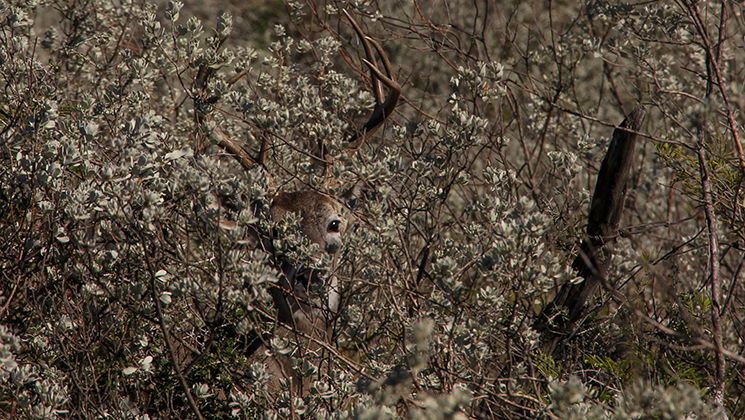
Scouting Bedding Areas
Since deer spend so much of their time in their bed, it’s very productive to concentrate your efforts around these locations early in the season. The term around is critical, as you don’t want to risk bumping a buck from his bedding area; alerting the deer you’re targeting the moment you enter the woods has effectively ruined your hunt before you ever climb into your stand.
Therefore, locating a buck’s bedding area should be your primary focus early in the season. Sometimes this is as simple as watching a buck consistently bed down in an agricultural field from your kitchen window. Other times it’s not nearly so simple. The majority of hunters believe that a buck will always select a bedding location that’s in the deepest, gnarliest tangle of thorns and blown-down trees in the woods, but that’s not always the case. An out-of-the-way area that offers an easy escape and allows the deer to monitor its surroundings effectively is prime bedding, and these areas are usually near food and water sources, as a buck will travel as little as possible to conserve energy and avoid predators early in the season.
The traditional method of scouting—ambling through the woods until you find deer sign—works just find for finding beds, but using technology to your advantage can be a real help. Game cameras are a great help in monitoring deer movements, and with the use of cameras you’ll get a good idea of the deer’s direction of travel at certain times of the day. What most hunters find is that deer—bucks included—tend to move in the same direction at roughly the same time of day or night.
By determining a deer’s direction of travel as you move toward food sources, you can also backtrack their movements to pinpoint bedding areas. Is a buck appearing on your camera every day between seven and eight in the morning headed east? Then slowly move the camera to the west. If the pattern follows as expected, you can work backward and get a good idea which general area a buck uses as his primary bedding location. Thermal imaging cameras like the FLIR Scout TK are also very useful to track deer movement at night. Where legal, thermal cameras offer you incredible insight into what deer are doing under cover of darkness. After a few nights in the woods with a thermal, you should be able to accurately pinpoint bedding locations.
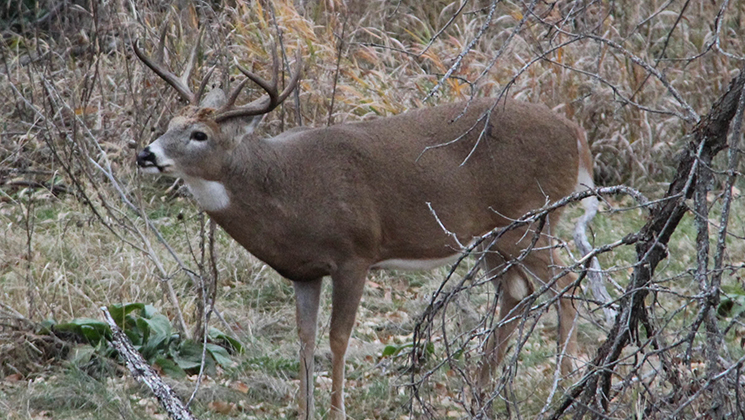
Plan of Attack
Your job leading up to opening day is to identify where bucks are bedding. If you accomplish this, you’ve already laid the foundation for a successful early-season hunt. When you identify a buck’s bedding area, always approach from downwind, simply because in most circumstances a deer’s sense of smell will alert it to your presence before its eyes and ears will. Choose a stand that allows you to approach using natural cover, and treat every walk into the stand as though it were a stalk. I believe we ruin far more hunts than we imagine by simply alerting deer during our march to and from a stand or blind location, so make every effort to approach your setup without spooking deer.
Your homework prior to opening day should have allowed you to place a stand on the perimeter of a buck’s bedding area. The stand setup should be close but not so close that you’ll spook the deer. By contrast, the closer the stand is to the bedding area the more likely the odds that the buck will pass by your stand on his way to feed without getting distracted. If you’ve done things right and you’re in the proximity of a buck’s core bedding area, there’s roughly a 70 percent chance that buck is close by. The key is to be on-stand when the deer finally rises and starts to move.