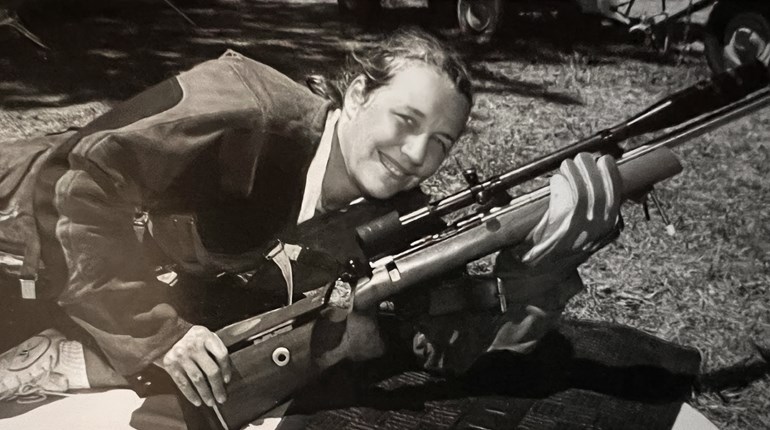
The coyote came in fast; too fast to think about the shot, just shoot. The safety was pushed off via muscle memory before the gun came to shoulder, there was no thought to the mechanics, it was simple instinct; the result of hundreds of hours practicing with a rifle in hand. She had heard the call—that was certain—but she meant business, and so did I. One tickle of the trigger and it was over; the .22-250 had another pelt to its credit.
My chosen predator rifle is no fancy rifle; it’s a Ruger 77 Mk II, with a Timney trigger and a Hogue Overmolded stock, but it shoots very well, and it fits me like a glove. However, it’s chambered in .22-250 Rem.—a cartridge that has the case capacity to seal the deal with an exclamation point.
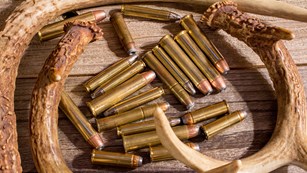
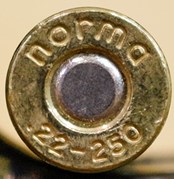 Arthur Savage’s 1915 release of the .250/3000 Savage—a cartridge which hit an unprecedented mark, driving an 87-grain bullet to 3,000 fps—ushered in the velocity race. No other cartridge had this claim to fame, launching a projectile so fast, and it didn’t take an awful long time before the ballistic experimenters had their way with Savage’s design. Though there were many early variants, by 1937, a trio of gunsmiths—J.B. Smith, J.E. Gebby and Grosvenor Wotkyns—had settled upon a wildcat design they called the ‘.22 Varminter’: Savage’s .250/3000 case necked down to .224” caliber bullets.
Maintaining the same case length as its parent—1.912”—but with a slightly steeper 28˚shoulder angle, the .22 Varminter came close to the muzzle velocities of the .220 Swift, yet burned much less powder. To those in the know, it was a well-guarded secret, as it wasn’t very difficult to re-barrel an existing rifle for the new wildcat. It does, after all, share the same case head dimensions as the .30-’06 Springfield. It was more efficient than the Swift, was easier on throats and barrels, and yet still gave the fantastic field performance that shooters desired. Browning began to offer rifles chambered for the .22-250 wildcat in 1963—my buddy Donnie Thorne has one that still shoots great—even though no major manufacturer offered ammunition for it. It would take two more years for Remington to adopt the cartridge—giving it a last name after 28 years—and as Remington has done so well throughout the years, it legitimized a wildcat cartridge. Offering a line of SAAMI-approved ammunition, as well as their new-fangled Model 700 rifle chambered for it, prairie dog hunters and woodchuck haters alike gave praise, and the .22-250 was cemented in cartridge history. Thank you Remington, I’m glad you got behind this one.
It will drive a 55-grain bullet to a muzzle velocity of over 3,600 fps, and some of the lighter offerings will exceed 4,200 fps; making the .22-250 a flat-shooting cartridge that is absolutely perfect for varmints, yet suitable for the biggest coyote ever born. Recoil is minimal, being far less than the .243 Win., and while I personally feel it’s a bit light for deer and similar sized game, it sits atop the heap for the smaller game that you’d use a centerfire rifle for. My own pet loads are built around a Sierra 53-grain flat base MatchKing, over a suitable charge of Hodgdon’s H380 powder. It’s an interesting note that H380 powder was actually named for its use in the .22-250 case—Bruce Hodgdon used a 38.0-grain charge of this surplus military ball powder in the .22-250, under a 55-grain bullet, for the most accurate results he’d ever seen. I’ve tried other powders, with varying degrees of success, but ultimately I resort to H380; it just plain works in this case. The .22-250 Rem. is sparked by a standard large rifle primer, and I've seen my best groups with the Federal Gold Medal GM210M primer; it helps to keep velocities uniform, and that leads to tight groups.
 If I had to bring out any flaw in the .22-250 Rem., it would not be with the cartridge, it would be with the barrels. You see, the standard twist rate for a .22-250 is 1:12, as opposed to the .223 Remington, which more often than not comes with a 1:8 twist. What this does, is handicap the .22-250 Rem. to using bullets of 55 grains or less. While on the surface this may not seem like a huge issue, when you look at the fantastic .22 caliber bullets that weigh 60 grains or more, you’ll feel like you’re missing out—like I do. These bullets—like the Swift Scirocco II at 62 grains, the Sierra Tipped MatchKing at 77 grains, the 80-grain Berger VLD and others—all give fantastic downrange performance on both varmints and targets, but can’t be properly stabilized with the 1:12 twist rate. If you want to use these heavy-for-caliber bullets, you’ll need a .22-250 with a 1:8 twist, which is available in a custom barrel, but, for reasons I cannot explain, most of the factory barrels remain 1:12.
Many of my friends and family have a .22-250 Rem. in their safe, and we often hunt coyotes together in the winter, after the deer season has closed. I’ve yet to see a rifle chambered for this cartridge that wouldn’t produce sub-MOA groups, with many of them printing ½ MOA out to 200 or 300 yards. If you’re in the market for a serious coyote rifle, there are many options, but you really can’t go wrong by choosing a .22-250 Rem.
Looking for previous installments of Behind the Bullet? We've got you covered.