The turn of the 21st century saw a large number of new cartridges released, including some gems like the Winchester Short Magnum series, the Remington Ultra Magnum series, and Hornady’s efforts in releasing a pair of .17-caliber rimfire cartridges. The .17 HMR, or Hornady Magnum Rimfire would go ahead to set the rimfire world on its ear, but its little brother—the .17 Mach 2 or .17 HM2—didn’t quite have the fanfare. Nonetheless, it is a sound design that fills a niche in the rimfire world. Let’s take a look at what makes the .17 Mach 2 tick.
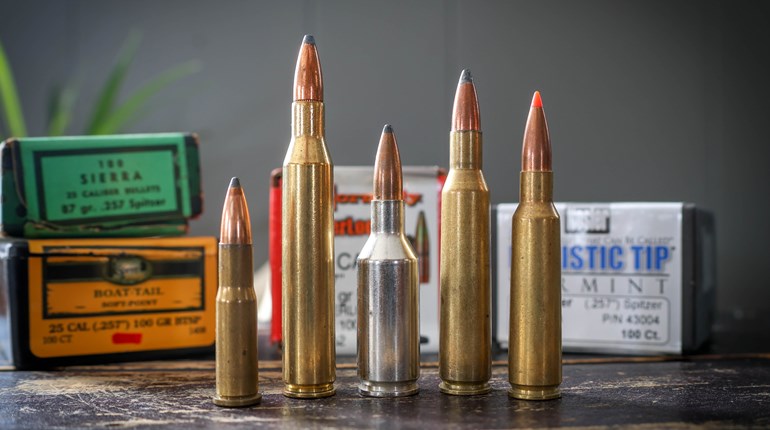
Rimfire cartridges date back to the middle of the 19th century, and were not relegated to small bores only. The famous Winchester 1866—the Yellowboy—was chambered for the 44 Rimfire cartridge. Our beloved .22 Long Rifle was actually the fourth in a series of .22-caliber rimfire cartridges, following the .22 Short, .22 Long and .22 Extra Long. Seemingly content with the choices of .22s, we didn’t see another significant rimfire until 1960, when Winchester gave us the .22 Winchester Magnum Rimfire. Remington followed about a decade later with the 5mm Remington Magnum, which garnered very little interest; it surely appeared that America was content with the .22 LR and .22 WMR. Gunsmith and ballistician P.O. Ackley began swaging his own .172-inch-diameter bullets for his wildcat .17 PeeWee, and then proceeded to neck down the .218 Bee and .22 Hornet cases down to hold those .17-caliber bullets. Remington took their .222 Magnum or .223 case (depending on who you ask) and necked it down to .17-caliber, resulting in the .17 Remington being released the year I was born—1971—and bringing the Seventeens to the masses.
Hornady saw the wisdom of mating the .17-caliber bullets with rimfire cartridges, releasing the .17 Hornady Magnum Rimfire in 2002, and the 17 Mach 2 in 2004. The former mated the .22 WMR case with those diminutive bullets, while the .17 Mach 2 uses what appears, at first, to be the .22 Long Rifle case, but that’s not it (that distinction belongs to the lesser-known .17 PMC/Aguila). The .17 Mach 2 uses the CCI Stinger case, which is just a bit longer than the standard .22 LR, necked down to use those .17-caliber bullets. The .17 Mach 2 case measures 0.714 inches—as opposed to the .22 LR case which measures 0.613 inches—though the two share the same cartridge overall length of 1.000 inches on the nose. The .17 Mach 2 uses the thicker Stinger rim for headspacing, despite the prominent shoulder.
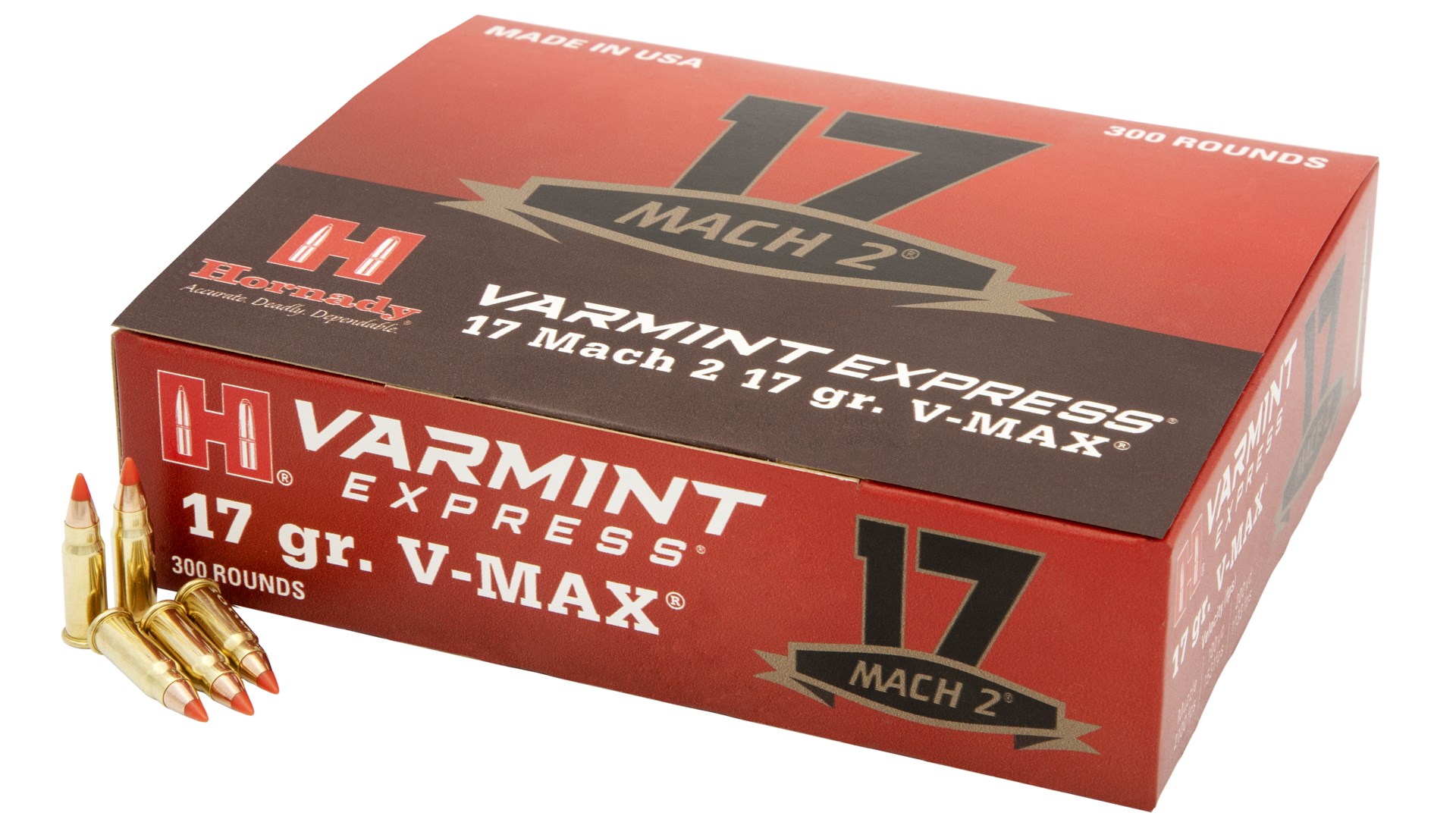
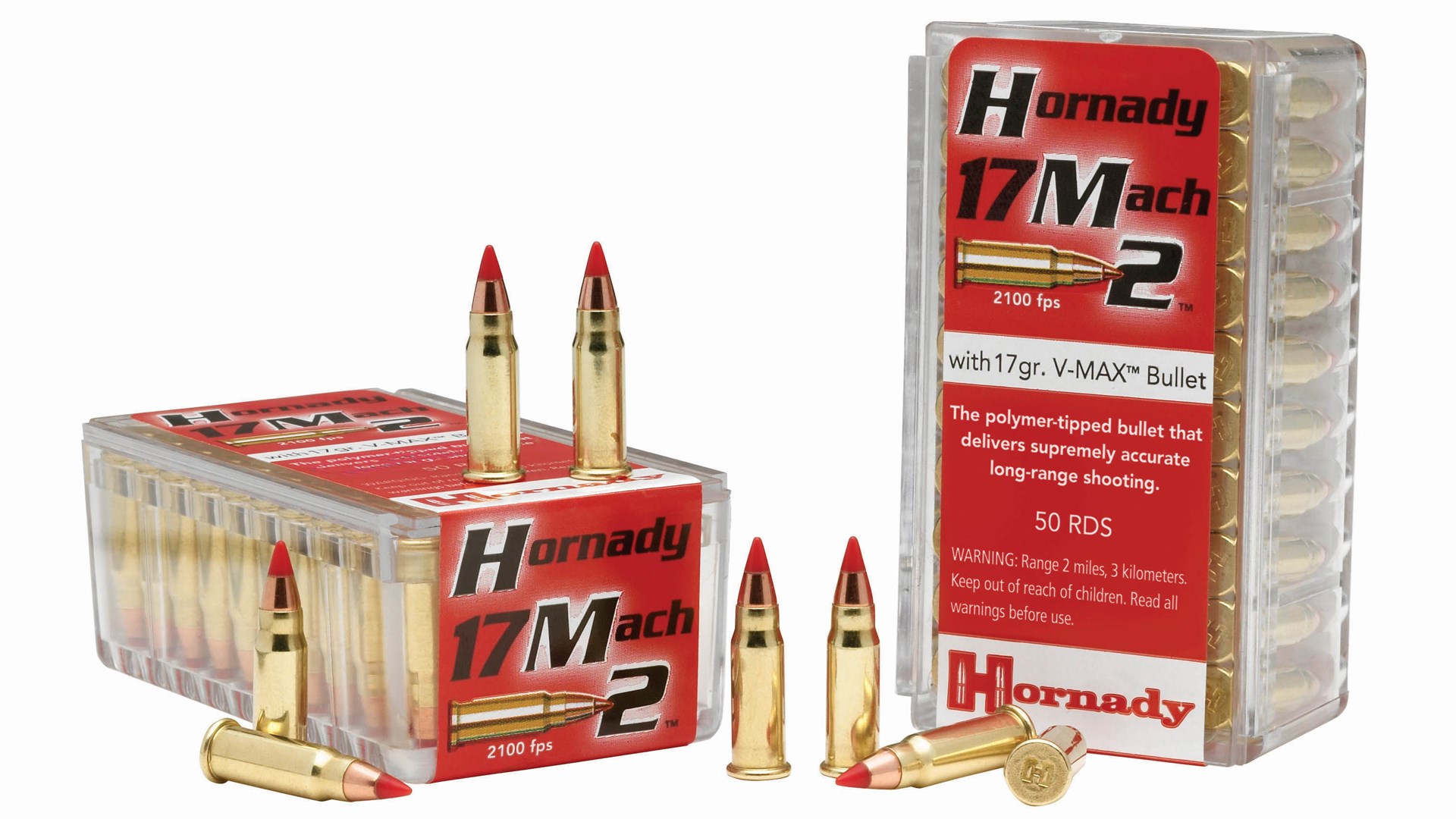
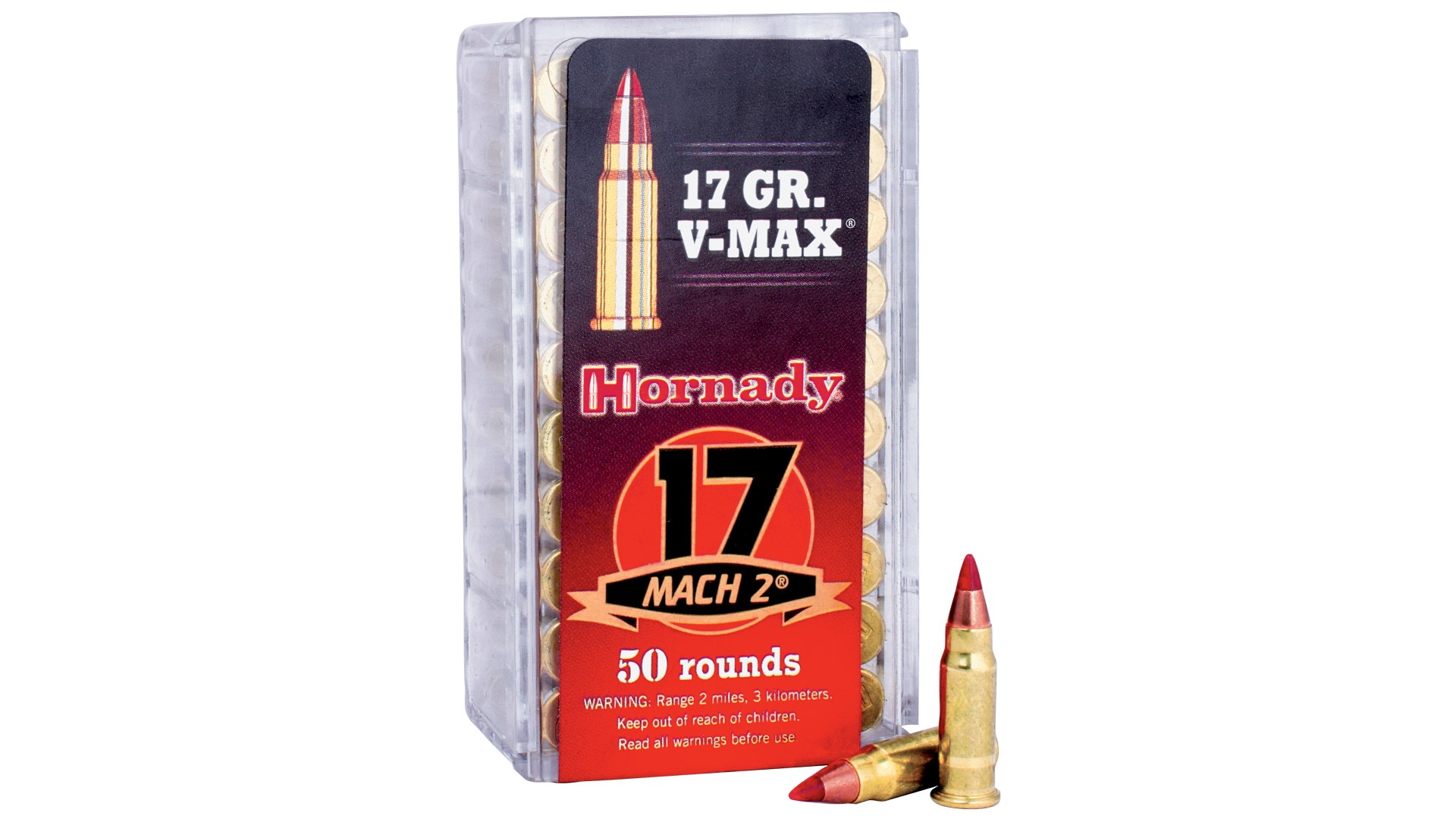
The Hornady load for the .17 Mach 2 sees a 17-grain V-Max bullet driven to a muzzle velocity of 2,100 fps. While considerable lighter than any .22 LR projectile, the higher velocity makes the .17 Mach 2 a 125-yard gun without too much trouble at all. Using a 100-yard zero, you’ll see the bullet rise less than ¾ inch at 75 yards, yet the bullet will only drop 1.6 inches at 125 yards, and 4.3 inches at 150 yards. If most of your shooting is done inside of 100 yards, a 75-yard zero will see virtually no mid rise, and only an inch of drop at 100 yards. The .17 Mach 2 isn’t exactly great in the wind, as a 10 mph crosswind will push that bullet nearly 4 ½ inches at 100 yards, so you'll have to keep that in mind if want to take the little guy out to those ranges. That 17-grain V-Max only generates 166 ft.-lbs. of energy at the muzzle, at retains a mere 88 ft.-lbs. at 100 yards, so it’s probably best suited for the smaller species, especially considering the frangibility of the bullet.
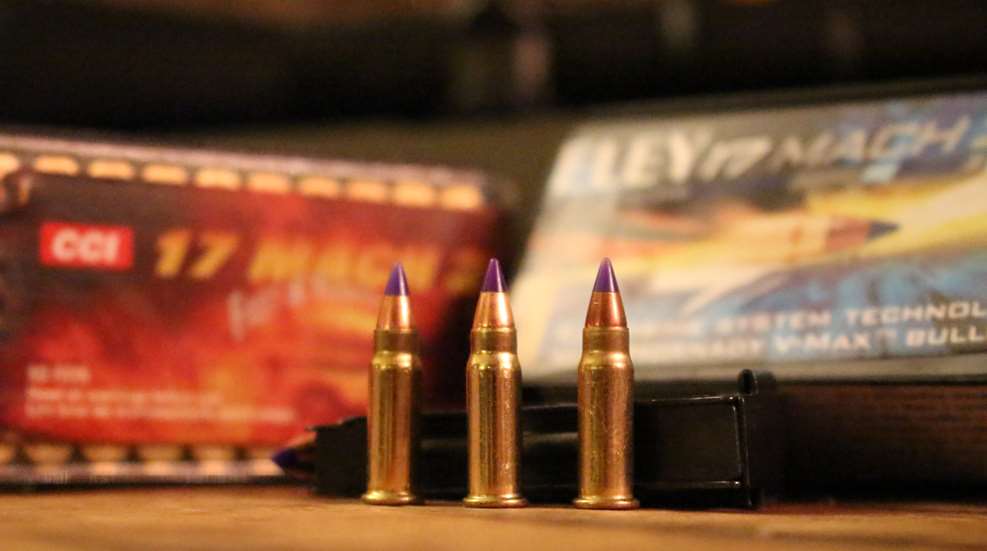
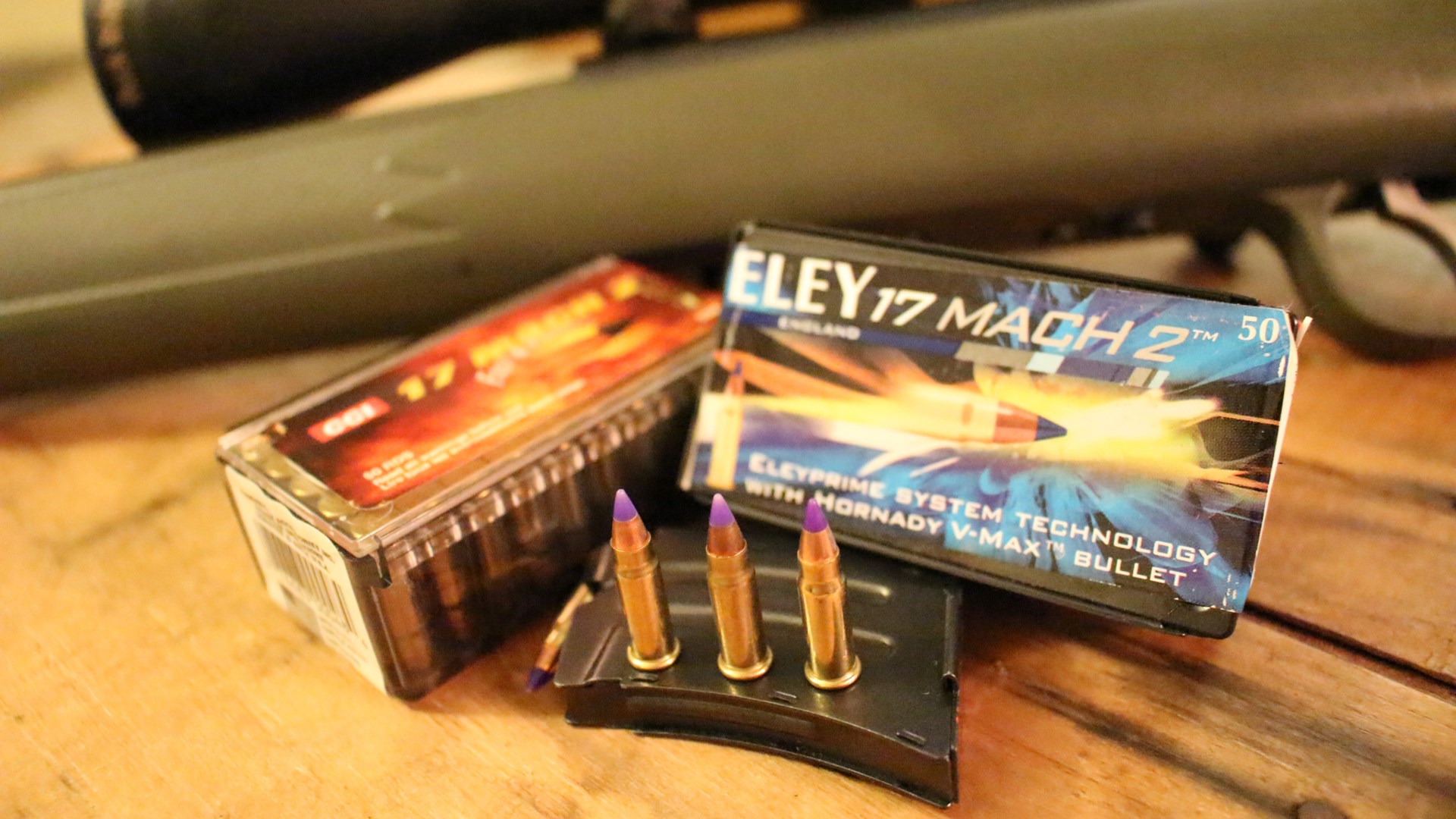
The problem with the .17 Mach 2 is a consistent supply of ammunition. Early on, there were multiple loads available from Hornady and CCI alike, as well as Eley, but today only two loads remain: the Hornady 17-grain V-Max, and the CCI 17-grain VNT. Both loads use a polymer-tipped spitzer, though the CCI load runs at 2,010 fps – 90fps slower than the Hornady load. Rifles for the .17 Mach 2 are nearly as limited, as Ruger once offered a 77/17 so chambered, but you’ll now essentially be limited to Savage, who still lists three rifles for this cartridge. There are two bolt-action choices, and an autoloader.
What is the future of this diminutive rimfire cartridge? Well, it seems to have been on a downward slope for at least a decade, but that doesn’t mean it has hit rock bottom. I think there is enough demand for this little guy to save it from the fate of the 5mm Remington Magnum, though it is probably the least popular of the major rimfire cartridges. The major issue comes from within Hornady’s own house: the .17 HMR is just too good and dominates the market where .17-caliber is concerned. It offers no real difference in recoil or report, and the higher velocity makes a difference out past 100 yards, so I feel the HMR is going to make life very difficult for the .17 HM2. If you like the smaller cartridge, make sure you secure a healthy amount of ammunition, should things dry up.