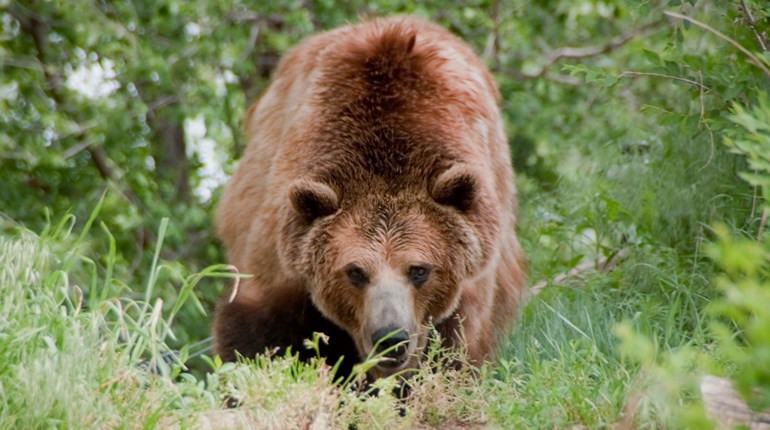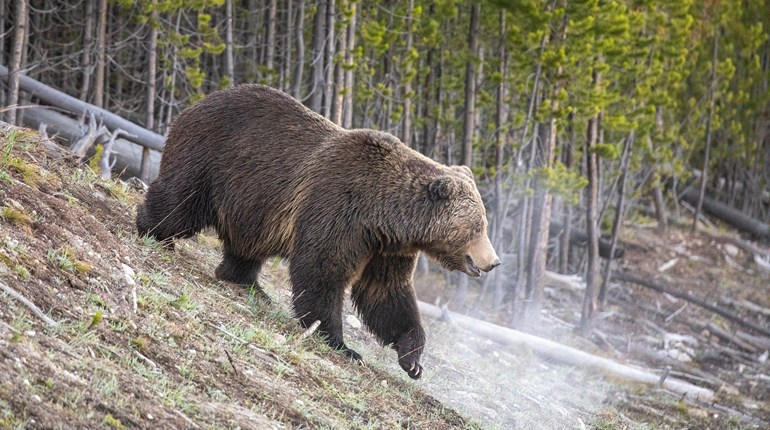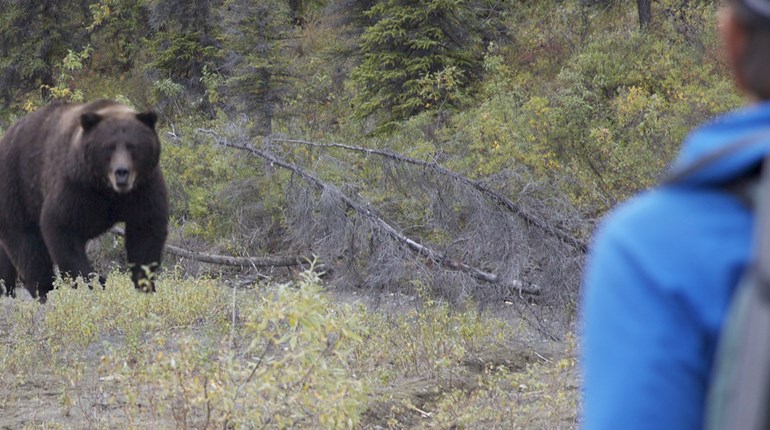
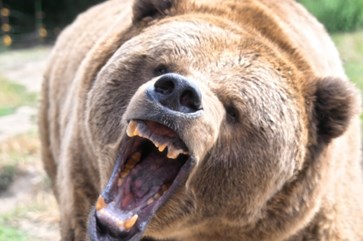
 Springtime is here, and that means that bears are awakening from their winter slumber. When they wake up, they’re very hungry. Often a bear will initially eat some fresh grass sprouts in order to help purge their system of whatever they last ate that is languishing in their digestive tract. Then they want protein—a lot of protein—and that’s when a bear can become aggressive. This is true whether you are dealing with black or grizzly bears. Most encounters with bears are not life threatening, but if you are out in bear country you need to err on the side of safety. Translation: You need to carry some type of bear protection.
Bear spray—a concoction of OC pepper with a high pressure propellant—is touted as the preferred alternative. Maybe so, I cannot say. I’ve heard good and bad accounts of bear spray. As for me, I prefer a revolver. If I am out in bear country during springtime, I am usually fishing, and I do not care to carry a tool belt full of bear deterrents. If I spot a bear I simply redirect my pathway to avoid a confrontation. Thus far it has been 100-percent successful. But the dangerous bear is the one you surprise, or, perhaps, the odd rogue that actually targets you as prey.
It is popular to tout super-powerful .45- to .50-caliber magnum revolvers as bear guns—anything from the .454 Casull up to the .500 S&W Magnum. These revolvers, while they may be wonderful hunting instruments, are not the best choice if your primary purpose is not hunting. First, they are heavy and usually long of barrel. That makes them more difficult to carry and increases the chance that you might not strap it on for a short jaunt to the camp privy or some other quick sojourn. Guess when the bear attack will occur? The other problem is that because of the bulk and weight, these big guns are much slower to draw. Finally, they are not truly necessary for self-defense.
Using deadly force against a bear is only slightly of a less-justifiable proposition than using deadly force against a human. If you do shoot a bear count on someone from the game department interrogating you and determining whether you were justified in shooting the bear. A broadside shot at 50 yards will likely not pass muster. Chances are that a justifiable shooting will be at halitosis range. Add the stress of a bear attack, and you will be in the same boat as a life-and-death encounter with a human antagonist. Most experts agree that the best you can hope for, in terms of performance, is 50-percent of your best day at the range. Handicapping yourself with one of these hunting revolvers doesn’t make sense. I would prefer to have a controllable and easier-to-pack .357 Magnum or .44 Special in such a situation than one of the hand canons.
You will be shooting the bear in the face—eyes, nose or mouth—and a solid hit in one of these areas with these smaller calibers is far better and more effective than a nick or miss with the big guns. Just as in any other shooting endeavor, shot placement is the key to success. Of course, if you are one of those who can drive tacks with a .50-caliber magnum and can dump a cylinder-full of these bombs into a 3-inch group in two or three seconds, you don’t need to listen to me. But for the rest of us mere mortals, think carefully before you head into bear country with an outsized magnum.