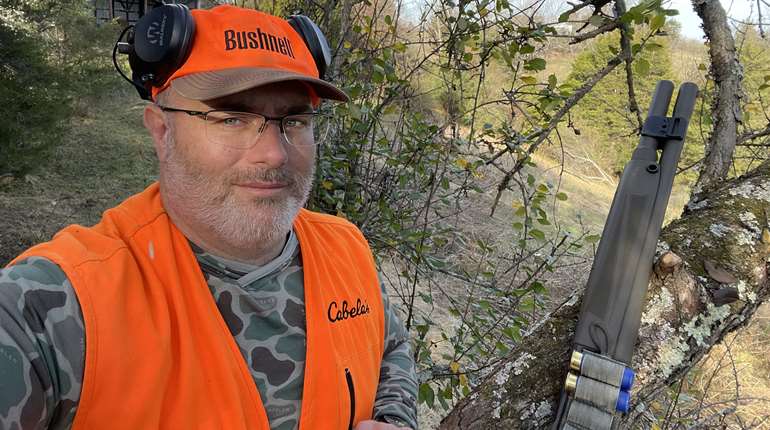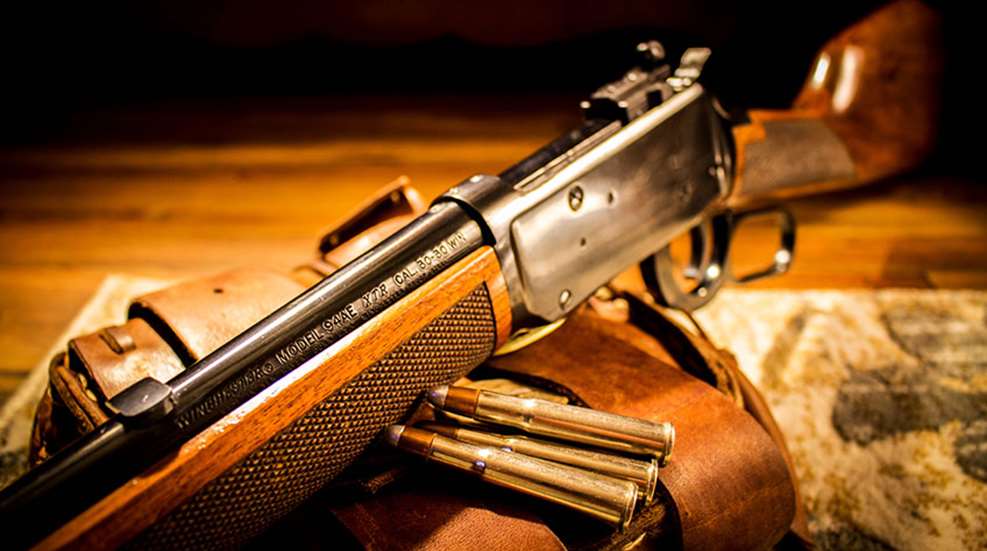
It was my first deer season, just barely sixteen years old, and I had sat still where my dad had put me from daybreak until 10 a.m., when I knew Grumpy Pants would come pick me up. I heard him walking down the logging road, and turned to express just how cold I was. To my great surprise, it wasn't dad, it was four does, just strolling along as if there wasn’t a care in the world. I also saw dad about 75 yards behind them; I motioned him to stop, and he indicated to me that I needed to shoot one of the does. I raised the Winchester Model 94 to shoulder, leveled the iron sights on the doe’s shoulder, and squeezed the trigger. My dad actually watched me take my first deer, and I'm really not sure which of us was prouder.
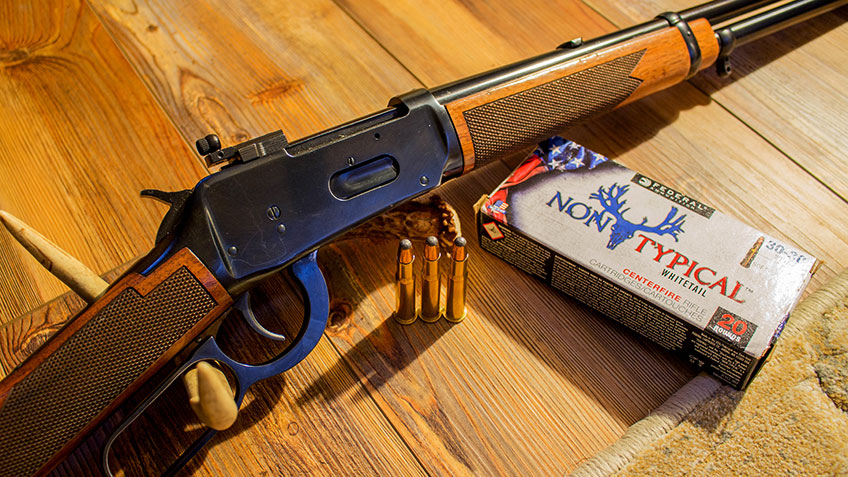
Three decades have passed since that small doe fell to my rifle, and dad and I have done a lot of hunting together, around the country as well as around the globe. Both of us took our first deer with a .30-30 Winchester, and both of us hold that cartridge in a special place. Thirty years after I took that deer, the .30-30 remains in the top ten of Federal’s sales, and new rifles are continually produced for the veteran cartridge. So, I pose to you: why would a cartridge from 1895 still be so popular in this modern era? We have all sorts of cartridges; fast ones, slow ones, fat ones, skinny ones, short ones, long ones, belted ones, rimmed ones and list goes on. Why would a short, slow, rimmed cartridge hang on the way the .30-30 Winchester has? There are several identifiable reasons.
Let’s get this out of the way: if the .30-30 Winchester were released today, no matter how big the marketing machine was behind it, it wouldn’t fly. It doesn’t sit in the mix of modern cartridge designs with the high B.C. bullets and/or high velocities, it doesn’t function very well in bolt-actions or semi-automatics (the rim poses an issue) and it certainly isn’t a speed demon. But when it comes to cartridges and their followers, nostalgia plays a huge role in the equation.
When the .30-30 was released in 1895, it represented a new type of cartridge. It was released as a black powder cartridge that could be loaded with smokeless powder, and at the time, .30-caliber cartridges were not very popular; in fact the .32-caliber cartridges were much more popular than the .30s, with the possible exception of the .30-40 Krag. Based on a .38-55 necked down to hold .308″ bullets, it was released the year after Winchester’s most popular lever-action rifle: the Model 1894. That rifle is still in production today, and the combination of the two is part of the cartridge’s allure. Light, handy, portable and quick, the 94 Winchester gave a deer hunter plenty of firepower, and the cartridge represents what may be the quintessential deer cartridge with the range of an iron-sighted lever gun. So much of the deer hunting in the East is done within 100 yards, and at that range, the .30-30 is, as Goldilocks so aptly described, just right.
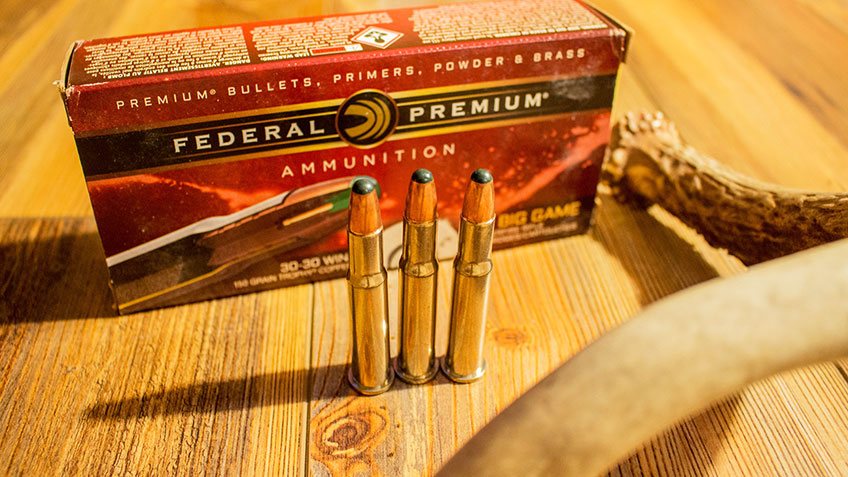
A 150-grain round nose bullet leaves the muzzle at 2400 fps, and the heavier 170-grain bullet leaves at 2200 fps—the round nose bullets being required in the 94’s tubular magazine—and they are hell on deer at woods ranges. Is a .308 Winchester or .300 Savage possibly a better choice? Perhaps, but that’s not the entire point. That aforementioned nostalgia—the opportunity to head afield with a cartridge that your great grandfather held dear, and still works today—is huge. So many Winchester 94s, Marlin 93s and 336s, and Savage 99s were ceremonially oiled and carried in the crook of a wool-plaid clothed arm each fall that the opening day of deer season nearly became a holiday. Schools were closed and families eagerly awaited the news report, as to whether dad got a deer for the freezer. The .30-30 is an instant throwback to that era, and that is part of the appeal.
The low recoil of the .30-30 is certainly another attractant; while it possesses more than enough killing power for close-range hunting, it doesn’t beat the shooter up at all, even in the popular lightweight carbines. Teaching a new hunter, be it a youth or an adult new to hunting, works much better when the student is not afraid of the rifle; the .30-30 Winchester is absolutely perfect for that task. It’ll take deer and black bear with no issue, and there are so many good deals on used rifles in this caliber that virtually anyone can afford a decent rifle without breaking the bank.
Ammunition is plentiful, not to mention affordable, and the mild velocity of the .30-30 doesn’t put a whole lot of stress on the projectiles, so a good jacketed soft point will most definitely do the trick. There are premium projectiles available, like the Nosler Partition, Barnes TSX and Swift A-Frame. There is also the Hornady LeveRevolution, using a pliable tip on a spitzer bullet, for a load which is perfectly safe in a tubular magazine, yet offers a much flatter trajectory for those who like a scoped .30-30.
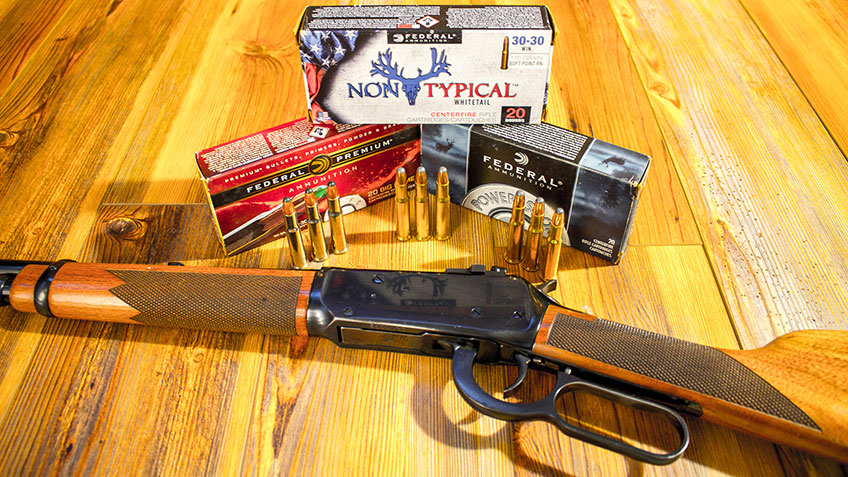
So many hunters, in a different time and under different circumstances, considered the .30-30 Winchester to be the pinnacle of hunting rifles. It is great fun, not to mention a challenge, to grab an iron-sighted .30-30 and head to the forest to make your venison. Leave the rangefinders, trajectory charts and bipods in the truck; just grab a half-dozen cartridges and your lever gun, and enjoy the experience of getting a bit closer than modern rifles require. I gave my old Winchester 94 a new lease on life this year by installing a set of Skinner Sights’ brass front bead and rear peep; my aging eyes appreciate the speed and focus of a peep sight, and I shoot the rifle better than I ever have.
Is the .30-30 going to fade away as the 21st century wears on? I doubt it. Like the .45-70, there are enough sensible applications for the .30-30 and enough hunters who appreciate the nostalgia to ensure it will still be popular, so long as there is hunting.