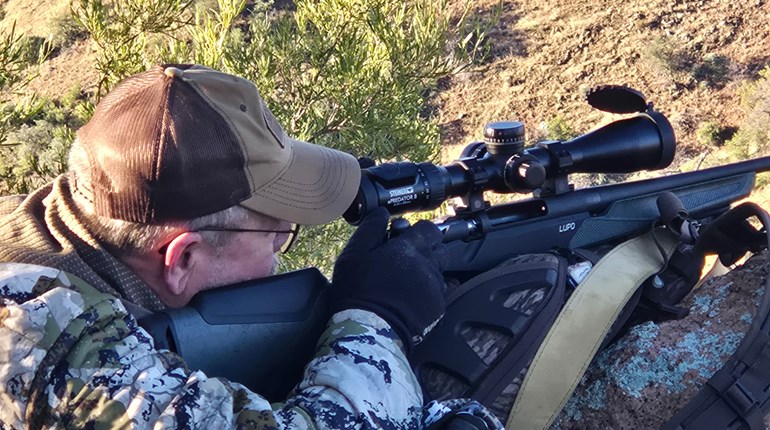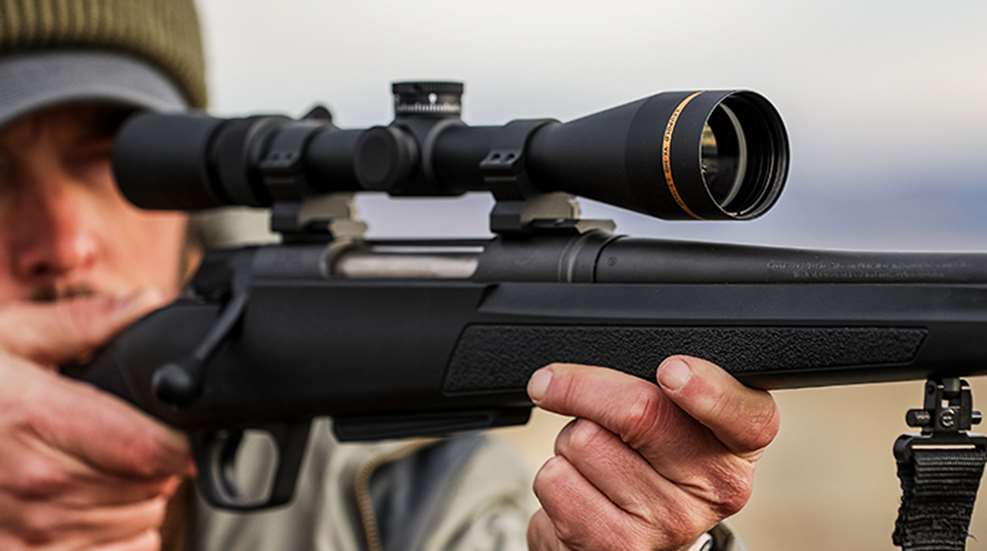
You don’t have to understand all the terminology that appears on scope and binocular reviews and specification sheets, but it certainly doesn’t hurt. It helps you accurately range estimations and adjustments using your reticle (first focal plane), helps you dial correctly for elevation and hold for windage (MIL/MOA) and helps keep you from getting smacked in the head by a hard-recoiling scope (eye relief).
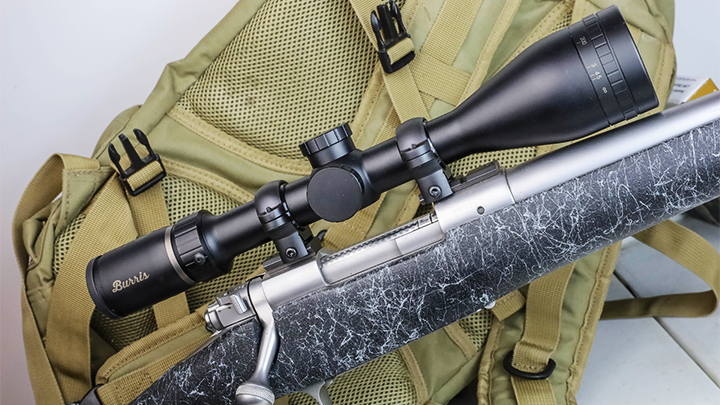
It can also help you understand not only what your objective lens is, but what objective lens diameter effects when you’re shooting. Additionally, you’ll be a more informed consumer, better able to sort through and interpret the language of optics. Here’s a rundown of some basic optics terminology and why understanding each of these words is important for hunters.
• Aberration: Aberrations are imperfections inherent to all optics designs. The best optics limit aberration as much as possible to provide a clear, accurate image. One example of aberration is chromatic aberration, which occurs when lenses in an optic incorrectly refract different colors of light. The result of this aberration is differing focal points and a distorted image.
• Exit Pupil: Exit pupil is the diameter measurement (usually in millimeters) of the beam of light exiting the optic and reaching the shooter’s eye. Exit pupil values are determined by dividing the objective lens diameter by the magnification. Without modification, optics with an exit pupil of 7mm are optimum for very low light conditions, but will appear very bright in full sun. Optics with exit pupils of 2.5mm or so will offer a view similar to that of the unaided eye during periods of bright sunlight, but the image will appear darker in low light than it would with higher exit pupil optics.
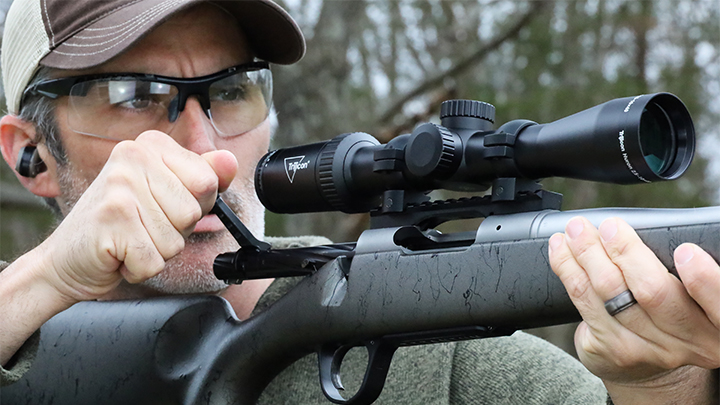
• Eye Relief: Eye relief measures the distance from the eyepiece lens of a scope or binocular to the plane behind the lens where the light rays from the exit pupil come into focus. In other words, it’s the distance your eyeball needs to be behind the rear lens of your optic to see the image clearly and without distortion. To determine eye relief, simply move a scope or binocular closer and farther away from your eye until the image comes into full view with no distortion around the perimeter. Eye relief is particularly important with riflescopes designed for use with hard-kicking shotguns and rifles. Three inches of eye relief is ideal for most shooting applications, but 3.75 or even 4 inches is not unusual on optics designed for big-bore dangerous game rifles.
• Field of View: The diameter of the viewing area visible through an optic at a certain distance and a specific magnification is field of view (FOV). If your scope offers a linear field of view of 14.1 to 5.8 and it’s a 6.5- to 20-power scope, that means on low power (6.5X) your field of view will be 14.1 feet and on high (20X) you have a field of view of 5.8 feet.
• Objective Lens: The objective lens is the forward-most lens in a riflescope or binocular. The objective bell is the flared portion of the scope body that houses the objective lens. Contrary to popular belief, a larger objective does not always mean more light transmission since exit pupil figures are based on objective lens diameter as well as magnification. The objective lens is generally measured in millimeters.
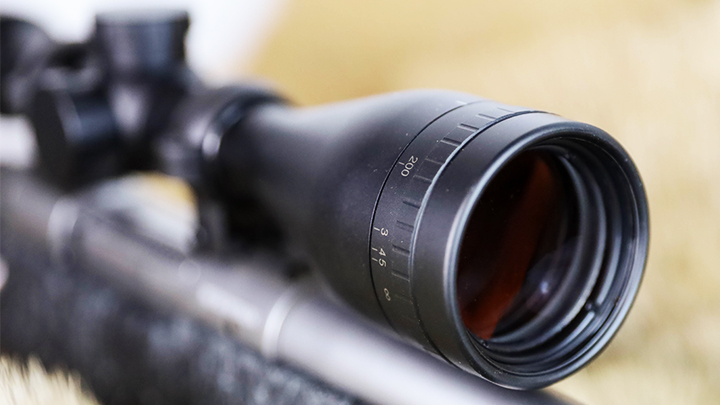
• Ocular Lens: The ocular lens, also known as the eyepiece lens, is the lens on an optic that is closest to the user’s eye. The ocular lens is smaller than the objective lens and directs the image to the shooter’s eye. Oftentimes ocular lenses are adjustable to account for variations in visual acuity.
• Maintube: The maintube is the portion of the scope between the objective bell and the eyepiece. Most scopes have either a 1-inch or 30mm maintube. The added tube diameter increases windage and elevation travel range. Long range target scopes may have tube diameters between 34 and 36mms. Scope rings are built to specific scopes with specific maintube diameters.
• Reticle: A scope’s crosshairs. The two primary types of reticles are wire and etched glass. Plain, uncluttered reticles popular with hunters oftentimes contain wire reticles while target reticles with multiple windage and holdover points are often etched glass reticles.
• Parallax: Parallax occurs when the reticle and target are on different focal planes. Parallax is the reason that you cannot focus your eyes on a close and distance object at the same time, but modern optics allow you to adjust for parallax compensation. When parallax is corrected, the target and reticle will appear in focus simultaneously.
• MIL vs. MOA: MIL is a common abbreviated form of milliradians, while MOA is an abbreviation of Minute of Angle. Both are measurements of angle (not distance or length, as some shooters believe). As ranges increase so does the value of 1 MOA or 1 MIL. At 100 yards an MOA is 1.047 inches, so a scope with ¼ MOA per click adjustments should move point of impact about .25-inches every click at 100 yards (and .50-inches at 200 yards). One MIL is 3.6 inches at 100 yards, and since most MIL scopes have 1/10 click adjustments, each click will adjust point of impact .36 inches at 100 yards. One system is not better than the other for hunters, but many hunters prefer MOA, as the measurement so closely relates to inches.
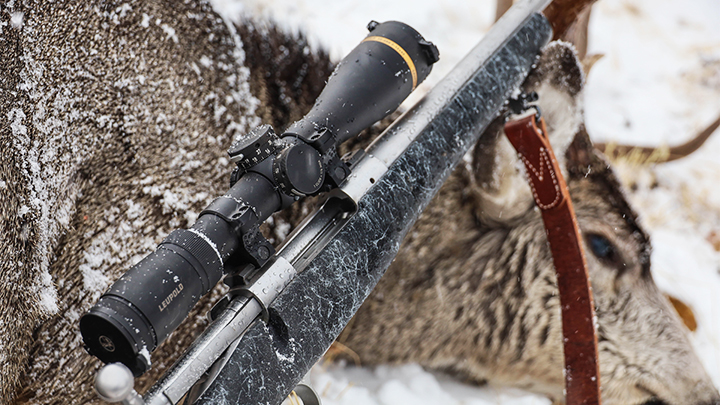
• Zero Stop: When dialing for elevation adjustments, a zero stop prevents the shooter from going below zero MILs or MOA of elevation. After firing, a shooter can simply dial down the scope until the zero stop engages and the scope is then reset to the original sight in distance.
• Nitrogen/Argon Purged: When moisture enters an optic, it can fog the lens and render the optic useless. The “purging” process involves eliminating the air and water vapor inside an optic and “purging” with a dry, non-reactive gas like argon or nitrogen. The optic is then sealed with O-rings or in some other manner to prevent the gas from escaping. Optics like this are also called “fogproof.”
• Coated/Fully Coated/Multi-Coated/Fully Multi-Coated Lenses: Chemical lens coating on optic lenses prevent light loss and distortion. Next time you scan over the specifications on an optic you’re planning to purchase, pay close attention to exactly how the optic’s coating system is described. Coated lenses have one layer of coating on at least one lens, so don’t expect exceptional clarity from these optics. Fully coated lenses mean that all the lenses in the optic receive at least one chemical coating. Optics with multi-coated lenses have at least one lens with multiple chemical coats, but the top-of-the-line premium optics features fully multi-coated lenses, which means every lens receives multiple coatings.