When the great Prussian archaeologist Karl Richard Lepsius first explored the Pyramids of Giza, I suspect his first thought when he encountered strings of hieroglyphics on the rock walls was something like ... “WTH?”
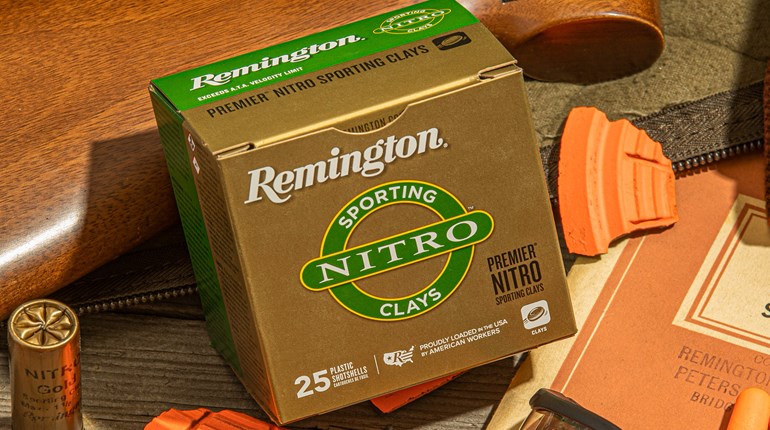
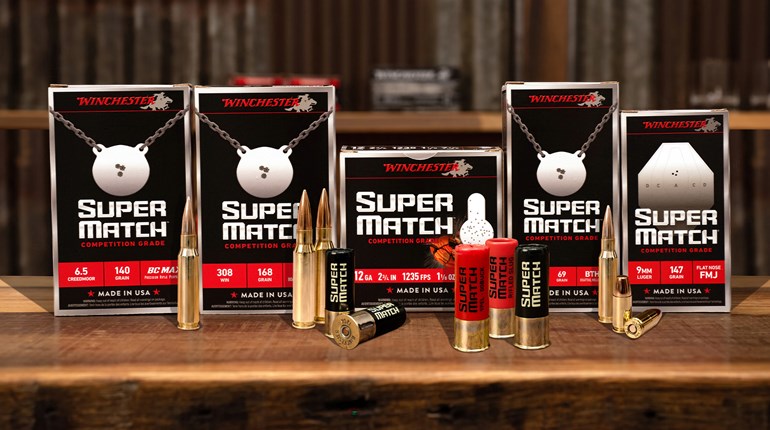
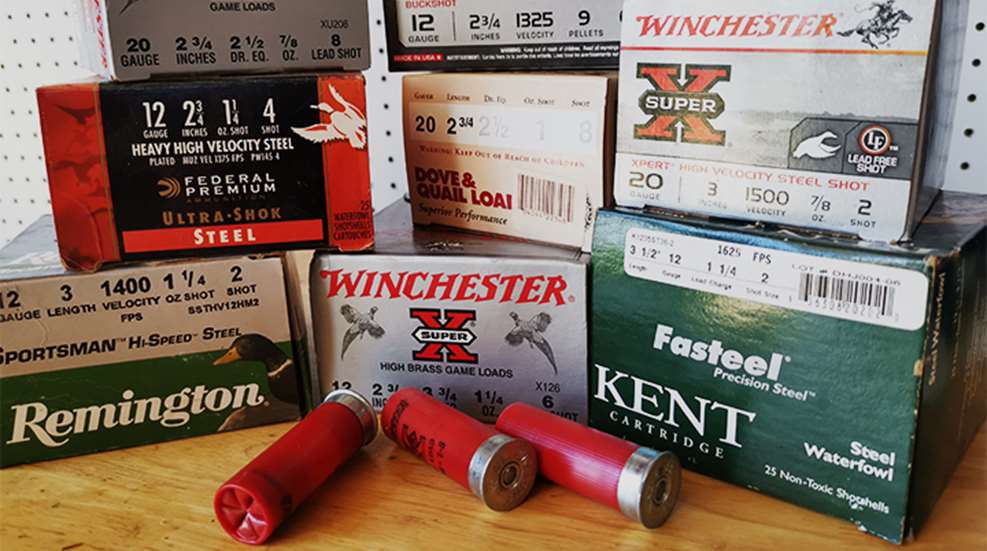
And that’s what plenty of new shotgunners think when they see the top of a box of shotshells. Payload? Dram equiv? FPS? Can’t I just buy a box of 12-gauge and call it good? Well, you can, but like anything else, it’s best you know what you’re buying so you can get an ideal load for your shotgun and for your intended purpose. So here goes.
Gauge: All you really must know is what gauge your shotgun is so you can buy shells for it, but since we’re diving into the weeds, here is its definition: Gauge is an old English measurement of bore diameter that reflects the number of same-diameter pure lead balls that equal 1 pound. For example, 12-gauge is .729-inch in diameter, therefore 12 solid lead balls of .729 diameter equal 1 pound. Twenty lead balls having a diameter of .615-inch equal 1 pound. So, as you can see, the higher the number, the smaller the gauge’s pure size.
Gauge has little to do with the size of a shotgun’s pattern—that’s dictated by choke—but rather the pattern’s density potential. While a 10-gauge shell has the capacity to hold more shot and more powder than a 12-gauge shell of the same length, it’s not always loaded to do so. That’s why you need to read the box and continue reading this article.
Shot Size: This is the diameter of the individual pellet contained in the shell, collectively called shot. Pellet diameter is measured in inches, but given a numeral and, therefore, if made of pure lead, like-diameter pellets have the same mass. Generally, the smaller the pellet, the less its striking energy, therefore smaller pellets are used for smaller animals and targets, whereas bigger pellets are used for larger game. And like gauges, the larger the number, the smaller the pellet size. For example, a No. 8 is best used for small birds or targets, whereas a No. 4 or No. 6 is used for rabbits and turkeys. After shot size No. 1, pellet size is called by other, non-numerical names such as buckshot, T shot or F shot. Yes, it’s confusing, so just remember that for clay pigeons, No. 7½, 8 or 9 shot is best; For home defense or deer hunting, buckshot (or a slug) is supreme. For ducks, buy steel No. 2 or 4s and for small game, go with lead No. 4 or 6s.
Ounce: The total weight of the payload, or pellets. It’s used for nearly all shot sizes except buckshot, which uses pellet count. For example, a 1-ounce load of No. 8s has about 410 pellets. (A 20-gauge with a 1-ounce payload of No. 8s has the same number.) A 1⅛-ounce load has approximately 461 pellets. If all things are equal, a 1⅛-ounce load would be deadlier and have more recoil than a 1-ounce load, but all things are not equal. It takes more powder to move 1⅛ ounces of lead at the same velocity as a 1-ounce payload, so if both loads have the same amount of powder, the 1⅛-ounce load will have less velocity. This means that while its pattern density will be greater, the energy of its individual pellets at distance will be less. Same goes for buckshot loads that have more pellets. That’s why you should pay attention to a box’s dram equivalent number (or velocity). Also, because metal is expensive, a greater payload means it’s usually more expensive.
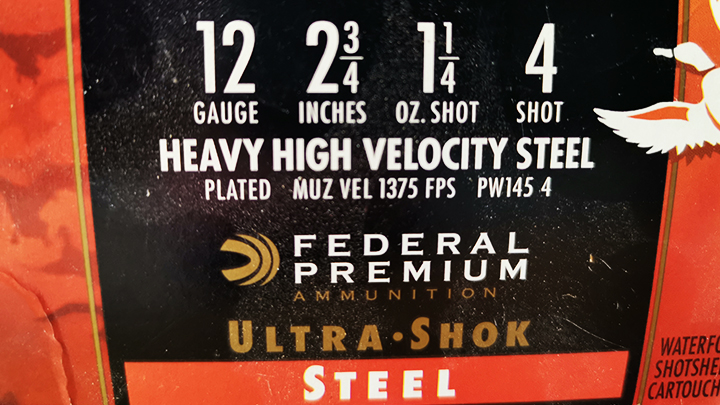
Dram Equivalent: Centuries ago, shotshells were loaded with blackpowder measured in drams, 16 of which equal 1 ounce. After the advent of smokeless powder, loaders needed blackpowder to smokeless powder equivalents, so the term “dram equivalent” was coined. It’s a measurement of the amount of powder in a shotshell. But because today there are myriad powders, this measurement is very rough. For example, a common 12-gauge dram equivalent for skeet loads is 3¾, whereas some heavy new loads contain 4½ dram equiv. If the box says “Max,” it means it has the maximum amount of powder that the manufacturer feels is safe. In general, the higher the “dram equiv,” the higher the velocity and energy the shell will have, as well as recoil.
Length: Shell length determines the shell’s ability to hold more pellets and powder, although it doesn’t necessarily do so. Lengths range from Aguila’s new 1 ¾-inch “Minishell” to 10- and 12-gauge 3½-inch magnums. Generally, 12-gauge 2¾-inch shells hold 9 to 12 00 Buck pellets; 3-inch shells hold 12 to 15 and 3½-inch loads, like Remington’s Express Magnum, hold up to 18. In general, longer length means more pellets, more energy, more recoil and less magazine capacity; 2¾- and 3-inch are the standard shotshell lengths.
Velocity or FPS: Not too long ago, manufactures didn’t bother listing the shell’s velocity on the box, but nowadays it’s becoming more common. Typically, any payload traveling 1150 to 1300 feet per second (fps), is average. Much below that—perhaps 1000 fps—could be a “reduced recoil” load, whereas anything over that—like 1500 fps—is a magnum or “high velocity” load with respective high downrange energy and recoil.
Lead: Nowadays, shotgun pellets are made from lead, steel and numerous other alloys and elements, including heavier-than-lead tungsten, bismuth and other metals. The downside to these alternatives, however, is that they’re much harder than lead, so they don’t expand in the target. They are also very expensive. For buckshot and birdshot, stick with lead. For migratory bird hunting, such as waterfowl, the law mandates steel shot be used, so the box will say “steel” somewhere on it.
Buffered Shot: Refers to the presence of buffering material (plastic beads, polymer powder, etc.) that pads the pellets from colliding with each other at the moment of setback (firing) and therefore keeps them as spherical as possible, ultimately enhancing the load’s downrange pattern and energy. At close, home-defense type ranges, deformation is not critical. But for hunters or longer shots, pellet deformation can lead to erratic flight and reduced downrange performance.
Plated Shot: Copper-plating adds protection to soft lead pellets that could otherwise deform upon setback. It also adds cost.
If it all sounds confusing, it is—at first. But overtime and with experience, you’ll learn the best load for every scenario and what your particular gun prefers.