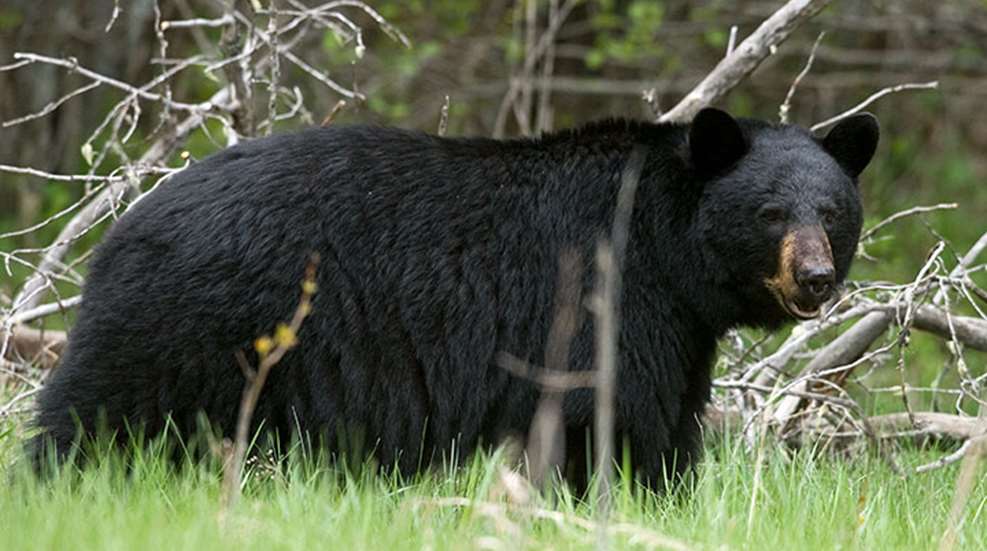
I’m an expert on judging bears. That’s right, if I see two bears side-by-side, I can usually tell you which is bigger. You might say, rather, that I’m an expert on judging small bears, because I’ve taken more of them by mistake than I’d like to admit. Believe me when I tell you bears, by themselves, are very difficult to judge. While nothing beats experience gained from looking at hundreds of bears, there are a few tricks you can use to discern their size in the field. Usually.
Comparative Analysis
The best way to judge a bear is to visually compare it to something of known size. The best example of this is “bear vs. barrel.” It’s a big reason why black bear outfitters use standard 55-gallon bait barrels—so hunters can compare the size of the bear to the barrel. For common barrels, if the bear’s backline is between the uppermost ring and the top of the barrel, it’s a shooter, perhaps in the 6-foot (tail-to-nose) range. If it’s as tall or taller than the barrel when standing next to it, it’s a huge bear, perhaps in the 6½-foot range. And if it’s over the barrel, it’s possibly a 7-foot giant! Of course, this is all swell and dandy until the bear knocks over the barrel, doesn’t come near it, or you are on a spot-and-stalk hunt and don’t have a barrel by which to judge.
The trouble with judging bears against other bears is that one bear could be really small, making the other average-size bear seem huge. Conversely, a couple years ago I failed to shoot what were more than likely two big bears because they were of similar size, and I just couldn’t believe both could possibly have been big mature boars. (Later the guide told me they were!) In these cases, you’ll have to judge a bear by its own merit.
Body Clues
The first question you should ask yourself when you see a bear is: How far apart do its legs look? Big bears have big barrel chests, and therefore there is more space, or daylight, between their front legs. The legs of big bears will also look short and stumpy, because big bears have huge chests and swaying bellies that make their legs look shorter. Beware shooting a bear with front legs that almost touch while walking, or one that has what looks to be long legs.
Similarly, the ears of big bears look tiny, with much space between them, because their heads are so big. Be leery of shooting bears with big ears that rise off the top of their head like a German shepherd’s.
Finally, really big boars don’t get huge without age, and if they’ve been around for years, they will often have scars on their faces from fighting. This is no guarantee, of course, but it can serve as another clue.
Attitude
Big, old boars are often crotchety and mean. If they’re the boss on the block, they have no reason to slink around warily like smaller bears often do. Rather, they swagger in like John Wayne entering a saloon and act like they own the place. Conversely, if you see a bear constantly looking over its shoulder or acting very shy or fearful, it can mean it’s been getting whipped by a bigger bruin regularly. Hesitate shooting this beta bear with the hope of getting a glimpse of the big dude.
Even with these tips, don’t be surprised if the bear you ultimately decide to take is not as big as you first thought. But don’t let that ruin your trophy. Just getting to watch—and hunt—these wonderful animals should be consolation enough.
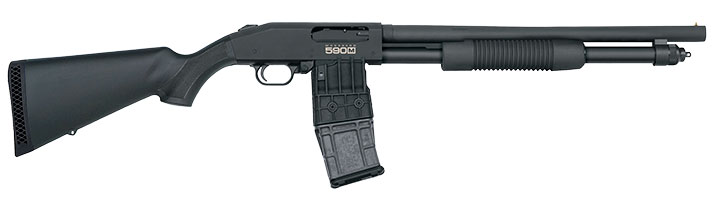
For springtime bears hunted in close proximity over bait, it’s tough to beat a shotgun loaded with slugs. On a recent hunt in Canada, I chose Mossberg’s 590M for several reasons. First, a 300-grain Hornady SST slug load aimed with a red-dot optic is plenty accurate for inside 75 yards—and the slug’s energy is devastating, putting down even huge boars quickly.