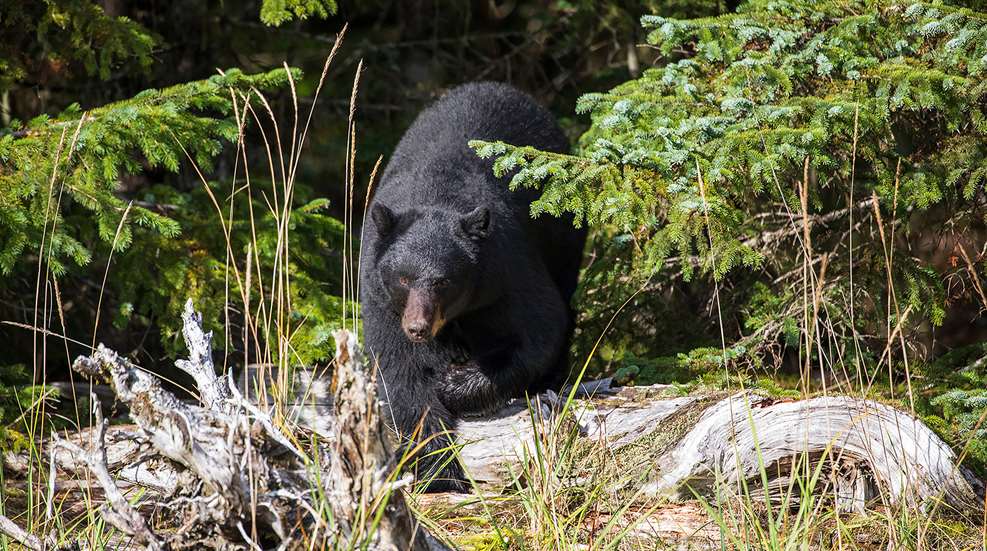
Following fresh tracks into a spruce forest, I stopped to study a pile of bear scat. It was still green; the undigested grass had yet to oxidize and turn color. It was the diameter of a soda can, leaving no doubt it was a big bear. The brute had to be close.
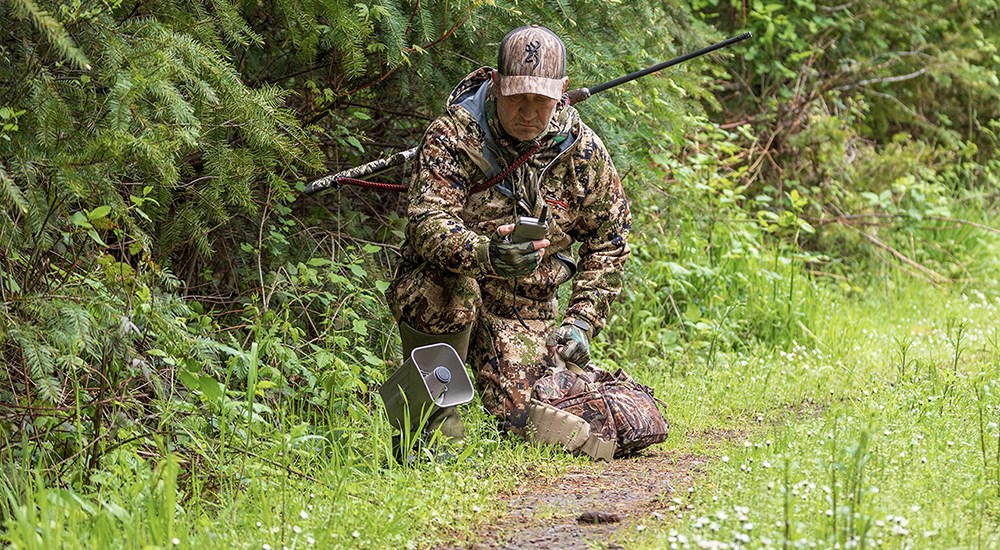
Setting up in the first small opening on the trail, I began the calling sequence by blowing on a handheld call. The open-reed call sent inviting rabbit distress sounds into the forest. A few minutes later I switched to fawn distress sounds. That’s when a bear came boldly walking through the trees, right at me.
Instantly I was staring at the bear through my scope. The green dot of the Trijicon AccuPoint was easy to see against the black pelage and heavy shadows. When the bear hit the edge of the clearing, inside 30 paces, it was obvious it wasn’t the same bear that left the scat or the track I’d been following. This bear was nice, maybe 250 pounds, but it wasn’t the one.
I quit calling. The bear lost interest and left. Fifteen minutes later I started calling again, this time with an electronic call. Nearly 20 minutes into the sequence another boar came in. The shot would have been simple, but it was smaller than the first. The bear eventually left. I called for another hour but the big bear never showed itself. Nonetheless, it was a great day of calling black bears in the forest. It was late May, the final week of the spring season, when hunger and an urge to mate govern a boar’s life. This is my favorite time to call bears.
When hunting in cover where you don’t first see a bear prior to calling, locate fresh sign. Tracks and droppings are the easiest to read. The width of a front paw and the diameter of the droppings are accurate indicators of how big a bear is. The closer you can get to the bear, the greater the chance of calling it in amid thick habitat.
Start with mouth calls in case a bear is close. Once calling starts, don’t stop. You’ll run out of wind in short order when blowing mouth calls, so have an electronic call set up and ready to engage. Position the speaker to the side of a trail or edge of a clearing so it’s not in line of sight with you and an approaching bear.
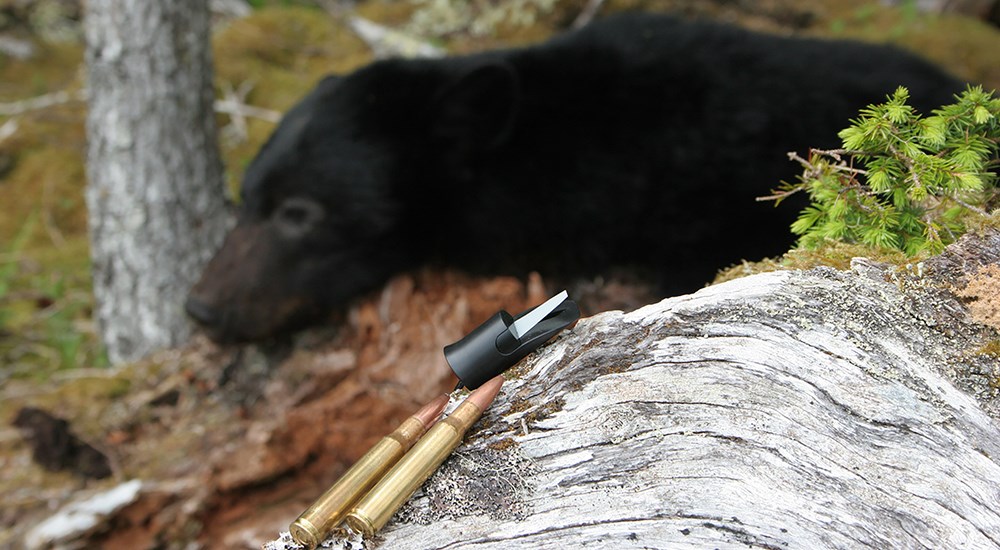
Keep the sounds running 45 minutes to an hour. If in a good area overlooking vast, open, rolling hills surrounded by timber and brush, calling longer is not overkill. Change up the sounds every five to 10 minutes. Bears aren’t picky when it comes to predator sounds, so mixing varmint, deer, elk, even an array of livestock distress and bird affliction sounds can be effective in the spring. Bear cub distress sounds can also produce, especially the closer it is to the rut.
Early in the spring I’ve called in more boars than sows. Fresh from the den, boars largely depend on vegetation to get them going. They won’t pass up carrion, but preying on bigger animals doesn’t usually happen until later in the spring when temperatures warm and deer fawns and elk calves start hitting the ground. Stick with basic predator sounds to try to fire-up a hungry bear early in the season.
I once interviewed a biologist about cougars killing calf elk in a specific game management unit. The man informed me I was asking the wrong question, stating that more than 70 percent of the calf elk mortality was due to bears preying on them, not cats.
The end of May and early June are prime times when it comes to calling bears. This is when deer and elk are dropping their young, and the bear rut is kicking in. Radio telemetry studies in Oregon’s Cascade Range have shown numerous boars covering over 25 miles a day in some of the most rugged terrain in the country, just to find a sow in heat.
Late in the spring, plan to cover ground. Prior to calling, try to first spot a bear. Early in the spring, calling without first seeing a bear is effective because bears aren’t typically moving much, so are more likely to be within earshot of your calls. Late in the spring it’s best to locate a bear, size it up, and if it’s one you want set up and call so you can watch its reaction. Seeing how a bear responds to a call is the greatest education you can earn.
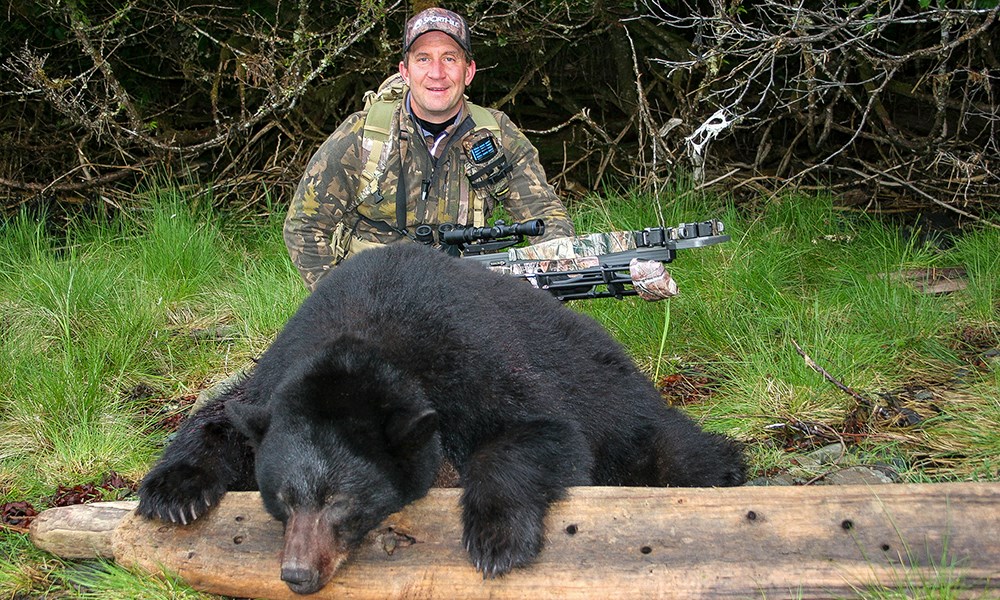
I’ve had bears hear the initial calls, turn and reach 30 mph in seconds, going the opposite direction. I’ve had them come on a dead run right at me, only to stop and go to grazing on grass, not reacting to another sound I made. I’ve had bears come charging in to kill the source of the sounds and not stop until a bullet hit them, which is the ultimate bear-calling thrill.
If a bear loses interest, change sounds and keep them rolling. Don’t think coyotes; think distracted teenager whose attention you’re trying to keep. I used to teach high school science, and my wife and I raised two boys; the correlation is accurate. Increasing the volume is another good move, especially if it’s windy or thermals are swirling. The moment a bear turns away or goes back to feeding, make a sound change.
Successfully calling in any animal comes down to catching them in the right frame of mind. It’s no different with bears. When calling bears, there are no set rules. Anything can happen at any time. But when it all comes together, it’s one of hunting’s greatest rewards, for few thrills match the rush of having an animal charging in with the intent to kill you.
Want to learn how to skin and break down a bear? Check out Scott Haugen’s popular DVD, Field Dressing, Skinning & Caping Big Game, at scotthaugen.com.
Most Popular