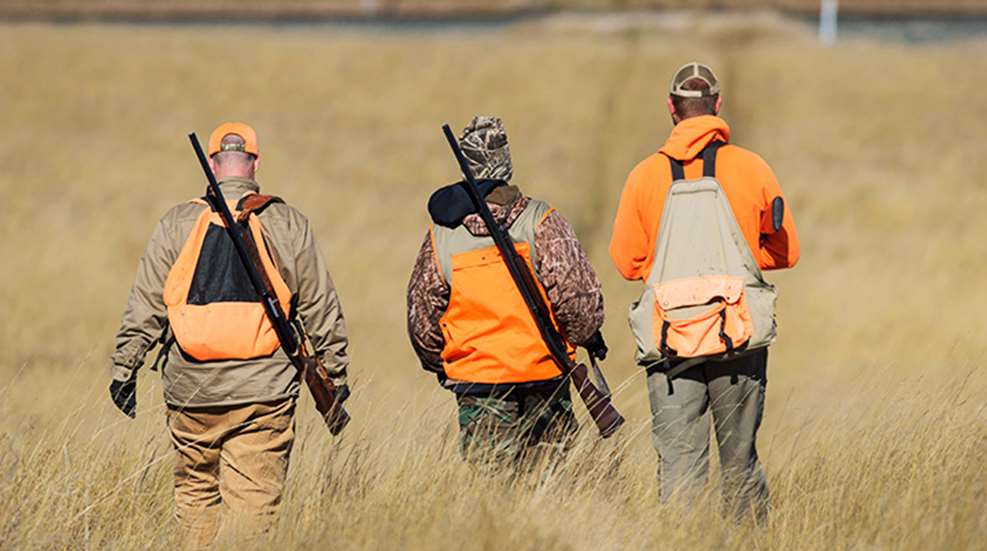
The number of California hunters declined 17 percent in 2019, as new regulations regarding the use and purchase of ammunition kicked in fully last July to drive tens of thousands of hunters from the field last fall.
California is America’s most populous state. More than 39 million call it home, but hunters represent less than one-half of 1 percent of its huge population. As recently as 10 years ago, only 287,229 licenses were sold there. The total has fallen every year since. As of Oct. 31, 2019, the California Department of Fish and Wildlife reported only 224,604 hunting licenses sold compared to 269,276 a year prior.
That’s right, 44,672 California hunters quit the field in 2019.
“California is passing firearm legislation that is directly impacting the hunters in our state,” said Daniel Reid, Western Regional Director of the NRA Institute for Legislative Action.
This result can be traced to the effect of a one-two punch that walloped California hunters and gun owners July 1, 2019. First, the final phase-in of a 2013 law banned the use of all lead ammunition anywhere in the state (previously, lead-prohibition zones included only the “condor zones”). Second, as of July 1, 2019, all would-be ammunition buyers must pass a state-administered eligibility check.
The eligibility check is part of a package of gun-control bills made law in 2016 in the wake of the killing of 14 people at a San Bernardino workplace Christmas party in 2015 by a husband-and-wife terror team. It is a combination of SB 1235, proposed by Kevin de Leon, a former Democratic leader of the California Senate who now is running for a seat on the Los Angeles City Council, and Proposition 63, backed by then-Lt. Gov. Gavin Newsom (D) as his Safety for All Act.
Ammunition buyers must be California residents. They must be 21 or older to purchase handgun ammo and 18 or older to buy long gun ammo. But even buyers who meet these requirements will now pay something extra, even though every buyer of a box of ammo already pays an excise tax of 11 percent of the price of that box to help fund conservation across America as part of the Pittman-Robertson Act of 1937. Residents have three options in order to become eligible to purchase ammo. If they have a gun registered with the state they may opt for a standard eligibility check performed by the vendor at the point of purchase that generally is performed quickly; this check costs $1; to be eligible, information must be an exact match with your current information. If a resident has no gun registered he/she may opt for a basic eligibility check conducted by the California Department of Justice (CDOJ), which may take hours or days, and costs $19. Residents also may obtain a Certificate of Eligibility (COE) from the CDOJ. COEs generally are reserved for people who work in the firearm industry—a federal firearm licensee, for instance, or someone who works for a licensed ammo vendor. Nonresidents may purchase ammo only if they obtain a COE; separately, without a COE, they may purchase ammo only from a licensed target facility holding a regulatory or business license and only if it will be used at the point of purchase.
Ammo buyers must expect their Real ID-compliant California driver’s license or other government-approved ID to match their personal information CDOJ should have stored; if it doesn’t, no purchase. Residents may give or loan ammo to another only when in the presence of the associate. Needless to say, residents may not travel out of state, purchase ammo and return home with it. Neither may they buy from online dealers unless the ammo is shipped through a California brick-and-mortar business.
Reports abound of lawful gun owners being turned away because their personal information was not current according to state records.
Imagine the nightmare faced by retailers. Now all ammo must be kept inaccessible to customers. Now a retailer must hold hands with every customer who wants to compare the price of five different boxes of ammo before purchase. The retail clerk then must carry the ammo to the register, perform the telephone eligibility check then hand over the purchase.
The idea, say proponents of the onerous law, is to make it more difficult for felons and others unauthorized to possess firearms to obtain ammunition. But this ignores the fact ammunition is a commodity that is used after purchase, says Reid, also a California resident.
“So now the state may determine who has purchased a large amount of ammunition in the recent past. Then what? Does an inspector knock on your door three days or three weeks or three months later and ask to see it? Why? What if the citizens says, ‘I shot it’? Then what? This is about nothing. You know, ‘Seinfeld’ was called a ‘TV show about nothing.’ This is truly a registry of nothing. The fact is people buy ammo then use it, so even in the face of a record of ammo sale there may be no ammo for the state to check. Besides, all it takes is a clerical error within the CDOJ for this system to create a massive amount of denials at the retail level.”
Indeed, the numbers suggest many law-abiding California gun owners’ right to keep and bear arms truly has been infringed.
Even the mainstream media must note the snafus. At the end of 2019, the Sacramento Bee researched state data to report that between July 1, 2019, and November 2019 nearly one in five ammo purchases was rejected by CDOJ. In that span, California vendors made 345,547 eligibility checks with CDOJ and were forced to reject 62,000 customers merely because their personal information had yet to be officially entered into the state database, or information reported on their California-approved ID did not match that recorded in the state gun registry. That’s 62,000 law-abiding California gun owners rejected—alongside 101 would-be purchasers who were blocked because they actually were prohibited from legally possessing ammunition.
The numbers are encapsulated in a response by the office of California Attorney General Xavier Becerra to a lawsuit seeking to overturn the law filed by many plaintiffs including the California Rifle & Pistol Association and Kim Rhode, an NRA board member and the lead plaintiff. In court filings, Becerra’s office pointed to a moderate decline of rejections from summer through fall as progress, and said it expected the rejection rate to continue to fall as clerical errors and omissions of personal information by CDOJ are corrected moving forward.
No doubt many gun owners reading this will take platitudes like that from Becerra’s office to mean the state will take its sweet time working out the kinks. It seems the people most affected by all this are the law-abiding—62,000 of them, and counting.
What the rest of us need to worry about is this nonsense spreading. We all know some of the worst ideas originate in California.