Bears do it, and spend enough time in the woods, so will you. For some hunters, popping an outdoor squat, with birds chirping, squirrels chattering and nice breeze blowing between the legs, is a chance to re-connect with nature. For others, it’s a hazard to be avoided it all costs, even at the risk of crippling stomach cramps. However, when you have to go, you’ve got to go, even if the nearest dirty outhouse is a day’s hike away. When that urge hits, here are a few tips for doing what comes naturally.
Leave No Trace
First, let’s remember we’re not the only hunters in the woods, so we should be considerate of other people. Animal scat, especially if it’s from whatever quarry we’re after, has a way of quickening a hunter’s pulse when we see it—but a steaming pile of human poop has the opposite effect. So always do your best to disguise your outdoor toilet.
The Leave No Trace principle suggests squatting at least a minimum of 200 feet from any trail, water source or campsite. Now, in emergency situations, such as the morning after chili night in hunting camp, that 200 feet may seem like a mile. But do your best to hobble as far as you can make it before squatting in a location out of sight of your fellow hunters, hikers and other outdoor enthusiasts. (There’s few things more embarrassing than dropping your pants only to see someone walking by.)
Now, before push comes to shove, there’s the matter of digging a hole to dump in. Smart hikers pack along a small shovel for such a deed, but a stick, rock or the heel of a boot can work in pinch. Just be sure to make the hole deep enough to disguise your pile. Shoot for 6-8 inches if you can, and once you’re done, kick in the dirt and cover the scene of the crime with rocks, sticks or other cover to keep others from stepping in it.
Once you’ve done the deed there’s the delicate issue of what to do with toilet tissue. (You did remember to pack a roll of paper, right?) In many instances, burning it in the hole before burying is the best option. Just be sure there’s not a burn ban in place, or conditions are otherwise ripe for a forest fire. You don’t want to explain your actions to the fire chief. Standard toilet tissue is biodegradable, so burying it is okay, though not ideal. If you really want to be P.C., pack it out in a sealable bag or can with a secure lid.
Proper Pooping Positions
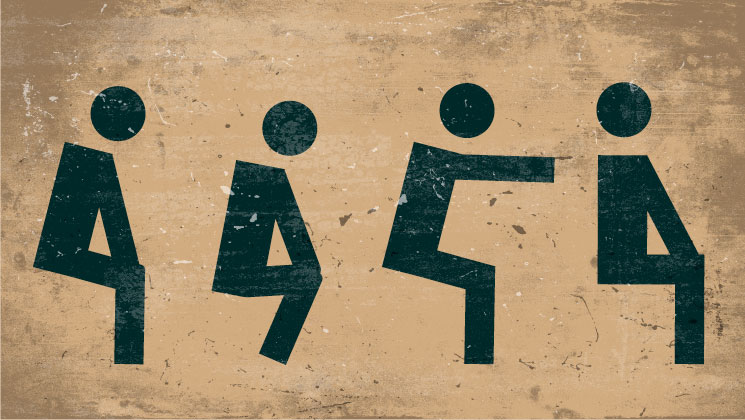
The actual act of going in the woods should come natural, but maybe it’s worth discussing the pros and cons of the four common ways to poop outdoors.
The Lean—Probably the most popular method, with the back or butt leaning up against whatever happens to be handy: tree, stump, boulder, etc. Just make sure the support is solid or risk it rolling out of the way and sending you into a splashdown you don’t even want to consider.
The Hang—The way works great, especially if you’re wearing waders, coveralls or other clothes that could get soiled by squatting. Grab onto a sapling or branch and lean way back before loosening those bowels. This requires a strong grip and stout support. Pro move: wrap a rope or belt around the tree for even better clearance.
The Squat—Other than the western world, most of the globe assumes this position, whether they’re outdoors or in. Simply squat down and go, just make sure those pants are pulled forward or you’ll be walking back to camp without them.
The Sit—The Holy Grail of going in the woods is two tree branches that come together in a V, allowing for a comfortable sit. Bonus points if your packed along a newspaper or other reading material for your morning constitutional.
Dangers of Dropping Trou
While lightening the load the woods can be enlightening as well, it’s also fraught with hazards. Here are a few of the perils of pooping outdoors.
Butt Bites —Turkey hunters beware. Before baring it all, take a peek behind that log to make sure a snake isn’t sunning itself. Spiders, ticks and other insects may also be lurking near your loo.
Itchy and Scratchy—If you sit down in a patch of poison ivy or oak, good luck getting your hunting partner to rub your backside with balm. Wild rose, wait-a-bit and other thorny vines can also leave long red marks that may be hard to explain when you get home and could lead to infection.
Soiled Suspenders—Nearly every waterfowler who’s ever squatted in the swamp has a tale of human waste in the waders. Same goes for those of us who wear suspenders. Pack straps, belts and other items also have a way of winding up being left in the woods. (Though really, pack it out, even if you don’t want too.)
Diaper Rash—It’ll inevitably happen. Either you forgot to pack along paper, or the hunting camp diet burned through your stash, leaving you high, but not dry. You can chose to lose a sock, your skivvies or slice off your shirt tail, but there are plenty of natural wipes in the woods, from leaves to sticks to, yes, rocks. Just be sure to positively I.D. those plants before getting intimate with them. (See: Itchy and Scratchy.)
The One That Got Away—Inevitably, the urge always strikes right at the magic hour. If you have to go, take your gun with you and keep it within reach. There’s no shame in taking the shot as you squat, but be careful the recoil doesn’t send you reeling backwards.