Long-range shooting is a horse of a different color—it takes regimented practice and thorough knowledge of your equipment and their capabilities. The best rifles, optics, precision ammunition and a bit of training and instruction to minimize the human error, all go a long way in ultimately connecting with that distant target. There are many different forces acting upon your bullet. This is no ordinary chip-shot and requires a bit of science. There are fantastic ballistic calculators available, no doubt, but the data they predict is for a static environment. While that is a fine baseline, and a good starting point, the differing atmospheric conditions you hunt in can affect the path of your bullet drastically.
I’m not talking about the 150- or 200-yard shot where the time of flight is short enough that the atmosphere doesn’t have time to show much of an effect; I speak of the longer shots in the hunting world. Perhaps it’s an elk across the canyon that you just can’t get closer to, or a caribou across a frozen lake in Quebec—maybe even a sheep above the tree line. The further away from the muzzle your bullet has to travel, the worse the effects of the atmosphere will be.
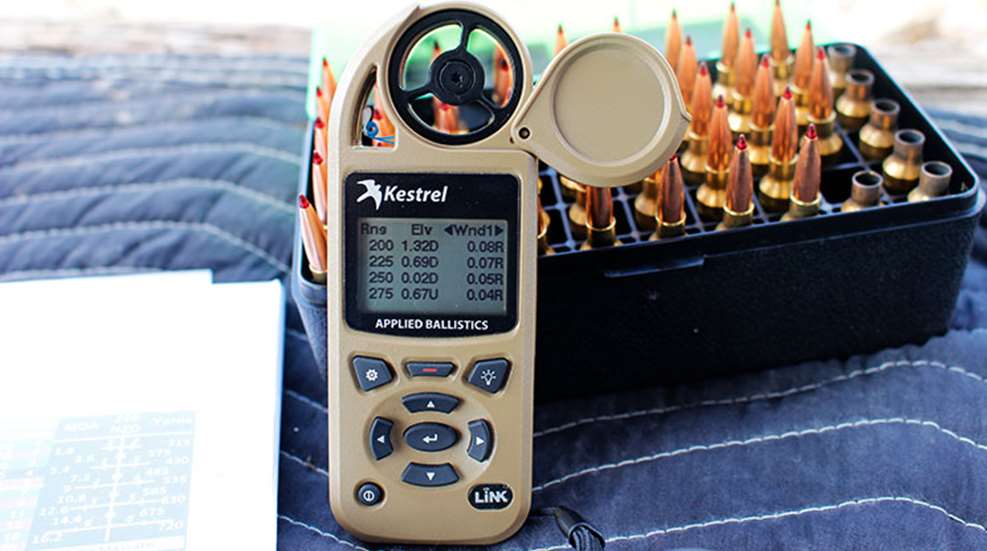
Just as a riflescope and a spitzer boat tail bullet will help you make a long distance hit, there are other tools available to aid the shooter, such as the new Kestrel 5700 Elite weather meter with applied ballistics. With an MSRP of $709, the Kestrel Elite comes in a neat, weather-proof and portable package, and will quickly become a long-range hunter’s best friend—especially for those who travel and hunt in differing environments. The air at the top of the Rockies is different than the air at Alaskan sea level, which is different than the Sonoran desert. Those atmospheric conditions will affect your dope, and the Kestrel Elite adjusts for those differences.
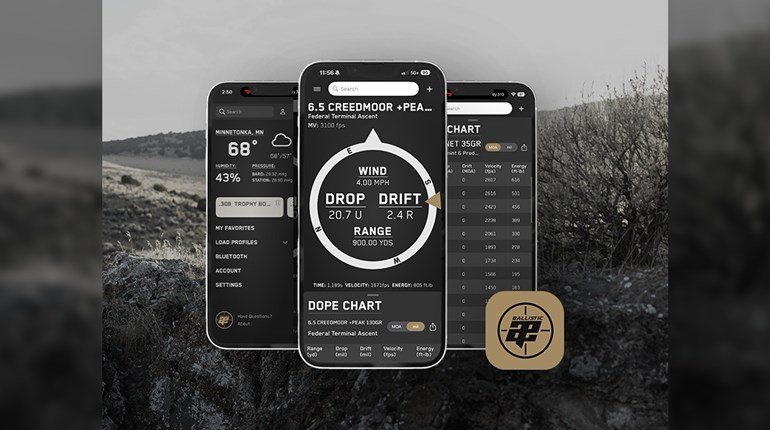
The unit is loaded with the Applied Ballistics computer developed by ballistician Bryan Litz, which provides a detailed dope card based on a combination of your rifle, bullet and speed data, and the atmospheric conditions. The Kestrel Elite allows the user to build multiple gun and bullet profiles—either a G1 or G7 B.C. value may be entered, along with the muzzle velocity of your particular load. The onboard wind meter can be used to the shooters advantage, with the Kestrel adjusting the wind dope information as conditions change, giving very accurate wind calls. It also adjusts the trajectory curve based upon altitude, humidity and temperature—perfect for the traveling hunter. It conveniently runs on a single AA battery and stores neatly in a coat pocket or hunting pack.
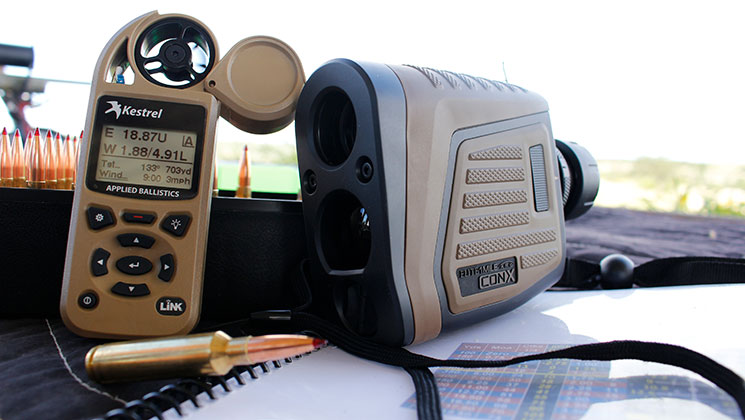
One of my favorite features of the Kestrel Elite is that it will connect through Bluetooth with the Bushnell One-Mile CONX rangefinder. It quickly interfaces, displaying the proper amount of holdover and wind adjustment on the display of the rangefinder. This impressed me, as I could easily image a mule deer far below in a coulee in the prairie wind, distance changing as the deer feeds slowly. The combination of these two units allows a solo hunter to have his dope instantly displayed within the rangefinder, making a longer shot much easier.
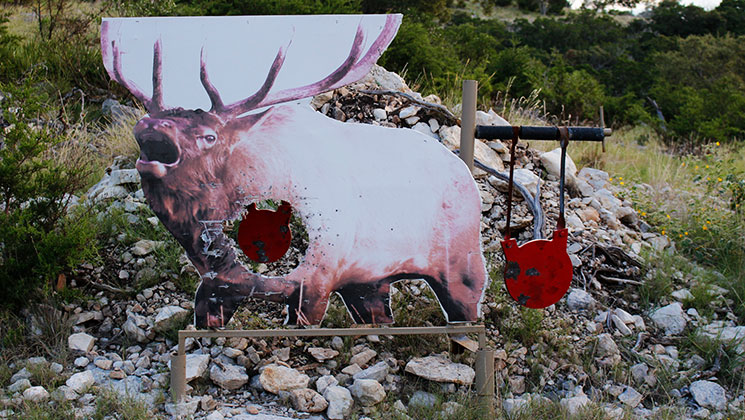
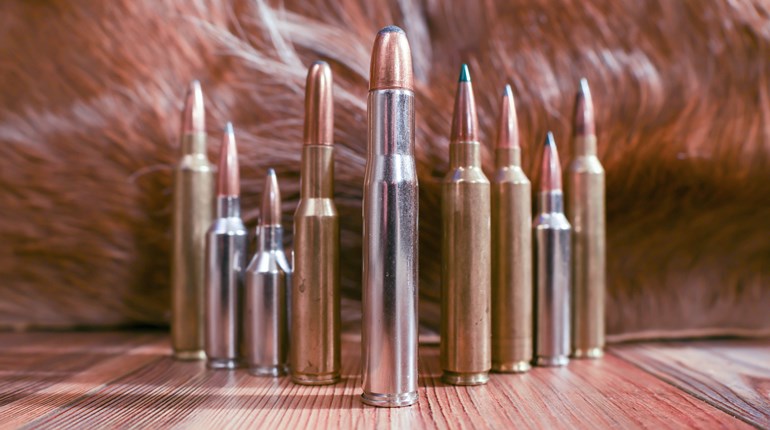
I put the Kestrel Elite to the test, down in Texas at the FTW Ranch. Their SAAM Shooting School offers a variety of targets at ranges from 100 to 1,800 yards—surely enough to test the trajectory and wind calling capabilities of any unit. In addition, the targets are at a variety of vertical angles, and the wind can be nothing shy of a nightmare down there. I brought my most accurate rifle with me to give the unit the best information possible. The rifle is a 6.5-284 Norma out of the Savage Custom Shop, and will print 140-grain Hornady ELD Match bullets into 1/3 MOA out to 500 yards.
I built the rifle/bullet profile into the Kestrel once I had a good average muzzle velocity off the Oehler 35P chronograph and loaded a couple hundred rounds to bring to Texas. Once I confirmed zero, I walked it out to 500, and then 700 yards, with the elevation marks on the steel plates being very consistent. The wind calls were a very good guide, though the wind at the unit wasn’t necessarily true along the bullet’s entire flight path, and needed to be adjusted—but that comes with the territory. Once I got the Kestrel interfaced with the Bushnell CONX, I used it to rapidly switch between plates at ranges from 300 yards out to 700, relying only on the displayed data, and it worked perfectly. I pulled one shot for certain, but the rest were hits.
The learning curve isn’t bad at all; even I figured it out quickly. It was interesting to see the change in data as the Texas sun worked its magic. The density altitude—the equivalent change in condition brought on by heat, which changes the trajectory as if you changed altitudes—had a definite effect on the long-range trajectory curve. The unit is built sturdy, and the display can be changed from a white to a red background while hunting. The buttons have a positive feel, which can be manipulated easily, even with cold fingers. If you’re into the long-range hunting game, whether hunting animals at sane ranges or punching steel way out there, the Kestrel Elite is a must-have tool, one that definitely increase your success.