Delta Waterfowl Releases Annual Waterfowl Breeding Population and Habitat Survey

by
posted on August 11, 2016
** When you buy products through the links on our site, we may earn a commission that supports NRA's mission to protect, preserve and defend the Second Amendment. **
delta_duck_report_f.jpg (1)

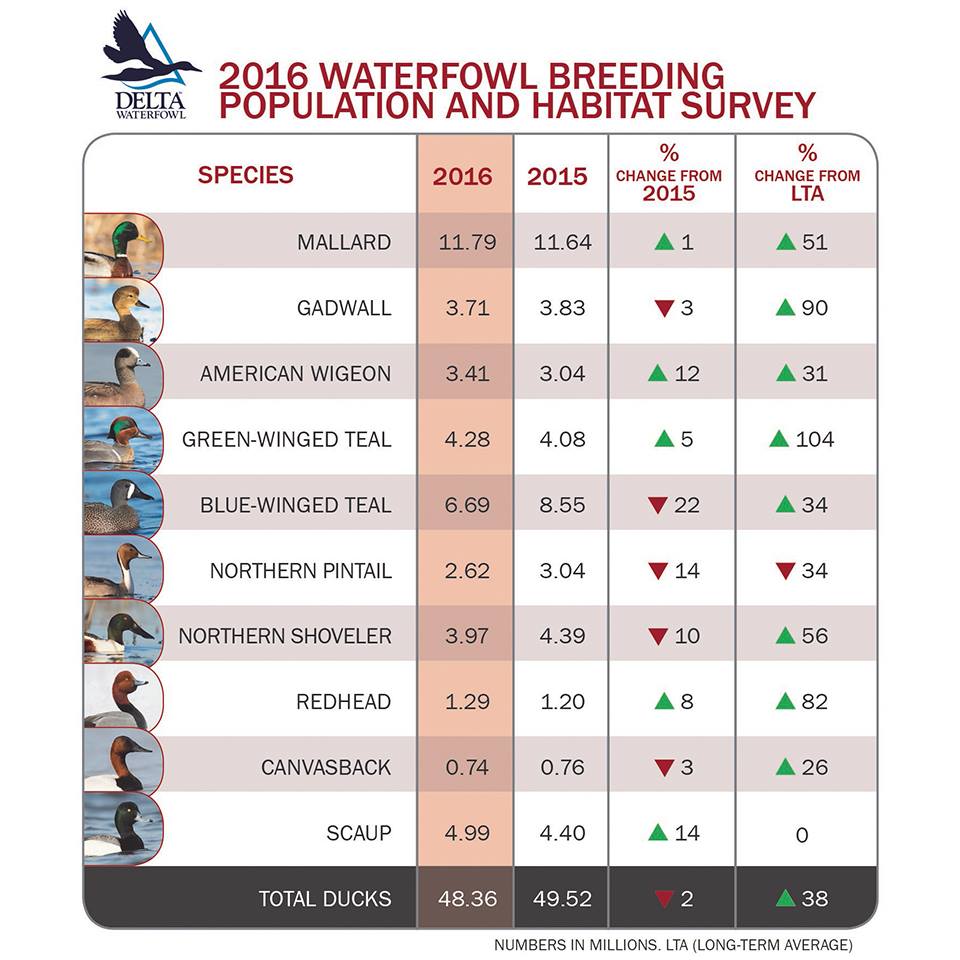
North America's breeding duck population has taken a slight dip in 2016, but remains well-above the long-term average, according to the annual Waterfowl Breeding Population and Habitat Survey released by Delta Waterfowl.

The annual survey, which has been conducted jointly by the U.S. Fish and Wildlife Service and Canadian Wildlife Service since 1955, puts the breeding duck population at 48.36 million. 2015's report indicated a record population of 49.52 million.

"The duck numbers are amazingly good," said Dr. Frank Rohwer, president of Delta Waterfowl. "Mallard numbers are especially surprising, and show why they are the most abundant duck in the world. They adapt to conditions exceptionally well.

The 2016 survey marks the highest estimates ever recorded for mallards and green-winged teal. The news was not as good for pintails, which dropped for a fifth-straight year.

"It's really clear that pintails overflew the prairies," said Rohwer, citing a 60 percent decline in breeding numbers in southern Saskatchewan. "Pintails and bluewings didn't find the seasonal and temporary wetlands they prefer for breeding, so much of the population did not settle in the prairies. When pintails overfly the prairies, production is always down."

The announcement comes on the heels of an earlier report from the organization, which forecasted a reduced fall duck flight. Indeed, fewer juveniles are expected to be in the air this season. Young ducks are generally easier to decoy and make up a significant portion of the hunter harvest.

"We'll be hunting flocks with more adult ducks in them this season, but the flights should be strong," Rohwer said.

For more information, go to DeltaWaterfowl.org.
Latest

WB355, Whitetails Use Their Nose Moe Than Any Other Sense, Copyright Mark Kayser

Three Whitetail Traps to Set for Close Shots

Your whitetail hunting location may be as expansive as a national forest or as small as an uncle’s 40-acre woodlot. In either scenario, whitetails have a knack for slipping by just out of shooting range. Whether using a firearm or archery equipment, you do have options to lure whitetails closer. Consider setting a trap this season for your best opportunity at an ethical, in-your-face shot.

Don't Fight the Feeling: Setting up a Booner Bowhunt

When your gut tells you to hunt, don’t fight the feeling. Josh Woods didn't, and dropped a legitimate Booner. Here's how he did it.


Range Review: Heritage Badlander Field .410 Bore

This flexible side-by-side from Heritage Manufacturing is ready for a variety of shooting roles including turkey hunting! Check out the full review of the Badlander here.

Win Leica Optics in Sitka’s Diverge 14 Photo Contest

No purchase is necessary to enter the Sitka’s Diverge 14 Photo Contest, and the grand prize winner will net gear worth more than $17,500 from Leica, Sitka, Pelican and Adobe.

Hardware Review: Pulsar Thermion 2 LRF XL60

Simply put, thermal weapon sights represent the greatest technological advantage a hunter or home protector can have since the advent of the firearm itself. The Pulsar Thermion 2 LRF is a great example. Check out Jeff Johnston's Hardware Review of it here.

American Made: What’s New at Griffin & Howe?

The classic brand is once again thriving in New Jersey, offering a hosts of products, services and even courses.

Interests


Get the best of American Hunter delivered to your inbox.