How to Tell a Buck Track from a Doe

by
posted on February 2, 2016
** When you buy products through the links on our site, we may earn a commission that supports NRA's mission to protect, preserve and defend the Second Amendment. **
buck_track_doe_track.jpg

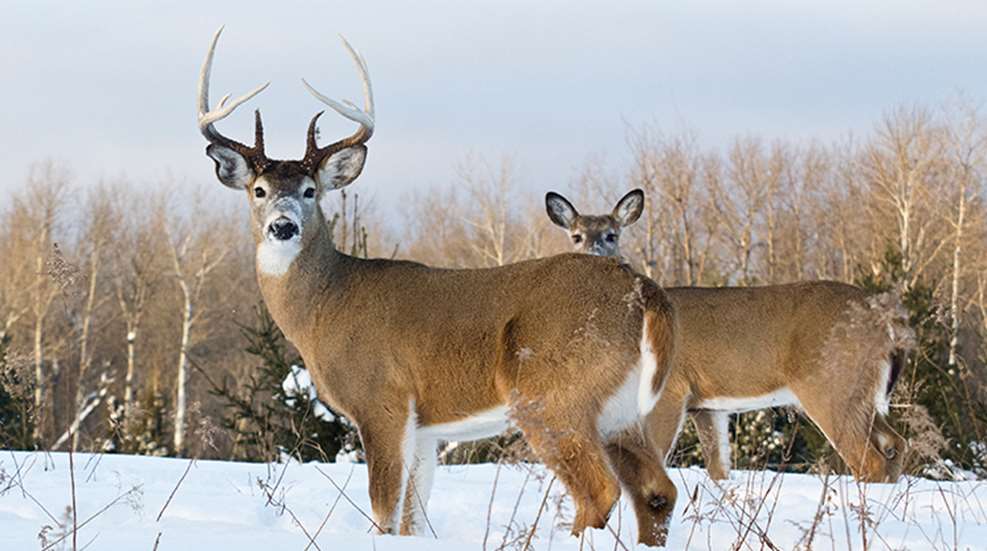
The difference between calling something an “art” as opposed to a “science” is that a science is supposed to have predictable, clear variables, whereas an art is up for interpretation. That said, telling a buck from a doe track is an art. But there are telltale things to look for. When you add up the clues, they’ll tell you if it’s a buck or a doe.

• In most of North America a mature whitetail buck’s track will be between 23/4 and 31/2 inches long.

• Sharper toes typically indicate a younger deer, but this varies with terrain, as harder, rocky terrain rounds off hooves.

• Rear tracks of younger deer or does tend to step on or slightly overlap their front tracks.

• Bigger bucks have wider chests and longer strides than younger bucks and does; a mature buck’s tracks might be 6 to 8 inches apart (left to right).

• In thick cover a doe might step between things a buck with antlers 15 or more inches wide can’t.

• Does tend to squat and pee whereas a buck’s plumbing causes him to pee farther forward; also, a buck will tend to dribble a little urine as he walks.

• Bucks might drag their feet more than does, but this can be deceiving, as it is dependent on terrain, the depth of the snow and more.

Latest

Scope Lede
Scope Lede

Hardware Review: Stealth Vision Tactical SVT 3-18x44mm

Jeff Johnston dives into the Stealth Vision Tactical SVT 3-18x44mm. Check out his thorough review below.

Top 10 New Hunting Rifles for 2025

As the year draws to its inevitable close, we asked Philip Massaro to select his top 10 favorite rifles that debuted in 2025. Without any further adieu, let’s dive into the list.

The 4 Classic Hunting Platforms

Andi Bogard takes a look at the classic actions and platforms that laid the foundation for today’s hunting rifles.

Conservation Partners Launch Novel Turkey Nesting Research

Predator populations—nest raiders and full-feathered turkey killers alike—are growing across the United States. To determine if their increasing numbers are a leading cause of wild turkey population declines, Turkeys For Tomorrow (TFT) has announced a groundbreaking study on predator impacts on nesting and poult-rearing success.

Muleys The Old Way: Traditional Muzzleloading

Aram von Benedikt and his son took part in one of the oldest American traditions there is: muzzleloading for deer with a traditional smokepole. Read on for more about their adventure.

MSU Deer Lab Celebrates 50 Years

For 50 years the Mississippi State University (MSU) Deer Lab—a partnership between the university’s Forest and Wildlife Research Center (FWRC) and MSU Extension Service in Starkville, Miss.—has delivered nationally recognized research on deer biology, habitat management and land stewardship.

Interests


Get the best of American Hunter delivered to your inbox.