Sometimes we lose sight of the fact that shooting and hunting are supposed to be fun. It’s easy to get serious when you invest a lot of money and vacation time on a big-game hunt, and even busting clays with your buddies has a way of taking on a competitive overtone. But when you pick up a .22, grab a pocketful of cartridges and go for a stroll in the woods or out in a field to do some plinking, you quickly remember just how much fun shooting can be.
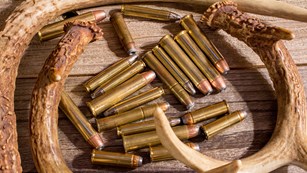
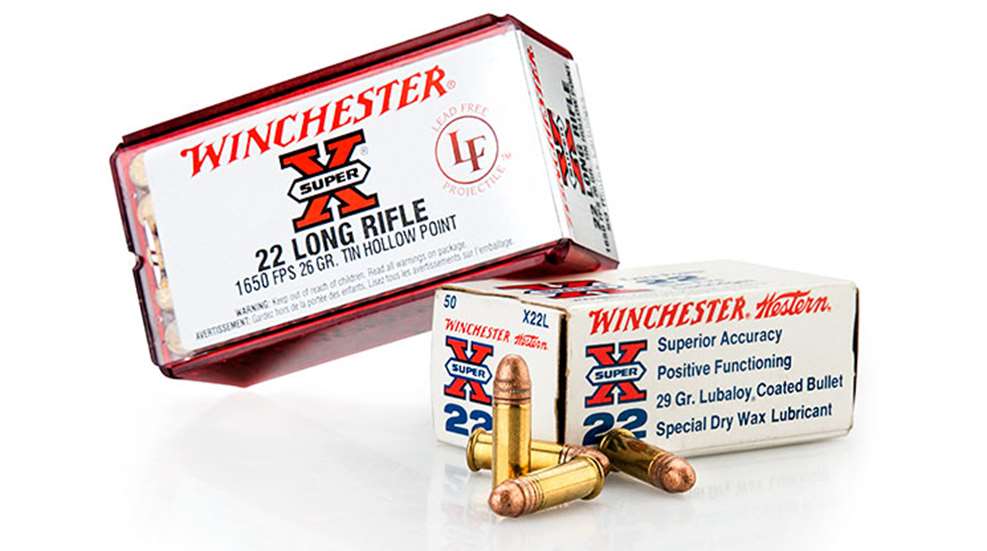
Today’s .22 can trace its roots back to 1857, when the .22 Short and its 29-grain pill were introduced. In 1871, the Short’s case was extended to accommodate a full five grains of black powder behind the same bullet, and it became known as the .22 Long. The .22 Long Rifle, or .22 LR, emerged in 1887. It featured the same case and powder charge as the Long, but the bullet was stepped up to 40 grains. Since the turn of the 20th century, all of these .22 cartridges have been propelled by smokeless powder. The 40-grain bullet remains the standard for today’s .22 LR, with velocities typically hovering around 1,100 fps. A number of high-velocity loads, often with bullets in the 32- to 36-grain class, are also available, some with velocities that surpass 1,600 fps.
When talk turns to plinking these days, the hot new .17-caliber rounds seem to monopolize the discussion. While I understand what all the fuss is about, I can’t help but think that the venerable .22 Long Rifle is getting short shrift. In an era when faster and bigger are all the rage, in my estimation the .22 LR remains as the best hunting rifle/cartridge combination for plinking—and for beginning shooters.
For starters, the ammunition is cheap; you can still get 50 rounds for less than five bucks, if you can find it. The rifles are also inexpensive, with lots of capable used .22s on the market for less than $75. Then there’s performance. Out to 75 yards, the .22 LR is reliable and inherently accurate, with recoil practically non-existent. No wonder the .22 remains the best choice for introducing children to the shooting sports in a fun and relaxed manner.
When I was a kid, the natural progression was to graduate from a cap gun to a BB rifle to a .22. Living in a small town at the time, we’d regularly bike 10 miles to a friend’s farm. He owned a couple bolt-action, single-shot Cooey .22s, and we’d take turns with these surprisingly accurate little rifles, harassing woodchucks or attempting to pot the occasional grouse. Later in life, when I was living on the prairies, I’d spend summer weekends strolling across the grasslands with my Ruger 10/22. Richardson’s ground squirrels (a.k.a. gophers), jackrabbits and even the odd crow or magpie were regular targets. It wasn’t unusual to go through half a brick of ammunition on a May or June afternoon when the gophers were most active. And although I don’t get out shooting in the summer as often as I once did, plinking and hunting with my .22 are still among my favorite pastimes.
Shooting with a .22 is more than a matter of nostalgia, however. It helps teach youngsters the fundamentals of handling firearms, from how to properly carry and shoot a rifle, to what it feels like to take the life of an animal and to know the joys of putting a little food on the family table. A .22 provides youngsters their first real opportunity to experience the freedom and responsibilities of walking through the woods and meadows alone, gun in hand. They discover first-hand what it means to have empowerment over life and death, while concurrently learning about restraint and ethical behavior.
The beauty of plinking is that you don’t need live targets. For many years soda cans have been the universally accepted official target of the plinking crowd, and decades after my first I still find it fun and rewarding to tumble one off a fencepost. And if you take a young boy or girl afield with you, I promise that you’ll be quick to appreciate the satisfaction that comes with passing on that tradition.