Two Octobers ago found me in a North Dakota marsh hunting a diversity of waterfowl.Someone mentioned that a local taxidermist mounts ducks at just $100 a pop—including shipping!
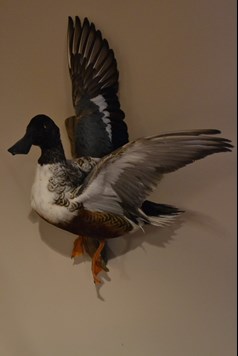 Wow, I thought. Most decent taxidermists charge at least twice that, and those known for bird work command three to four times as much. It was early in the season and the birds were not plumed out—but why not? So, on a lark, I left the taxidermist a drake northern shoveler. Yes, I know you spoiled Central and Mississippi Flyway hunters often pass on spoonbills, but for a northern Atlantic Flyway hunter they're a rare opportunity.
How'd the mount turn out? Well, you might say I got what I paid for:
The posture is quite unrealistic, but perhaps worse yet the drake is almost entirely hidden by the underside of an upturned wing. Then there's the eyes. Good eye work is the mark of a talented taxidermy artist, but—as you can see from the photo—this poor spoony is not without issues. In fact, the taxidermist didn't even bother to include an off-side eye. Admittedly that portion of the duck is generally out of view, but c'mon...
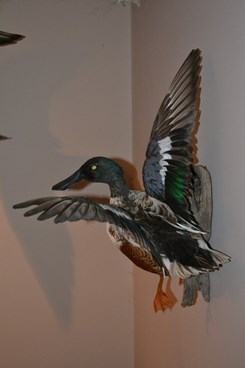 Then there's the stitching, which most good artists hide beneath feathers or otherwise. My spoonbill, on the other hand, looks like it was fashioned by an apprentice of Dr. Frankenstein. The most glaring error is found on the right wing coverts. Rounding out this piece of artistry we find the totally botched feet, which have the look of worn-out leather. On the bright side, I've found a way to position the spoonbill that doesn't look half bad—assuming it's viewed from a distance. In a corner, hidden amongst otherwise nice taxidermy, this angle does the bird some justice:
So, lesson learned. Now, no matter the deals offered by local taxidermists, I always carefully package my ducks for delivery to my preferred studio.
Is this the worst duck mount you've ever seen? Had a bad experience of your own? Feel free to commiserate in the comments section.