It’s been a bit more than four years since we last saw a Winchester Model 1894 leave the factory. The iconic lever-action, along with its equally iconic bolt-action Model 70 brother, were laid to rest in March 2006 when U.S. Repeating Arms Co. called it quits and closed its New Haven, Conn., plant. Sage riflemen sunk into seclusion and depression at the loss of two pinnacles of the American sporting rifle.
From a business standpoint—and let us never forget gun manufacturing is a business—it was a smart and necessary move. Sales were flat, costs were out-of-control high and conditions were as untenable as today’s economy is as a whole. Still, for a lot of us, it just didn’t seem right to not be able to buy a new Model 94.
A couple of years ago negotiations allowed the return of the original company name—Winchester Repeating Arms Co. (WRAC)—and the Model 70 was resurrected. I then asked Roger Stitt, who was behind the resurrection, when we would see a Model 94. “We’re working on it,” was all he would say, but there was a discernable twinkle in his eye.
Well, we got the old girl back … sort of. This year in honor of the 200th anniversary of Oliver F. Winchester’s birth, Browning/WRAC has produced a commemorative Model 94. Though not from New Haven, this Model 94 made by Miroku, a frequent partner of Browning/Winchester, is a much better example of gun making than we have seen from New Haven in a long time.
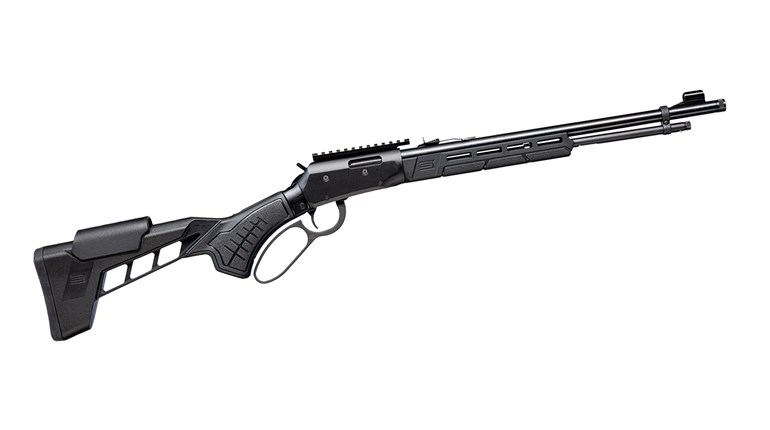
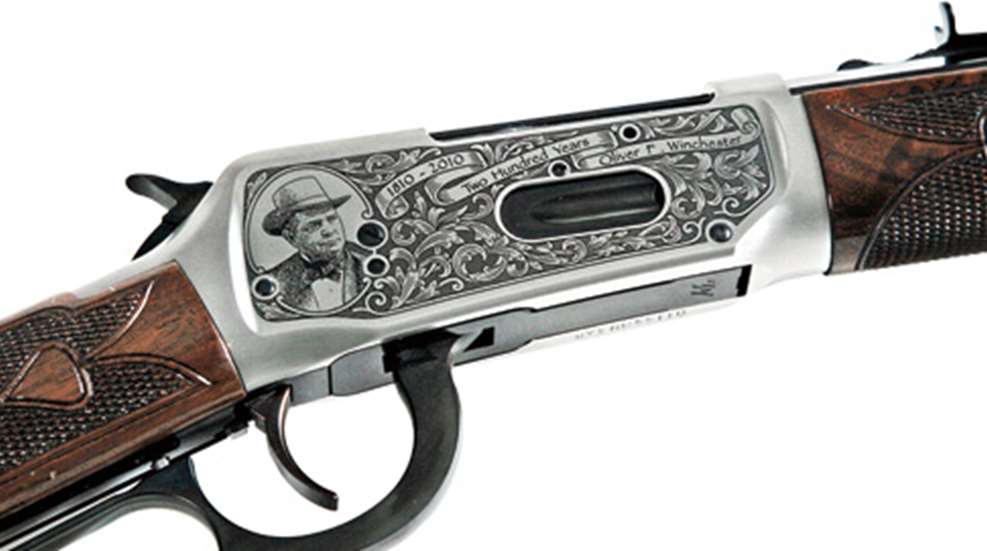
Since it is a commemorative rifle, it’s more dolled up than your basic behind-the-truck-seat Model 94. With a 24-inch, half-octagon and half-round barrel and an overall length of 43 inches, this is a rifle, not a carbine. Chambering is, of course, the quintessential .30-30 Win. The receiver is satin polished and left in the gray with scroll-style engraving left and right. Engraved on the left is the stylized WRA crest; the right side has an image of Oliver Winchester along with a ribbon announcing “1810-2010 Two Hundred Years Oliver F. Winchester.” The top tang is defiled with the now-mandatory manual safety. Granted, an effort has been made to make it as unobtrusive as possible, but it really is superfluous for those who know how to run a lever-action. One other minor annoyance I found on the receiver was the pivot pin for the under-link was a bit loose. It moved easily under finger pressure, making me concerned that it could be lost in the field.
The barrel and matching magazine tube are highly polished and deeply blued. A post front sight with a brass bead is dovetailed into the barrel 5/8-inch to the rear of the muzzle. Thankfully omitted is a front sight hood that was on many of the later New Haven guns, a useless addition on this type of rifle. Toward the rear of the barrel is the ubiquitous full-buckhorn sight dovetailed into the barrel with a stepped, sawtooth-like elevator. The bolt, like all the blued metal, is highly polished and has a gold-filled rendition of Oliver F. Winchester’s signature.
Not surprisingly, the stock is made from A-grade fancy walnut that’s finished in high gloss. The grip is checkered at 20 lines-per-inch in matching panels on each side. Up front, the fore-end features a wrap-around checkering panel. It also has a metal cap left in the gray. The stock is noticeably beefier than my other 94s. On the back end, the butt is terminated with the wickedly good-looking crescent plate. Unfortunately it is equally wicked in its transmission of recoil, especially for those of us with substantial shoulders. The .30-30 cartridge is quite mild, but the sharp edges of the crescent buttplate dug into my shoulder enough to leave a bruise after my range session with this rifle.
There were but two surprises during the range session. The first was the disgusting “click” of the hammer falling without the cartridge firing with the first round, which is to say that I don’t like manual safties on hammer guns. But moving the tang safety to “fire” cured this “problem.” The second was that even with the sight elevator at its lowest position the rifle printed its groups nearly 7 inches high at 100 yards. Groups were about what I expect with an open-sighted rifle at 100 yards with my old eyes. The best was a 1 7/8-incher with Hornady LEVERevolution. Worst was 3 3/4 inches with Winchester Power Points. The trigger pull was one of the most consistent I have seen, and at 5 pounds, it was better than some of the latter New Haven guns.
Of course, the Model 94 was never intended to be a target rifle. It earned its bones in the game fields of North America and all over the world. Regrettably, there were no hunting seasons open during my evaluation period. Had there been, I wouldn’t have hesitated to take this new, old rifle for a whirl.
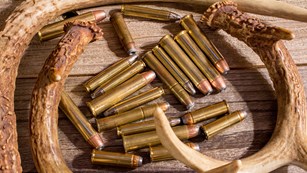
It dates me to say this, given the immense popularity of the AR platform and other semi-autos in the hunting fields today, but I thope this rifle sells well enough to encourage Winchester to bring back the Model 1894 as a regular catalog item. This commemorative rifle won’t get tossed behind the seat of a rancher’s pickup, but with more than 6 million Model 94s out there, it just doesn’t seem right not to see a few of the new ones on the rack at the gun shop.
Specs:
801-876-2711, www.winchesterguns.com
Type: lever-action rifle
Caliber: .30-30 Win.
Barrel: 24", half-octagon; 1:10" twist
Trigger pull: 5 lbs.
Magazine: tubular; 8-round capacity
Sights: buckhorn rear adjustable for windage and elevation; Marbles brass-bead front
Safety: tang-mounted crossbolt
Stock: two-piece; walnut; LOP—13.25"
Overall Length: 43"
Weight: 8 lbs.
Metal Finish: blue, gray accents
MSRP: High Grade—$1,469; Custom Grade—$1,959