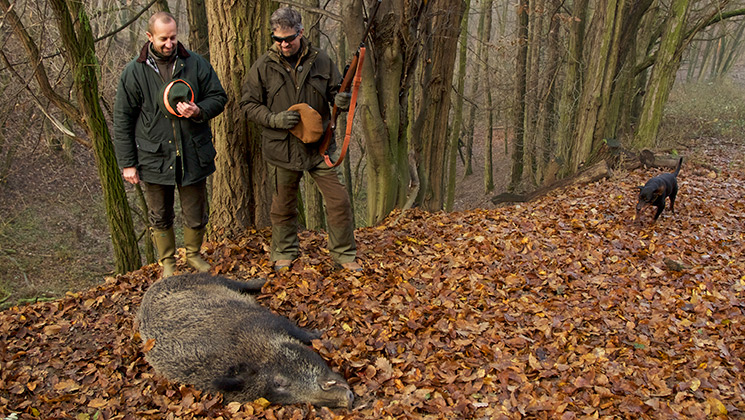
Hunting’s post-kill rituals aren’t spontaneous gestures like high-fives or war-whoops, but perhaps that’s where they began.
Maybe those instinctive, visceral celebrations evolved as ancient hunters and their tribes considered what they gained at the animal’s expense. From there, things got complicated as time and culture took hunters’ thoughts and hunting’s utilitarian tasks, and shaped them into formal tributes to the animal’s life and the meat it provided.
That process created ceremonies—large and small, personal and communal—to instill and sustain ancient reverence. Maybe that’s why post-kill hollering, laughing and chest-thumping can appear disrespectful to others. Ignoring post-kill tributes—even those silent and subtle—suggests we’ve forgotten the old ways, never took time to learn them, or never knew of them in the first place.
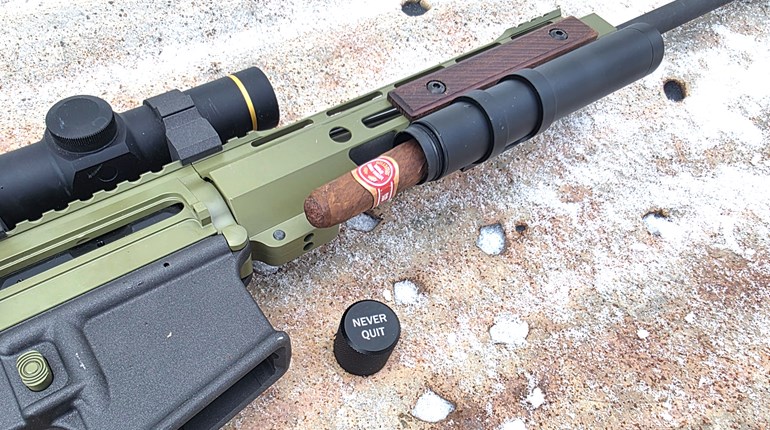
Either way, today’s post-kill rituals are rooted in history and traditions, and mostly of European or Native American origins. The Germans, for instance, prayed to St. Hubert, the patron saint of hunters. They built forest chapels on their hunting lands and made worship mandatory. American Indians, meanwhile, have long dropped pinches of tobacco onto the animal’s body to offer respect, believing that tobacco—crumbled or smoked—connects them to the spirit world.
Many hunters still practice post-kill rituals, borrowing from history, other cultures and their own imaginations to honor the fact that life requires death, which warrants respect. With that in mind, here are some post-kill rituals you might recognize.
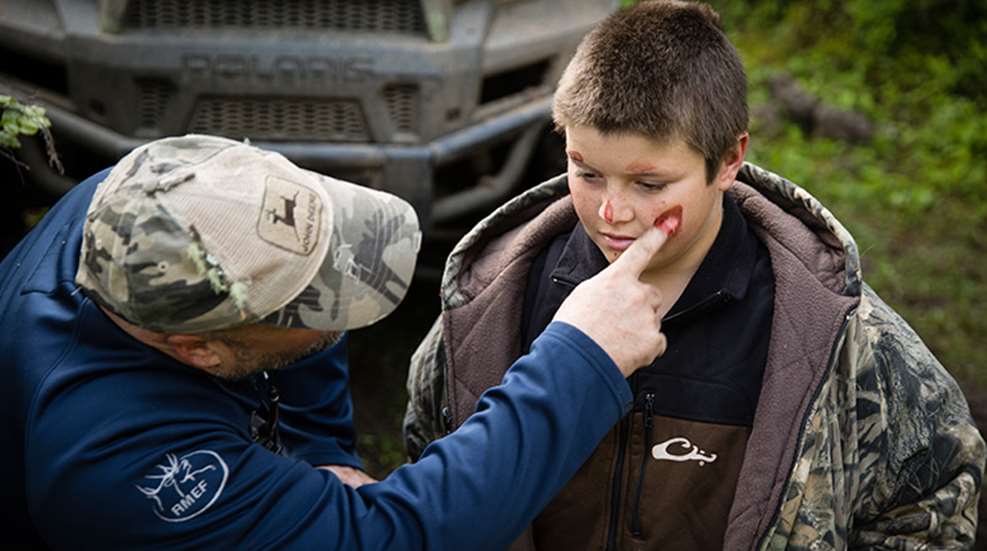
 Blooding: This common ritual varies widely, but usually involves a parent or the camp’s senior member taking blood from a hunter’s first kill and applying it to his or her face. Some elders carefully streak the hunter’s cheeks with a blooded finger, while others hastily smear blood all over the hunter’s face.
This rite traces back to the 700s A.D. as a tribute to St. Hubert. To receive the patron saint’s blessing for the kill, the group placed a knife in the animal’s fatal wound to coat it in blood. One of them then used the knife to gently apply red crucifixes on the hunter’s forehead and both cheeks. The hunter then accepted everyone’s congratulations.
Joe Hamilton, director of development for the Quality Deer Management Association, recalls a similar ritual from his younger days. In this case, an older hunter explained the symbolism while applying blood: The streak down the first-timer’s nose honored the quarry’s sense of smell; a second streak over one eye honored the quarry’s sense of sight; a final streak over the other eye honored the hunter’s accomplishment. “They honored the hunter for being quiet, patient and stealthy to overcome the animal’s natural defenses,” Hamilton explains.
Horn Blowing: Houndsmen hunting deer often blew horns to communicate with the dogs and each other. To make the sounds, they used everything from a bull’s actual horn sheath, to horns or bugles made of brass or pewter. Today many huntmasters in Europe still blow horns to communicate to their charges. Some American hunters do, too. Regardless where it’s blown, the sound of a horn reverberating through a hardwoods swamp or a deep forest can make the hair on hunters’ arms stand up.
The Last Bite: The “letzebissen” or “letzer bissen” is practiced in Austria, Holland and Germany, and by some Americans. Valerius Geist, 78, of British Columbia, is a retired zoology professor and hunting authority who was raised in Germany and Austria. Geist says Germans break (never cut) a twig from one of five tree species in descending preference: oak, pine, spruce, fir and alder. With the animal placed on its right side, they pull the broken twig through its mouth from one side to the other and leave it clamped between its jaws.
Eating Raw Liver: Al Hofacker, founding editor of Deer & Deer Hunting magazine, recalls hunters in 1960s-era deer camps in northeastern Wisconsin that brought the liver of their first kill back to camp each year. “At night they’d slice small pieces of the raw liver and each eat a piece,” he says.
Slitting the Throat: Hofacker also recalls a once-routine practice he could never explain. “Decades ago it was common to slit the deer’s throat before field-dressing it,” he says. “It never made sense because the heart has stopped beating, but they thought they were ‘bleeding it out.’ That’s pretty much gone now.”
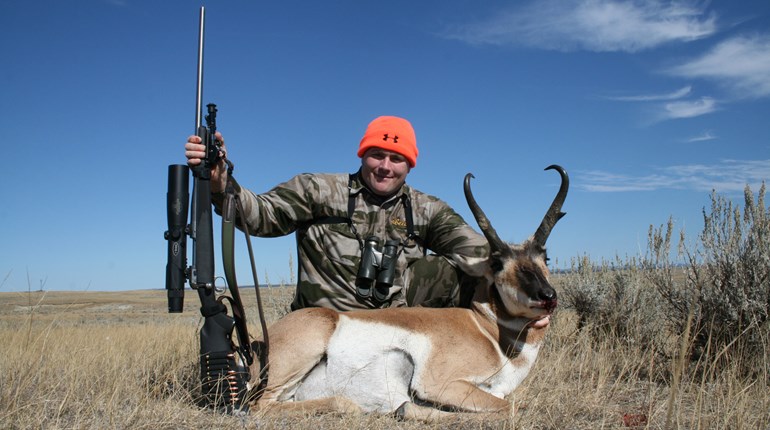
Meat, Skulls, Shoulder Mounts: Long after the kill, hunters continue honoring their quarry by cherishing and consuming its meat, and displaying its skull or full-shoulder taxidermy mount. Such honors, however, are easily tarnished. “You should never desecrate head mounts by placing cigarettes in the mouths, sunglasses over the eyes, or hats or Santa Claus caps on their heads,” Geist says. “You also don’t sit on the animal’s body after you’ve killed it. That dishonors the creature.”
This is obviously an incomplete list, but perhaps it reminds us that honoring our quarry is largely a matter of the heart. And that, Geist says, should focus on the kill itself.
“Rituals aren’t a bad idea; I see their value,” Geist says. “But you show the utmost respect by concentrating on killing the animal quickly. Hunters’ conduct toward wildlife and nature should be consistent with their conduct toward other humans.”
Most Popular