Millions of landowners now manage their property for deer, and most of those management plans revolve around one key feature: food plots. While food plots are an effective way to attract, hold and grow big deer that doesn’t mean you can’t also grow really big deer in forested land. Chad and Lear McCoy are proving that.
Chad and Lear manage the J. McCoy Lumber Company in Adams County, OH, and while timber is their business, whitetail hunting is their passion. Over the course of the last several years, the McCoys have developed a timber management plan that not only keeps their business running, but also produces some of the biggest whitetail bucks in the country.

Cutting down trees may not seem to be the best plan for growing big deer, but when timbered property is properly managed, it can be logged for profit while still providing ideal habitat for whitetails. In addition to their lumber company, the McCoys also run a whitetail hunting-guide service on the same lands they harvest timber, and their clients consistently harvest big bucks in areas that have been logged. How? Because they’ve mastered the art of forest-land management.

Managing Deer in Timber
“Loggers have traditionally cut down the most valuable trees in an area, and that includes the big oaks,” Chad says. “They’ve also left behind buckeyes, beech trees, gums and other tree species that don’t provide forage for the deer.” The McCoys use a different method; they’ll leave behind plenty of mature oak trees that provide valuable food sources for deer, but that’s just one element of their timber management plan. In addition, the McCoys remove the tops of trees that are traditionally left behind, and that allows for new growth. They say doing so speeds up regeneration in an area by as much as five years.
“You’ll see new trees growing shortly after you remove some of the mature trees,” Chad says. What’s more, the McCoys are very careful to preserve the mineral-rich topsoil that provides a base for new plants and helps promote antler growth.
“When we open logging roads, we’ll reseed them as soon as we’re finished removing the logs,” McCoy says. “That ground cover helps keep the soil in place, and provides another food source for the deer.”
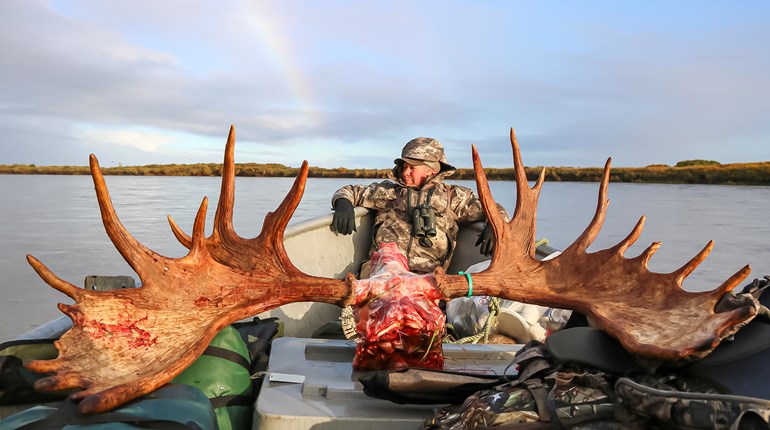
The McCoys plant food plots, but those food plots supplement the healthy forest habitat that surrounds them. In doing so, they create habitat that is more productive and attractive to deer. The results of their efforts are dramatic; their clients consistently take whitetail bucks that are 170 inches or bigger. In 2014, Lear McCoy harvested a massive 239-inch, 36-point non-typical buck on one of their managed properties. Forest land, when properly managed, can provide income from timber sales while simultaneously producing big deer.
The Secret Weapon
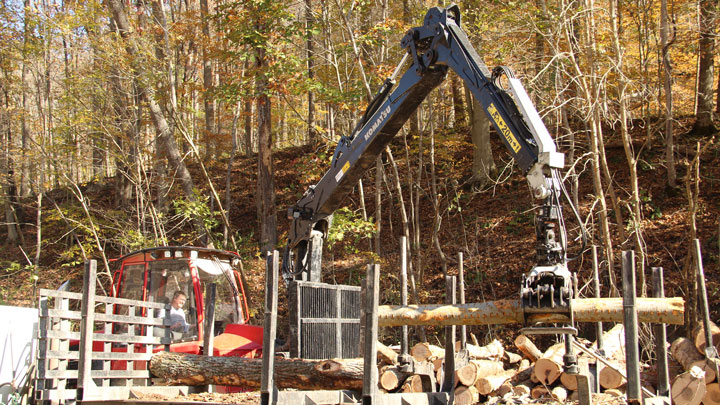
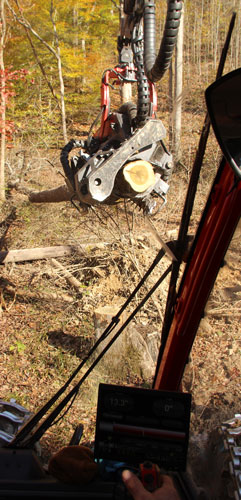
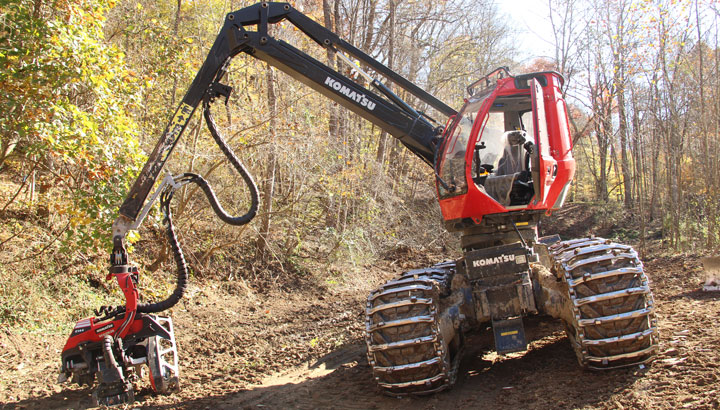
In an effort to harvest timber on lands they plan to hunt, the McCoys purchased a Komatsu 931XC harvester. Originally built for use in Scandinavian forests, the Komatsu is a high-tech machine that simplifies the logging process while maintaining critical habitat and leaving forested land undisturbed. Unlike traditional logging methods that require bringing heavy equipment into forests and leaving behind piles of treetops, the Komatsu has special tracks that leave the topsoil behind and reduce rutting of the land, while efficiently cutting down select trees. What’s more, the machine greatly reduces damage to nearby trees. Further, since it cuts branches down to 2 inches, there’s very little waste wood left behind to impede regrowth. This new technology is changing the way timber is harvested. By being able to selectively harvest mature trees without damaging mast-producing trees around it, the Komatsu leaves logged areas more attractive to deer. Forest succession is a natural phenomenon—trees fall, rot and are replaced by new growth. Low-impact logging techniques are improving forest habitat for whitetails.
The Takeaway for Landowners
You may not be able to afford a high-tech machine to cut timber, but there are lessons to be learned from the McCoys’ success for every land manager. Instead of simply viewing your timber property as bedding cover to support your food plots, incorporating intelligent forest management actually improves the overall quality of your habitat and the deer you’ll find there. The key is to leave mast-producing trees behind, selectively harvesting some trees while leaving others to mature. Low-impact logging is an effective way to boost whitetail numbers and improve habitat, while traditional logging methods require removing topsoil and clearing out all the valuable mast trees might provide short-term profit, but leave timber lands as less productive habitat for deer. By removing some of the less-valuable tree species that impede the growth of mast trees, reducing topsoil loss and planting ground cover on logging trails, you can make money off your forest land while simultaneously improving whitetail habitat.