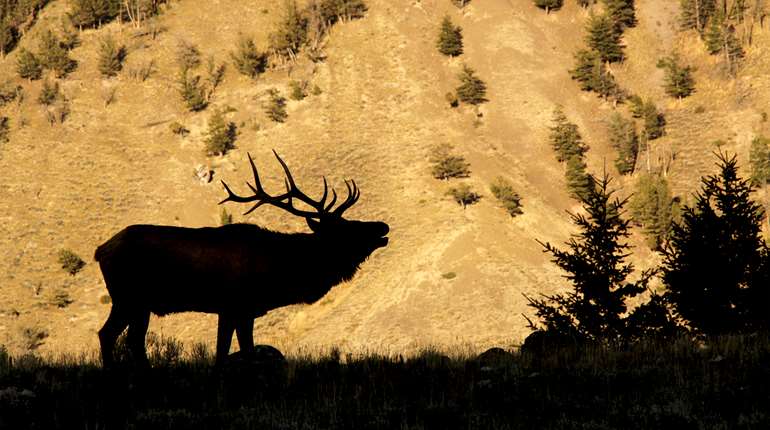
Hunters shouldn’t try to compete with farmers. You are not trying to grow crops in perfect rows in a large field. You are looking to bring in a buck you want to shoot in daylight. This means creating one or more food plots that bucks feel comfortable feeding in or cruising into as they search for does during the rut, during daylight. To accomplish this you need to create what many call “hunting plots,” as opposed to food plots primarily designed to hold deer on a property or to add nutrition to a deer herd’s diet to thereby increase antler size. A hunting plot should be small—likely less than an acre—and irresistible during the hunting season.
Seed choices, the precise shape of the plot and more depend on your terrain and region. But the experts interviewed for this article agreed on the fundamental guidelines presented here. Use them as a foundation as you take control of your property.
A hunting plot should be diverse: A hunting plot can look haphazard or even as untamed as a wildflower garden. This is gardening for deer, not a professional field with rows of crops grown for harvest with a machine. Diversity is important because different crops bring in deer during different times of the season.
RJ Forth, owner of Forth Seed Company, a business that specializes in putting in and maintaining food plots in southeast Kansas and part of Missouri, says, “Ninety percent of the plots I put in are 1 acre or less. Plant options vary according to soil and other factors, but I like to plant clover or alfalfa and to surround it with winter wheat and/or other late-season options. Clover and alfalfa will bring in turkeys in the spring and deer in the early season—before the first hard frost. Other crops keep them coming.”
Keaton Kelso, co-owner of K&K Outfitters with his brother Kendall and one of the many quality outfitters represented by NRAOutdoors.com, says, “I don’t recommend planting something the deer aren’t used to eating. They might look at turnips or kale like a tourist would at produce in a market in Vietnam. They just don’t know what to make of the stuff. It took three years for deer in my area to start eating turnips I planted. Also, don’t try to compete with local farmers. If there are large corn or soybean fields nearby then plant something else.”
Size matters: If you make your plots too small the crops might be all eaten up by the time you start hunting. If you plant a plot that’s too big you’ll have other problems, such as bucks that stay out of range during bow season. Somewhere between a half acre and an acre is right for most hunting plots.
Plan stand locations first: A hunting plot is only as good as the stand locations watching it. You need stands that give you a good vantage, but your stands also need to give you cover so the deer won’t spot you. An outfitter once put me in a limbless sycamore along a plot. All afternoon I watched bucks come, look at me and run.
You also need a good entry/exit route so you won’t burn the stand when you leave at dark—natural things like a ditch or stream are great, but if you don’t have a natural entry/exit route consider piling up brush or planting pines to give yourself escape cover. Forth says, “We plant ornamental grasses that grow 6 feet high and taller on the edge of some plots to give hunters a way to sneak in and out.”
Consider the prevailing wind: Always take the wind patterns into account. If you plant in a bottom, you might be choosing a spot where the wind swirls, making it tough to hunt. If possible, set up stands for various winds.
Consider the sun: You want a food plot location that gets six to eight hours of sunlight, but you don’t want it to get so much sun that it gets burned out. Also, you don’t want the sun in your eyes all day as you wait for bucks to show.
Keep the plot out of sight: A hunting plot should be out of sight of roads and buildings. Bucks will feel safer coming in if they can’t be seen.
Plant near bedding areas: If possible, plant the food plot within a few hundred yards of known security cover. Make sure deer have a way to get from their bedding areas to the hunting plot without leaving cover. This makes it more likely that older bucks will come in during daylight; also, it’ll up the odds that cruising bucks will check your plot when the sun is up.
Choose the right shape: A long and thin food plot can funnel deer past you and in range. This shape also maximizes the edge habitat deer love, and it allows deer to move in a predictable pattern. A logging road in the forest can make a great hunting plot.