In the mid- to late-1800s, professional buffalo hunters working on the Great Plains found that a straight diet of lean red meat led to malnutrition and painful sores on the mouths and gums. Over time, they learned to adopt the Indians’ practice of eating plenty of fresh organ meat. By consuming a variety of heart, liver, kidneys, tongue, marrow and even bile, they got the nutrients that they needed to stay healthy. While our diets are no longer strictly reliant on wild meat, edible organs still have a lot to offer. Here is my guide to four organ meats for the adventurous hunter and eater who wants to explore the wild side of wild game.
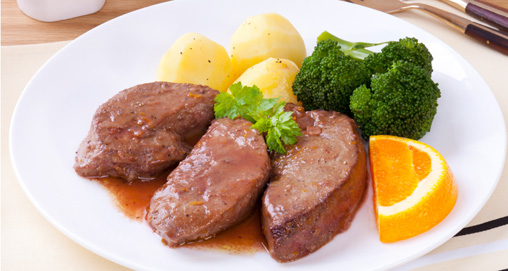
1) Heart: This is my personal favorite organ meat, by far. My father liked deer heart so much that he’d check fresh gut piles left by other hunters in hopes that he’d find one. For our own deer kills, it was a family ritual to cook the heart for a late breakfast after the morning’s hunt. My mother’s recipe is still my favorite. First, remove the ventricles and valve openings in the thick part of the heart with the slender blade of a fillet knife. It’s like hollowing out a bell pepper after you’ve cut off the stem and cap. Then wash the heart thoroughly and slice it into quarter-inch slices. Dust the slices in flour, then fry them in a heavy skillet using vegetable oil or peanut oil. Before serving, sprinkle with a bit of salt and pepper. While my father considered it to be sacrilegious, I always enjoyed mine with ketchup. I still like it that way today.
2) Bone marrow: Not exactly an internal organ, but close enough for discussion’s sake. I came to this one late in life, after reading about the importance of bone marrow in the diets of indigenous hunters. Often, when scavengers have picked a carcass clean, the heavy femurs are all that’s left. Early humans knew that a rich and highly nutritious meal of fat and protein was waiting inside. But this treat isn’t just for cave men. Today, marrow bones are a common sight on the menus of fine dining establishments. In fact, I recently had them in a restaurant on L.A.’s Sunset Boulevard. To make your own, remove the femurs from a moose, elk or caribou. (Whitetail deer femurs work, but they are a tad small). Using a hack saw, butcher’s saw or band saw, slice the femurs into 1½-inch-thick discs. Spread a layer of aluminum foil on a heavy baking pan and stand the bones upright. Sprinkle each with a touch of salt and bake them for about 20 minutes at 400 degrees. Serve the bones on a platter with small slices of toasted baguette. Then let your guests scoop out the marrow and spread it onto the toast like butter. It’s magical.
3) Kidney: In the spirit of full disclosure, I’ll admit that I’ve had mixed results with wild-game kidneys. There’s no way to put it delicately, so I’ll just say that some of them have had a slight urine flavor. Particularly I’m thinking about a pair of kidneys that I removed from a cow elk and used in a classic French preparation called kidney pudding. It’s difficult for me to even discuss that meal. But I wanted to give the organ a second chance, and that resulted in the most memorable meal that I’ve had in recent memory. This time, I used kidneys from a five-year-old bull buffalo to make a breakfast scramble. For that dish, I soaked the kidneys in a bowl of cold water for a night. Then I sliced them into cubes measuring about a centimeter across. Working over a campfire along the Missouri River, I sautéed a handful of the cubes in olive oil along with another handful of diced onion, garlic, parsnip and a bit of hot red pepper. When the meat was cooked and the veggies were soft, I cracked in a few eggs and stirred the whole mix until the eggs were scrambled and cooked, before sprinkling a touch of salt and pepper. Honestly, that dish forced me to reassess kidneys. It was sublime. I will be eating more kidneys during this fall’s hunting season, and I’ll be sure to report back about the results. But for now, I’d definitely say it’s worth a try if you’re feeling adventurous.
4) Liver: I was encouraged to eat venison liver as a young boy because I suffered from mild anemia and liver is known to be a rich source of iron. Many hunters prefer livers of yearling deer and elk, as the animals haven’t been alive long enough for their livers to accumulate a lot of the substances that can give it an off-taste. However, just about any liver can be made palatable by slicing it into thin strips (a quarter-inch or less) and submerging the strips in a bowl of water mixed with lemon juice. Soak overnight, or for at least six hours, in the refrigerator. This draws out a lot of the blood and makes the flavor much milder. After soaking, fry the slices in bacon grease until they’re slightly brown and serve them with coarse salt and lemon wedges.
Not that this is likely to come up, but it’s interesting to note that polar bear liver contains lethal amounts of vitamin A. Eating it can lead to something called acute hypervitaminosis A. Doesn’t sound like a whole lot of fun, but this still shouldn’t stop you from trying organ meat. It’s good for you, and you might be pleasantly surprised by its flavor.