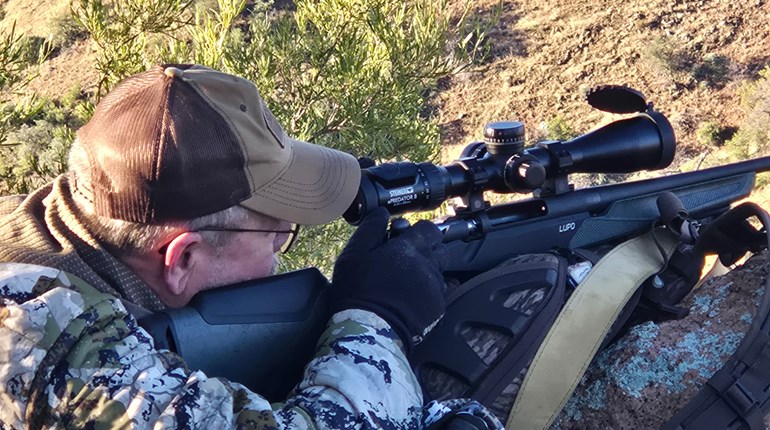
By now you probably have your treestands hung, but there’s always the procrastinators among us who are in a rush to hang stands at the last minute. And this is the worst way to hang a stand, because the number one rule to hanging stands safely is: Don’t be in a hurry! Follow these five steps to hanging a treestand by yourself, and then hunt confidently the rest of the year.
The closest I’ve probably ever been to death was when I used to hang stands by myself—without a safety rope. As athletic as I think I am, I’d routinely find myself 20 feet off the ground, holding my treestand by its strap in my mouth while clinging to the tree with only my leg wrapped around it, and I’d wonder … what the heck am I doing?! Since then, I’ve learned to slow down, get the proper gear and hang stands right. While there are many ways to hang a stand and all of them are easier with at least two people, here’s the solo method I use.
1. First, choose a tree that’s alive and healthy—one whose trunk extends straight up or leans slightly back from the ground. Most importantly, wear a safety harness while you hang the stand. Most people don’t fall while simply climbing to the stand; they fall while trying to hang onto the tree with their legs while trying to hang the stand with their hands.

In rock climbing, climbers refer to “being protected” wherein anytime they take a few steps upward, they either clip their climbing rope onto a bolt in the rockface, or the belayer below them pulls up the slack in their rope so that if they fall, they won’t fall far. When hanging treestands, hunters should always be protected, but it can be a tedious process because the tree obviously doesn’t have pre-set bolts in it, and we often don't have a partner to help us. So your goal should be to attach a “life line” several feet above the place where your stand will hang.
A life line is a long rope that loops around the tree above your stand and extends all the way to the ground. It has a prusik knot pre-installed on it that slides up and down as you ascend and descend, but it tightens and does not slide if you fall. (Click here to see and/or buy a life line.) But before being able to hang a life line, you must first climb to that point. And you don’t want to climb unprotected.

Therefore, take a 10-foot length of sturdy rope or strap (strong enough to easily hold your weight) and make a loop in one end. Take the tag end and loop it around the tree, then drop it though the loop in the rope so that the tree is essentially lassoed. Next, make a loop in the tag end using a double overhand knot, so that it allows a couple feet of slack between it and the loop around the tree. (You now have a rope with a loop at each end; we’ll call this our safety line.) Then attach your harness’ carabiner to its tag-end loop. Now place a handsaw in your pocket, and clip or attach an additional life line to your belt so you can easily access it with one hand later.
Now, as you climb to place your tree steps or ladder sections, move the loop (that’s around the tree) up as you ascend. You’ll have to cinch the loop down so that it won’t slip each time you take steps upward. This process takes a while, but it’s a must.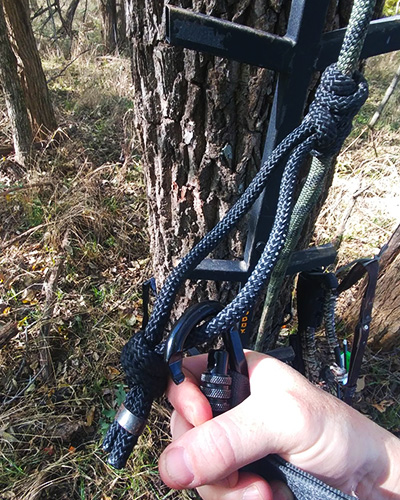
When you finally reach the point where you wish to hang your stand, you’ll be protected from falling by your safety rope and harness. Now, with one hand, remove the life line from your belt and loop it around the tree. Drop the tag end through the loop and then pull the prusik knot through the loop. This is very important! When you are sure the prusik knot is through the loop, attach your safety harness carabiner to the prusik knot loop. Now that you are fully protected by the life line, remove your safety line from around the tree.
2. While in the tree and protected with your life line, trim any branches or leaves that would prevent you from hanging your stand flush against the tree, then climb back down to the ground.
3. Tie your treestand to the tag end of the dangling life line and place a ratcheting strap in your pocket or backpack.
4. Climb the tree again while sliding the prusik knot up as you go. When you get to the point where you wish to hang your treestand, push the prusik knot as close to the rope’s loop as possible and cinch it down so that you can lean back slightly without using your hands, like a lineman, then pull the treestand up using the lifeline as best you can.
5. Make sure the stand is at a 90-degree angle to your tree steps or ladder so you can climb up and easily step off the step and onto your treestand’s platform. Next, loop the stand’s strap around the tree and tighten it down as much as possible before folding the stand’s platform down. Now stand on the platform and test its stability and levelness. Make any necessary adjustments now. When you get it just right, place the second ratchet strap around the stand and tree and tighten it down, as well. Now your stand should be locked in place.

Stand and sit in your stand and note any shooting lanes that need to be cleared from the ground. Now climb down, checking each ladder or screw-in step as you go to make sure they’re solid. When you get to the ground, un-clip your carabiner from the prusik knot, then tie the bottom of the life line to the bottom-most step so that it’s tout; this will make sliding the prusik knot up and down easy.
With the new knowledge that your treestand is totally safe, you’ll be able to better concentrate on killing that big buck when he comes through snorting and wheezing.
For more treestand tips, check out the following articles:
• Know-How: Treestand Maintenance
• 10 Treestand Safety Tips
• How to Stay Warm on Stand
• Know-How: Make-or-Break Stand Setups
• Why You Should Hang Your Treestand At Night
• Know-How: Make Your Treestand Disappear
• Smart Plans for Rut Stands
• Know-How: Find Your Superstand
• How to Set the Perfect Bow Stand