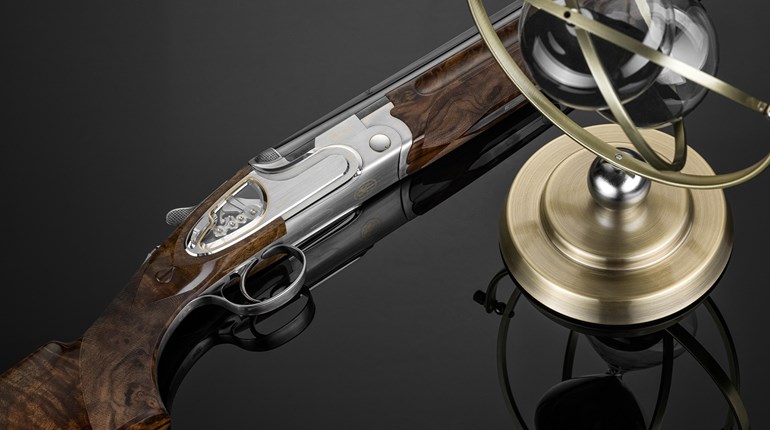
Recently I overheard a co-worker giving his “brief history of firearms” to the new girl. He told her that side-by-side shotguns are historically older than over/under shotguns. This claim might seem irrelevant, but nonetheless it started an inter-NRA office debate. I believe many Americans view side-by-sides as “granddaddy’s guns,” or the coach guns seen in western films and therefore think of them as old and nostalgic. Conversely, we tend to imagine over/unders as the shiny new Berettas and Brownings at the skeet range, and therefore think of them as modern. But shotgun design did not begin in America, and, in fact, I’ve seen some dinosaur-aged over/unders at the National Firearms Museum. So I investigated.
The Myth
The side-by-side shotgun design is older than the over/under design.
The Expert Opinion
I asked American Hunter contributor, renowned firearm historian and prolific author Terry Wieland—he's written dozens of books on firearms including Vintage British Shotguns—for his opinion. (Opinion is relevant here, because gunsmiths back in the day were better at turning barrels than documenting them, so we have to rely on the accumulated knowledge from experts who rely on the history that is documented.)
“It depends how you define shotgun,” Wieland said. “If you mean a shotgun in the modern sense (from the pin-fire forward) then it's the side-by-side. If you go back further, to percussion guns and flintlocks, they did not really differentiate between rifles and shotguns the way we do. But the answer is still the side-by-side. I have always read that the first multi-barrel guns were over/unders, going back to ignition systems even before the flintlock. Rifles and shotguns did not part company until the mid-1850s, and once we get to percussion systems of guns in general, the side-by-side was the first because of the difficulty in devising an ignition system for such a barrel configuration. It was only after hammers (tumblers) and strikers moved inside the frame that it became possible to devise a good over/under, and even then there were difficulties for years with hangfires and misfires. You have to go back to the very earliest ignition systems, where powder was ignited by hand, to find over/unders, and once you get back that far, who's to say?”
What the BullShooters Say
This “myth” is not myth: The side-by-side is the granddaddy of double-barrel shotguns.
What You Might Say
If you have evidence that proves otherwise, bring it on!