** When you buy products through the links on our site, we may earn a commission that supports NRA's mission to protect, preserve and defend the Second Amendment. **
Need a new duck hunting spot? Open a map. See those blue lines? They're rivers.
Gallery
1 of 1
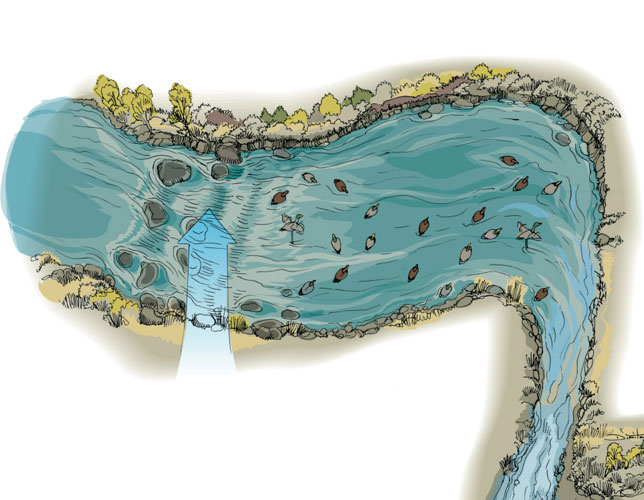
Late-Season Freeze
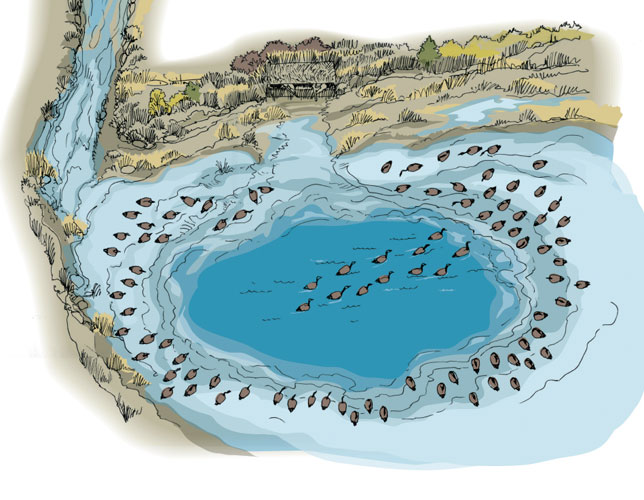
Find a pocket of open water and you’re in business. Sean Hammock of Big Sean's Outfitting, who hunts and guides the St. Joseph River in northern Indiana, widens the hole until the ice will support 50 to 100 rester and sleeper goose decoys. Ducks will also work the spread.
1 of 1
Small Rivers and Big Creeks
You can still achieve good visibility with a small spread if you add a little motion. Tim Herald, host of "The Zone TV" on the Sportsman Channel, places his spread at the edge of a riffle and adds two spinning-wing decoys.
1 of 1
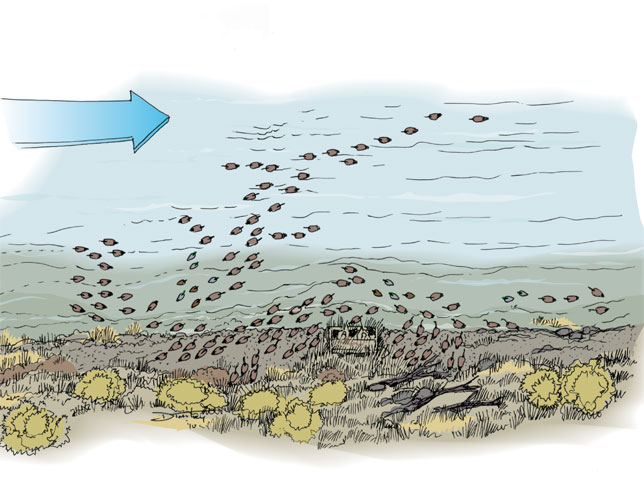
Early- and Mid-Season
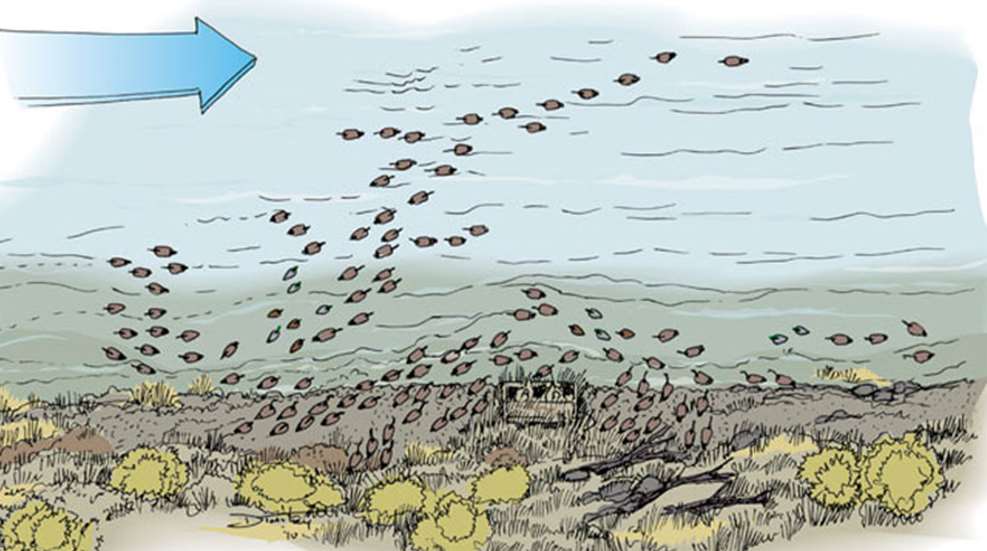
Before the freeze, visibility is key. Even if Field Hudnall, Avery pro staffer and founder of Field Proven Calls, is duck hunting, his favorite spread (see sidebar, above) consists of 90 to 120 floating and full-body geese plus a dozen ducks.

1 of 1
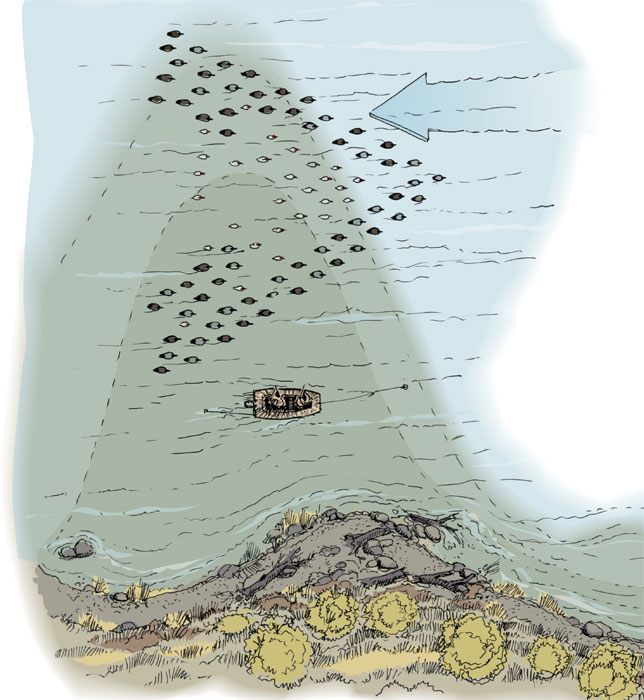
Deep-Water Divers
Captain Bob Wetherald, pro staffer for Benelli and Final Approach, uses two gang-rigged lines of bluebill decoys to form his V-shaped spread. The “V” points toward the current. A sandbar is an ideal location.
MDT has introduced its ultra-lightweight CRBN Rifle Stock lineup with a new inlet for the Remington 700 Long Action Right-Handed CIP configuration. The CRBN Rifle Stock is also available for the Remington 700 Short Action, giving shooters a lightweight carbon-fiber option across multiple action lengths.
ScentLok has taken the features hunters love about its men's Ridge line and combined them with a fit designed to help women feel comfortable and agile in the field. It combines form-fitting designs with technologies like Carbon Alloy, Silver Allow and Precip-X to produce an excellent midseason option.
When Dr. S. Matthew Liao, a “bioethicist” affiliated with the World Economic Forum (WEF) and the director of the Center for Bioethics at New York University (NYU), floated the idea of deliberately making people allergic to red meat, he created a counterreaction that still reverberates on social media today.