For generations we have risen in the middle of the night to lurk through the woods and position ourselves underneath a towering roost tree. When dawn breaks, good-morning gobbles and yelps greet our bleary eyes. If all goes well, we get a head start to Waffle House. On the other hand, if the turkeys head in another direction we simply have lost sleep. After a few days of being ditched, our predawn enthusiasm starts to transition to grumpy exhaustion.
How about taking a new approach and sleeping in for turkeys? Trust me, many of us could use plenty of beauty sleep. But there’s a strategy here that goes well beyond catching up on rest.
Lonely by Brunch
Spring turkey seasons throughout the nation correspond to nature. Specifically, they are tied to the nesting schedule of hens. If you understand that schedule, you might be able to garner a wink or two more sack time.
According to research by the Pennsylvania Game Commission, the nesting cycle of turkeys is regulated by photoperiod and triggered by the increasing hours of daylight in the spring. It’s the same time year after year. Most hens are bred by mid-April, but hen turkeys have a unique characteristic that allows them to store active semen outside their ovaries. Research is lacking in wild turkeys, but domestic turkeys have the ability to store it for more than 50 days.
Further research in Pennsylvania places incubation, otherwise known as the peak of nesting, at approximately May 1. More recent telemetry data from 1999 through 2001 showed that incubation for mature hens was May 8; peak nesting for juvenile hens was May 14.
Those dates are significant enough for hunters in the northern U.S. to mark on their calendars. Hunters in the rest of the country should reach out to a state turkey biologist to confirm incubation in their ZIP codes. Why? During incubation hens spend the majority of their day nesting with brief breaks to feed and eliminate waste. They fly down from the roost, mingle and feed, then it’s off to warm the eggs.
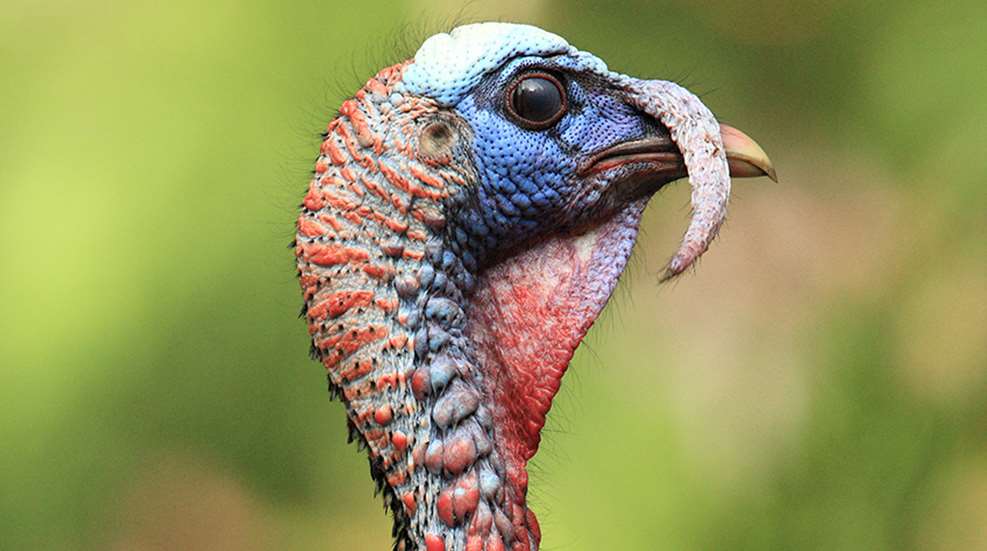
By midmorning, gobblers that just days earlier were the center of attention find themselves single and pining for the company of AWOL hens. With no Turkey Tinder they can be coaxed in range during the brunch hours. Even in states with half-day hunting this brief window can explode with exceptional turkey-calling action.
Sit and Wait
Mossy Oak pro staffer Billy Yargus understands the nesting schedule and uses this knowledge whenever possible to get the edge on spring turkeys without losing sleep. In fact, the 41-year turkey-hunting veteran and Missouri native admits he’s tagged more gobblers from 9 a.m. to 1 p.m. than during any other period of the day. Although more gobbling occurs at sunrise, there are challenges, says Yargus.
“The number one sunrise issue you struggle with is hens,” states Yargus. “The gobbler, lots of times, is roosting with hens and if he isn’t, he knows where they are roosting nearby. If you can get between the two you might be able to call him in, but otherwise he’s going to follow the flock and it becomes a real test to call him to you.”
That’s why when Yargus begins to see hens disappearing for nesting duties he doesn’t get too worried about a missed opportunity at the morning roost. He also knows that in states that have all-day spring hunting it’s possible to call in toms after the lunch bell.
Despite having an advantage during the brunch hours, Yargus understands it still isn’t a fix to win. Knowing where turkeys travel throughout the day is important, especially since gobbling typically dies down as the morning hours tick by. In brief, do your scouting to pinpoint a flock’s hangouts.
“The most important part for success in midmorning and beyond is studying the turkey pattern and where they’ll be at that time of the day,” Yargus shares. “Next, have the patience to rely on that scouting to wait them out. Sometimes if you get to walking and calling to find a gobbler, you’ll walk around a cedar and bust one coming to you silently. If you know a strut zone or another area the turkeys visit, don’t push it. Sit down, call and wait. A lot of times they just come in strutting and drumming quietly by themselves.”
Midmorning Calls
According to Yargus, who assists Woodhaven Custom Calls with call development, calling differs slightly from roost to midmorning setups. He believes you can get away with more volume and not be quite so concerned about the soft calling that typically is associated with the fly-down period.
“Later in the morning you can get away with being louder,” notes Yargus. “Some hunters struggle with softer calls at dawn, but later in the morning you can use lots more volume. A lone gobbler or one on the verge of having nesting hens leave it will put up with more noise.”
Yargus switches to a box call on most midmorning hunts. He begins a sequence similar to the lost yelp. He starts out softer and then increases the volume through each series of yelps. Toward the end he adds four to five hard cutts before wrapping up the string of sounds with a final run of loud yelps. Since gobbling traditionally slows in this period it’s important to listen while belting out calls. This is where Yargus takes a tip from real hens.
“Put pauses in between your series of yelps and cutts to give yourself listening breaks in case a gobbler is answering you,” Yargus instructs. “Real hens do the same, and I believe hens add in that pause to hear if a gobbler is responding. If you continue to call, a gobbler might respond at the same time you’re calling. Besides, it sounds more realistic and that’s a great bonus.”
Yargus may add a decoy or several to a midmorning hunt, but that depends more on environment and the mood of the gobbler. If his scouting points him to a field or edge, Yargus will oftentimes stake a lone hen. If he identifies the gobbler as dominant, he may stake a couple hens and add either a jake or tom decoy. In deep timber he oftentimes skips decoys completely. His goal is to shoot any turkey in that setting before it has time to see a decoy.
You may find it difficult to stay in bed with the excitement of turkey season upon you. But if you miss the alarm or can’t bear yet another early wakeup, don’t worry. When the hens begin nesting, a little extra sleep could be exactly what you need to rendezvous with a forlorn tom looking for company. And it will help in the beauty department, too.