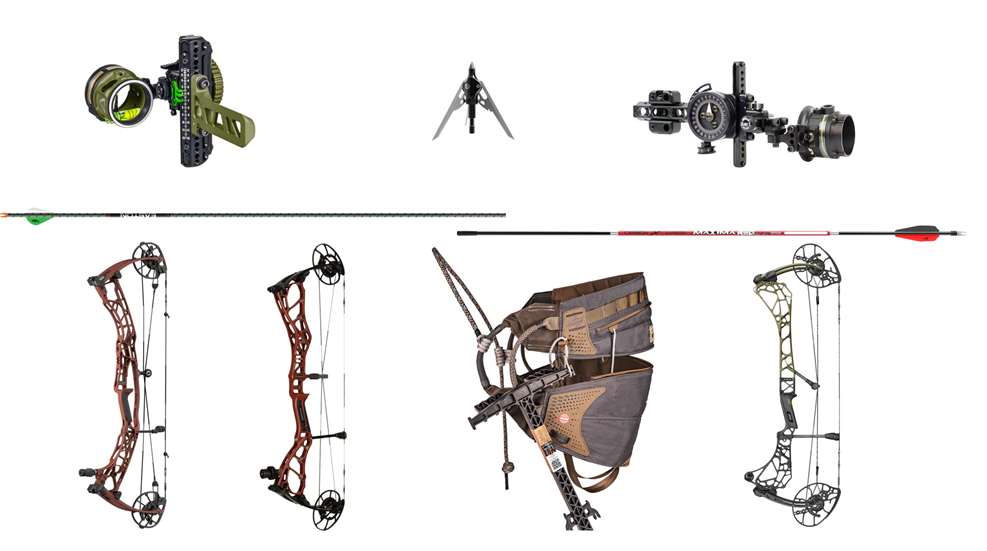
Like many of you, I’m a gear nut. After two decades of testing the latest and most excellent archery products, I still get butterflies when a brown box shows up on my doorstep housing a new-for-the-year piece of archery gear. Whether that box holds a new flagship compound, a release, or a sight, the sense of excitement is always the same. My goal: To see if any product I test will be beneficial to me and other bowhunters.
From bows to arrows to broadheads and more, the focus of the archery industry in 2026, as it has been in past years, is full speed ahead. Archery manufacturers, especially those in the article to come, don’t hit the pause button. Savvy manufacturers listen to their customers, identify trends and niches, take risks on new technologies, and remain forward-thinking.
We, as bowhunters, get to reap the yearly rewards of such hard work. Bowhunting is hard. When you earn your moment, the difference between meat for the freezer and a sob story is so slight. Think about it. How many times have you come back to camp and said, “One inch to the right and we’d be cutting up meat right now.”
Having confidence in your gear—from your bow to your release—is critical. Here are 10 items, many of which I’ve tested, and others that caught my eye, that you should consider during your 2026 archery gear quest.

Easton 5MM FMJ Max
Easton arrows have filled my quiver for years. In fact, the first arrow I ever fired from a compound bow was the manufacturer’s iconic XX78. I loved that shaft and stuck with it, even though shortly after I started shooting a compound bow, carbon projectile builds began to dominate the arrow category.
In 2006, Easton dropped an arrow bomb. Dubbed the FMJ, Easton’s shiny new penny featured an Acu-Carbon core wrapped in an aluminum jacket. Bowhunters quickly gravitated toward these shafts for their durability, accuracy, and jaw-dropping penetration.
A drawback of the OG FMJ is the weight. An uber-common spine size amongst bowhunters, 340 FMJ arrows weigh 10.2 grains per inch. That’s heavy. Frankly, I never minded the weight, but I do think Easton’s new FMJ concept will appeal to more bowhunters.
Enter the 5MM FMJ Max. Its purpose: to deliver the same accuracy, durability, and undeniable penetration as its predecessor in a lighter weight shaft. A 340 spine 5MM FMJ Max pushes the GPI (grains per inch) scale to 9.8 rather than 10.2, which means increased arrow speed. Easton also went the extra mile to include Match Grade HIT Collars available in grain weights between 13 and 21, as well as offering 16-grain 5MM HIT and 50-grain 5MM 8-32 Steel Half-out inserts. These options allow bowhunters to customize their Max build to their exact liking. Build it light and fast for tighter pin gaps or create higher FOC for enhanced accuracy.
My FMJ Max arrows weigh 45.1 grains less than my 5MM FMJ shafts. This means a remarkable speed boost. Over the course of two months, I’ve shot the FMJ Max arrows from 20 yards to 80 yards. I’ve shot them with field points, expandable, and fixed-blade broadheads. The arrows offer all the benefits of the original: straight, tough, accurate, and quiet in flight. However, the reduced GPI rating boosts speed, which means tighter pin stacks, allowing archers/bowhunters to get increased yardage from their sight tape.
I also like the improved 5MM Microlite Nock. Shorter ears and an improved throat design make tuning easier and increase overall accuracy. eastonarchery.com
Rage Tyrant
My roots with Rage run deep. Though in-flight blade deployment was an early issue, Rage broadheads have taken mechanical broadheads to incredible heights, and the manufacturer has given us some remarkable heads over the years.
I don’t shoot fixed-blade broadheads anymore at anything. A two-blade mechanical is hard to beat. I’ve also grown fond of two-blade mechanical heads that feature smaller bleeder blades. What the mechanical broadhead world is missing, and though a few models have come and gone over the years, is a solid three-blade mechanical.
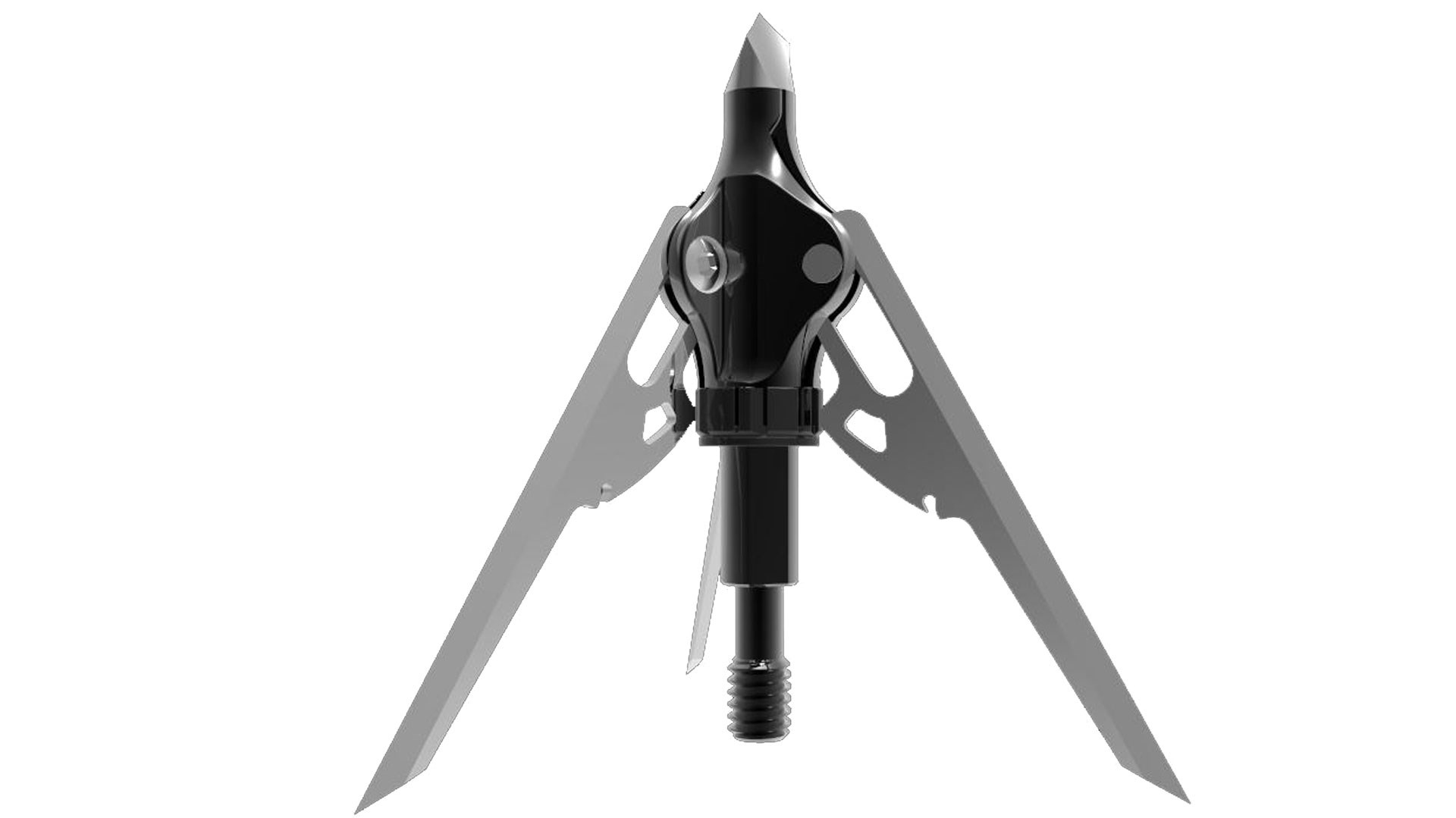
Welcome, Rage’s Tyrant, a three-blade mechanical broadhead that pairs a robust titanium chisel tip with a lighter aluminum ferrule. The trio of .035-inch-thick blades makes it surgical sharp, and Rage’s compression-fit retention system ensures controlled blade deployment without the worry of in-flight blade issues. Cutting diameter is over 2 inches, and the broadhead’s offset blade design, in theory, will produce a helical wound channel that should create those red-carpet blood trails Rage is known for. feradyne.com/brands/rage-broadheads-2/
Hoyt Alpha AX-3 33
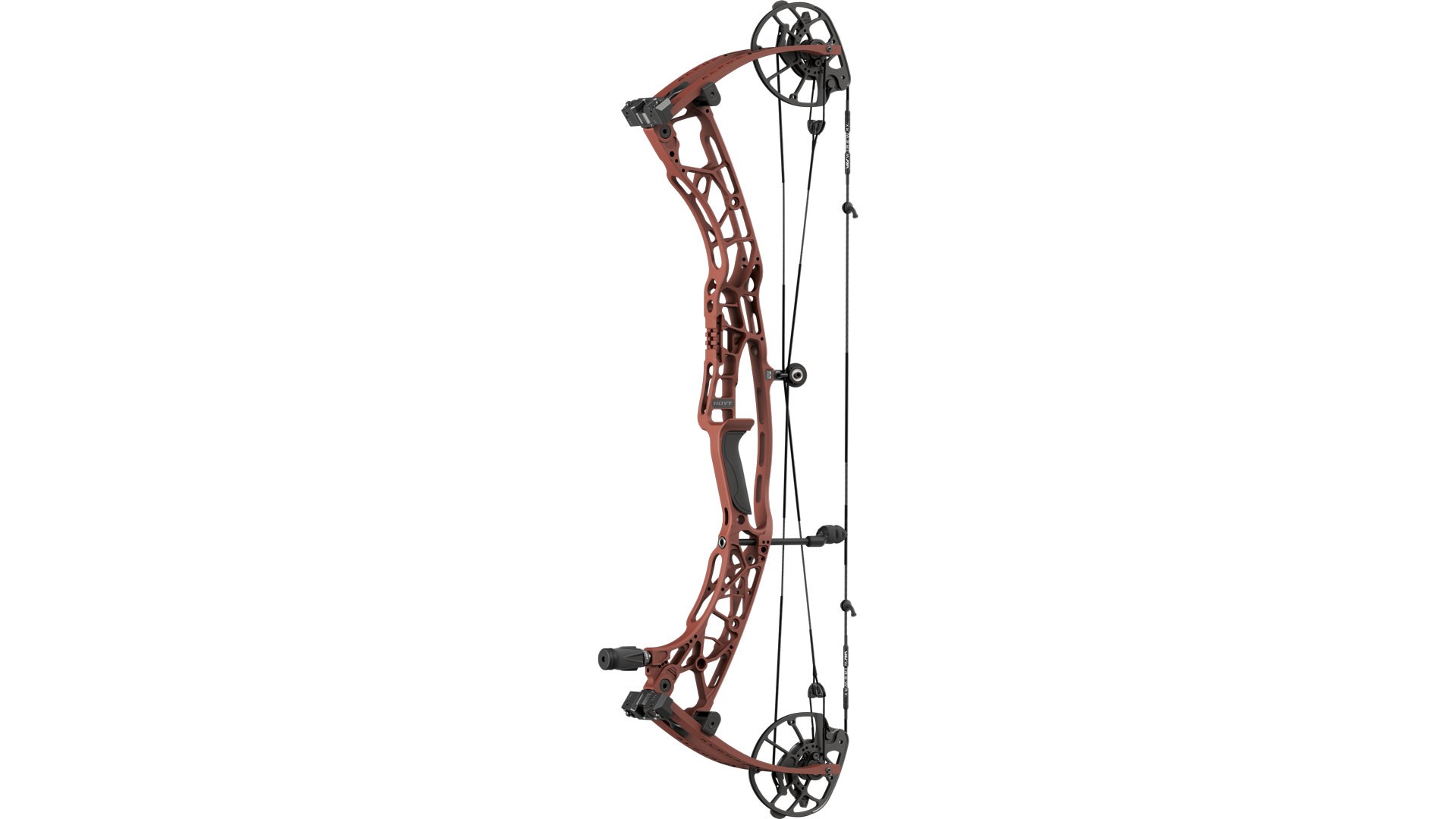
I’ve shot and tested every Hoyt compound—carbon and aluminum—since 2010. Good news: The AX-3 33, which is the third generation of the Alpha family, is the bowmaker's best-ever aluminum build.
Hitting a not-too-long, not-too-short axle-to-axle of 33-5/16 inches, the 4.75-pound compound is draw-length adjustable in 1/4-inch increments from 26 to 31 inches. Added customization in the HBX Gen 4 cam system includes a trio of let-offs (70, 75 and 80 percent) and backwall options of Hard and Xtra Hard. If you prefer a no-valley backwall feel like those provided by bows with limb rather than cable stops, Xtra Hard is the way to go. However, if you’re like me and prefer a valley that you can feel and pull into, choose the Hard option.
New for 2026, besides solid color options of Georgia Clay and Sandstorm, is what Hoyt was lacking: an on-bow tuning system. In past years, paper tear corrections that couldn’t be worked out with the rest meant removing axle pins and swapping or adding shims. The process was complex and best left to an experienced bow technician. New on the AX-3 29 and AX-3 33 is Hoyt’s XTS Tuning System. This patent-pending system requires no shim swaps or bow press and can correct left, right, up, and down tears up to 1 inch using an Allen wrench. Loosen the shuttle block locking screws on the top of the limb pockets and make slight turn adjustments to the bolt inside the pocket. It’s that simple. Hoyt provides a downloadable White Paper guide that walks you through the correction process for every tear you can imagine.
Hoyt’s Alpha AX-3 33 feels excellent in the hand, draws smoothly, and gets you on target quickly. During the moment of truth, being able to get your pin where you need and push and pull through your shot process, knowing that if you do your job, the bow will do its job, is everything a bowhunter wants. hoyt.com
Latitude Method 3 Saddle & System
Suddenly, all that mattered in the whitetail world was killing a deer from a saddle rather than a lock-on, ladder or climber. While I disagree with this entirely, saddles are cool, solve problems, and are ideal for those who want to roam the timber in search of that just-right whitetail tree.
Saddle systems are lighter than traditional lock-on stand-and-stick systems. Though I’ve yet to find one as comfortable, Latitude’s Method 3 Saddle, paired with Latitude’s Profile Saddle Platform and Carbon SS Climbing Sticks, adds comfort while boosting efficiency.
The Latitude Method 3 Saddle features a magnetic drop-away second panel that pulls in easily and quietly once you’re in the tree, boosting comfort and adding support. Then, when you climb down, and you’re ready to make the walk out, use the white cords on each side of the front portion of the saddle to pull the second panel back up and lock it down. It’s a great system.
The Carbon SS Climbing sticks come fully assembled, use a wrap-around rope system to ensure to-the-tree attachment, and are incredibly light and durable. Pair the saddle and sticks with the Profile Saddle Platform, which attaches easily to any backpack for easy transport. With this system, you can be up a tree and ready to kill in minutes. This saddle setup allows the bowhunter to get up in a tree in a hurry, and during those times when a movement pattern is detected, move to the movement and get an arrow in the lungs of a big buck. latitudeoutdoors.com
Mathews ARC 30
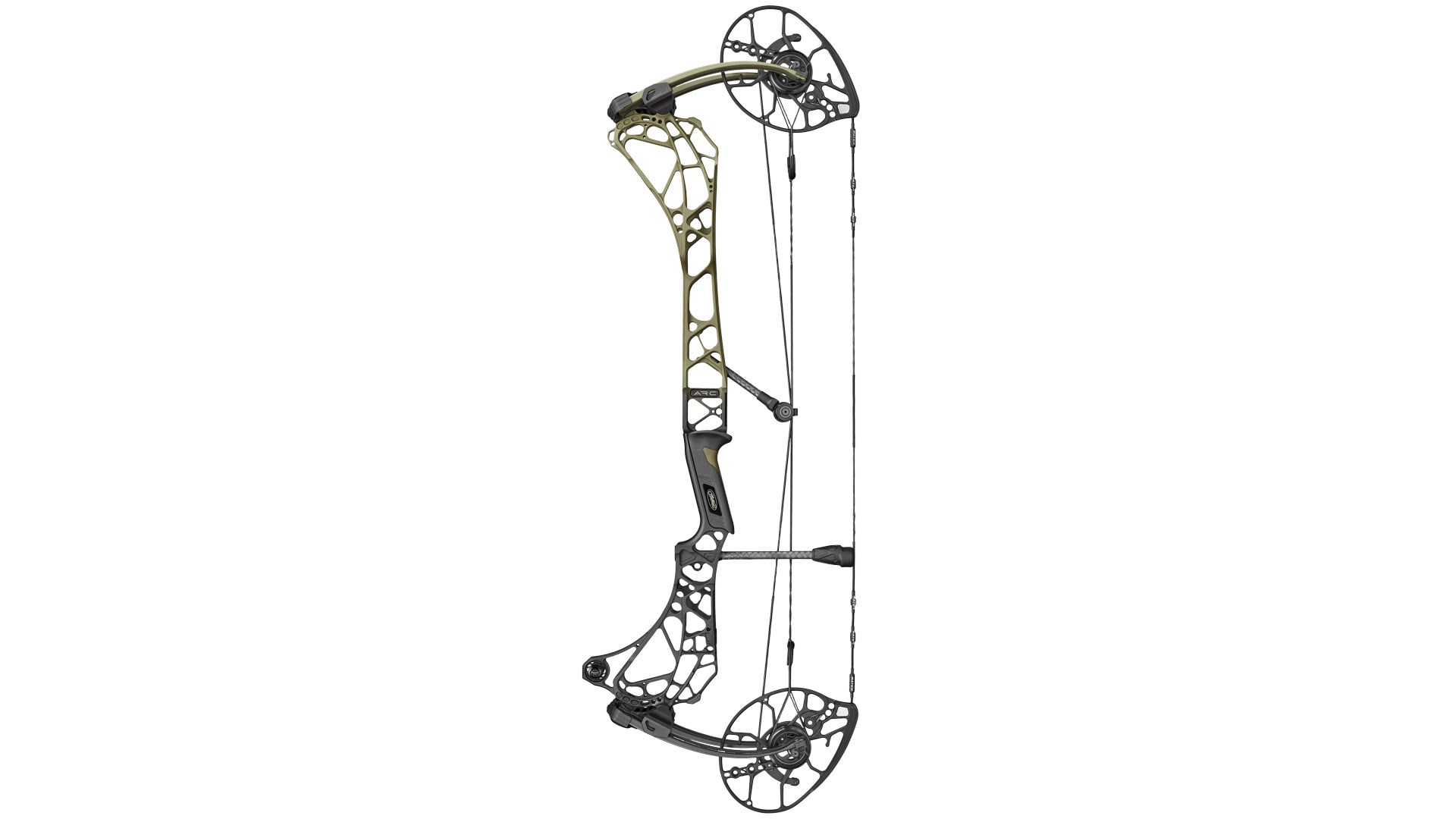
Mathews’ Lift series of bows—the Lift and Lift X—were favored by bowhunters for their shootability, hushed shot, no-bow-press needed tunability and tranquil shooting experience. For 2026, Mathews gives bow-toters its all-new ARC 30 and ARC 34. While Lift remnants remain, the ARC series emerges with a redesigned limb assembly, a new reinforced riser, and the second-generation SWX-2 Cam riding the axle pins.
The ARC 30 and 34 are identical. Though one measures four inches longer between the axle pins, they are twins. Mathews crafted the shorter axle-to-axle ARC 30 for those who prefer a tough-as-nails aluminum bow with an under-four-pound weight rating. The 30 will be excellent for tight treestands, cramped ground blinds, and spot-and-stalk pursuits. Its longer brother is for those who prefer a longer, more balanced bow. The 34 is a solid choice for hunters who roam the West, where shots between the hunter and target animal often have more space.
The second-generation SWX-2 Cam features a perimeter weight that Mathews engineers tell me reduces felt recoil and post-shot hand shock while helping the bow retain speed. I’ve been shooting Mathews’ 6-inch brace height ARC 30 for two weeks, and the bow is crazy fast. It’s also hushed at the shot and dead in hand. My only complaint so far is the stiff draw cycle, and that if I give any off the backwall, the cams want to pull me into the shot.
Dating back to its Lift bows, Mathews has reduced riser weight without compromising rigidity. For 2026, the ARC bows feature a reinforced chassis for added strength and increased rigidity, and the riser sports a machined Silent Connect anchor, along with the new integrated V-bar mounting port. Mathews engineers also created a parallel limb path to increase shot-to-shot consistency while reducing post-shot vibration.
Available in a smattering of solid color options, including new Kodiak Brown, the Mathews ARC bows will make excellent field companions. mathewsinc.com

Carbon Express Maxima RED 4mm
I’ve filled many of my quivers with CX’s original Maxima RED arrows. A standard diameter arrow, Maxima RED shafts feature Tri-Spine/RED ZONE Technology. This patented three-spine system increases accuracy and reduces oscillation. Hyper-accurate RED arrows are also tank tough. BullDog Nock Collars prevent rear arrow damage, and Launchpad Precision Nocks ensure a controlled release.
As great as standard-sized RED arrows are, CX fell behind the micro-diameter trend. When would we see a RED shaft in 4mm? Good news: the answer is now. For 2026, CX builds the Maxima RED 4mm. A shaft designed to cut through fierce crosswinds and drive through strong headwinds, the 4mm promises long-range stability and increased penetration. Fitted with updated components and new vanes designed to improve broadhead flight, the 4mm is available in spine sizes of 400 (9.3 GPI), 350 (10.2 GPI), and 300 (11.3 GPI).
Also, for 2026, Carbon Express launches a modernized arrow-naming structure based on arrow diameter, giving archers clearer setup choices based on hunting style and performance needs. Other shafts in the RED line include the 5mm, which received a facelift that will increase arrow durability, and the 6mm, CX’s classic diameter arrow with updated components. feradyne.com/brands/carbon-express/
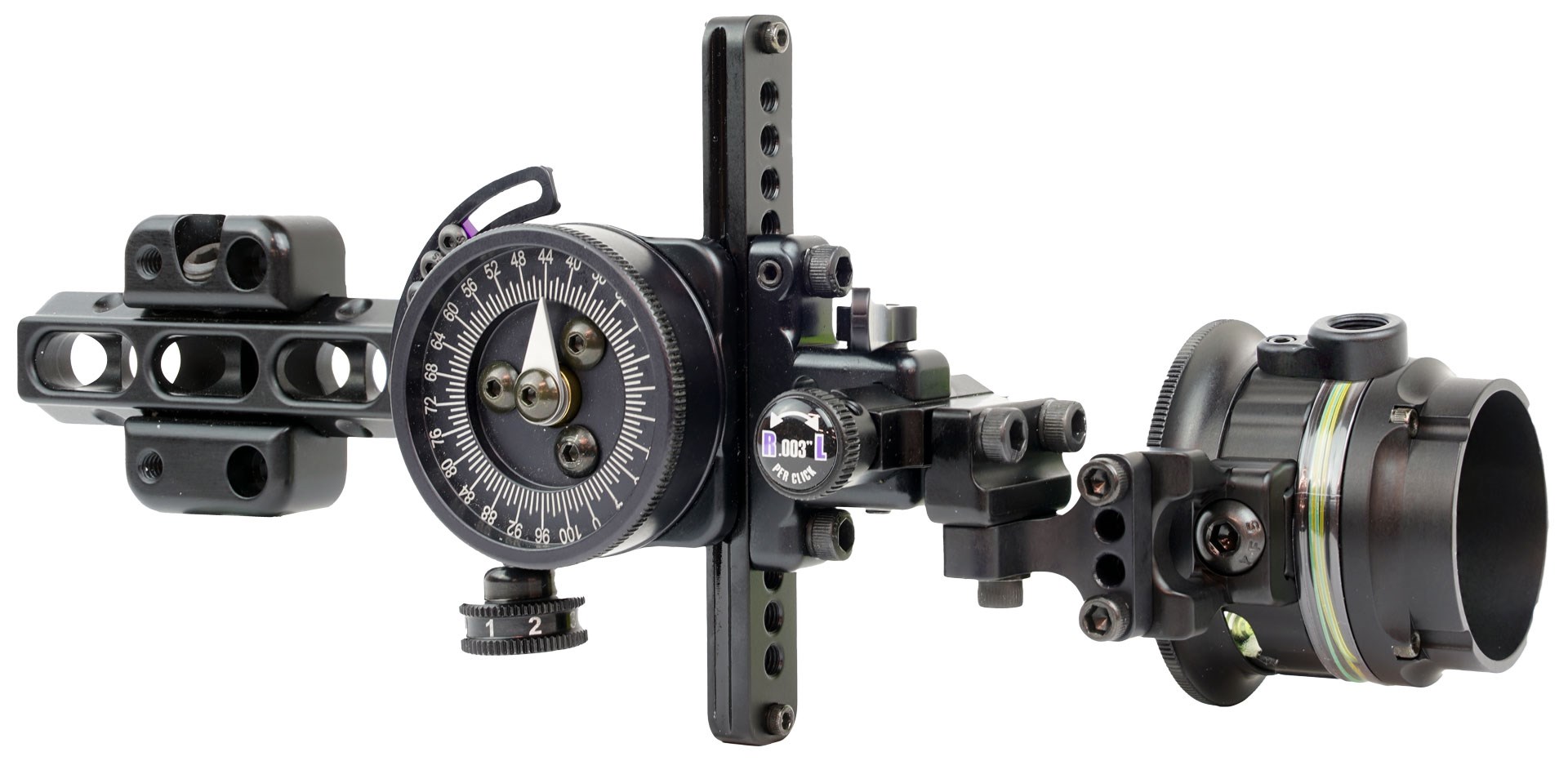
Spot-Hogg Hogg Father Pro
Whether you’re toeing the line in competition or drawing back on a big bull, Spot-Hogg’s Hogg Father sight line promises precision and no-fail durability. For 2026, Spot-Hogg adds the Hogg Father Pro to this award-winning sight line. The Pro blends the tried-and-true vertical micro-adjustment yardage wheel of the Hogg Father with the streamlined, interchangeable mounting system with upgraded windage adjustments that the Boonie provides. The best of all worlds, the new Hogg Father Pro is lighter, offers tool-less lockup and ensures maximum accuracy when you need it most.
Available in mounting options of Dovetail, Hard Mount or Pic Mount, the Hogg Father Pro mounts easily to any of today’s flagship compounds. Also new and available on the Hogg Father Pro is the ROTI Modular Sight System. I was able to do some early testing with the ROTI before Spot-Hogg made it available. It’s a unique and effective system, and Spot-Hogg has many ROTI add-ons that will be coming soon.
Engineered for flexibility, the ROTI allows Hogg Father Pro users to switch between Single-Pin and Double-Pin inserts easily. The Single-Pin insert offers four orientation options, providing archers with multiple single-picture layouts. An integrated sunshade reduces glare and improves visibility. The ROTI is also available as a stand-alone sight upgrade. spot-hogg.com
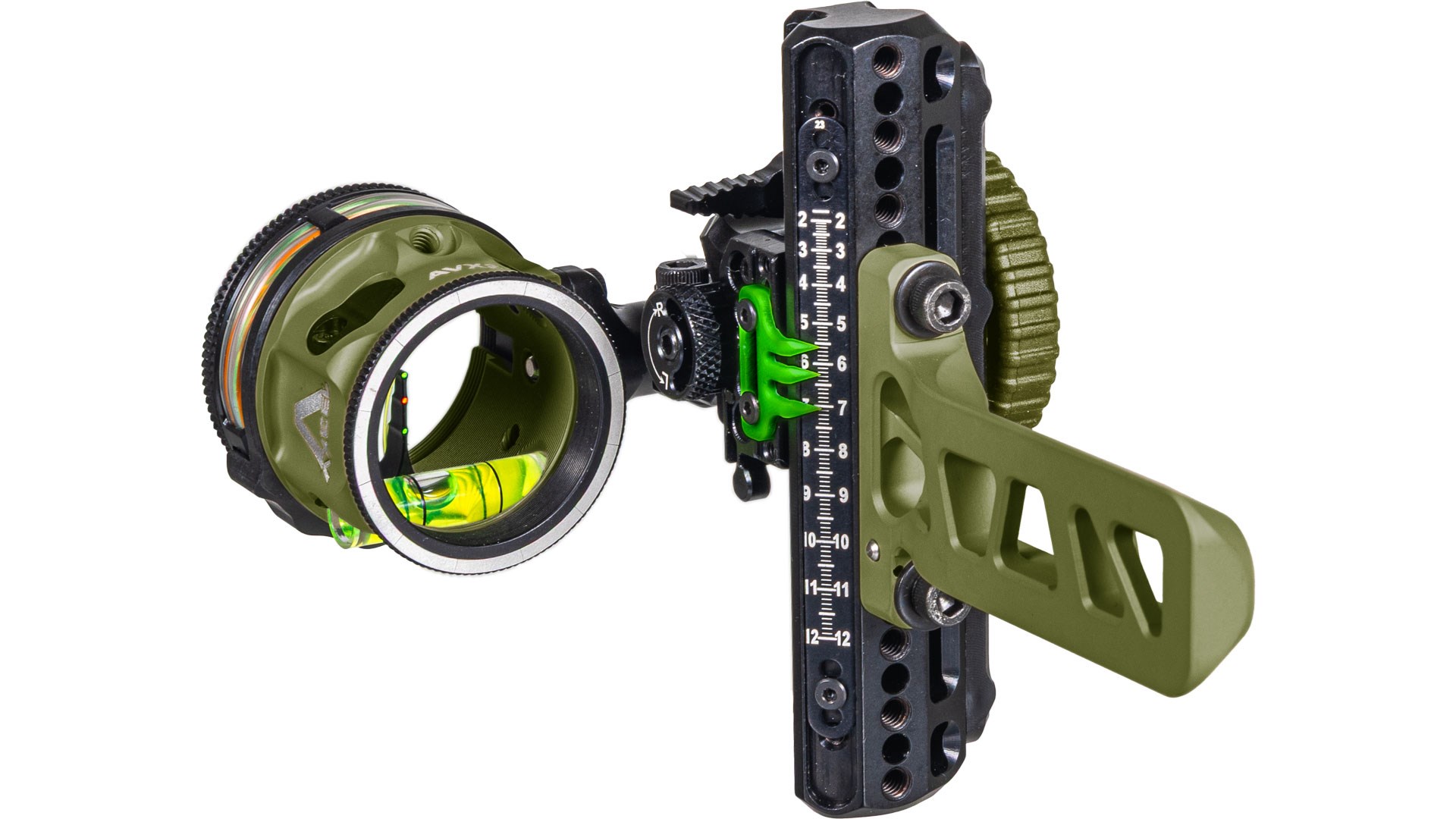
Axcel Driver CK—Bridge Lock—AVX Plus Triple Threat Pin
You know a manufacturer has a great thing going when they continue to expand upon an existing product line. This is the case with Axcel and its Driver series of sights. I’ve tested numerous Driver models, and all have proved their mettle on the range and in the bowhunting woods. Driver sights feature a large drive wheel with rubber tread and a lock lever for smooth, quick yardage adjustment; pin brightness is excellent; and the windage knob with Tournament Style Lock Lever allows precise gage adjustments and prevents unwanted movement.
For 2026, Axcel offers archers its Axcel Driver CK - Bridge Lock - AVX Plus Triple Threat Pin. Available in AVX-31 Plus (31 mm/1-3/4”) and AVX-41 Plus (41 mm/1-3/4”) scope options, the vertical inline pins reduce housing clutter and provide defined aiming points. Pin size options are .010” and .019”, and standard fiber color options are green, red, green. Housing color options on this ultra-light yet remarkably durable sight are Midnight Cerakote, Evergreen Cerakote, and Terrain Cerakote.
The new Cerakote color finishes enhance sight durability and provide protection, ensuring year after year of no-fail use. Axcel’s Bridge-Lock Mount is crafted with 6061 Aircraft Aluminum, and the mount is compatible with any Mathews bow that features the Bridge-Lock system. Also new to the sight for 2026 is the Triple Threat Pointer, engineered to match the fiber spacing in the Triple Threat Ring to reduce sight-in time and increase shooting confidence.
Boosting ease of use while increasing accuracy, Axcel combined the sight’s 1st and 2nd-axis adjustment. Loosen the bottom mounting screw and easily adjust the 1st/2nd axis in one direction and then back it out to change the opposite direction.
The sight is available in right- and left-hand models, comes with three 100-plus yard metal sight tapes, and extra tapes are available for purchase. truball.com
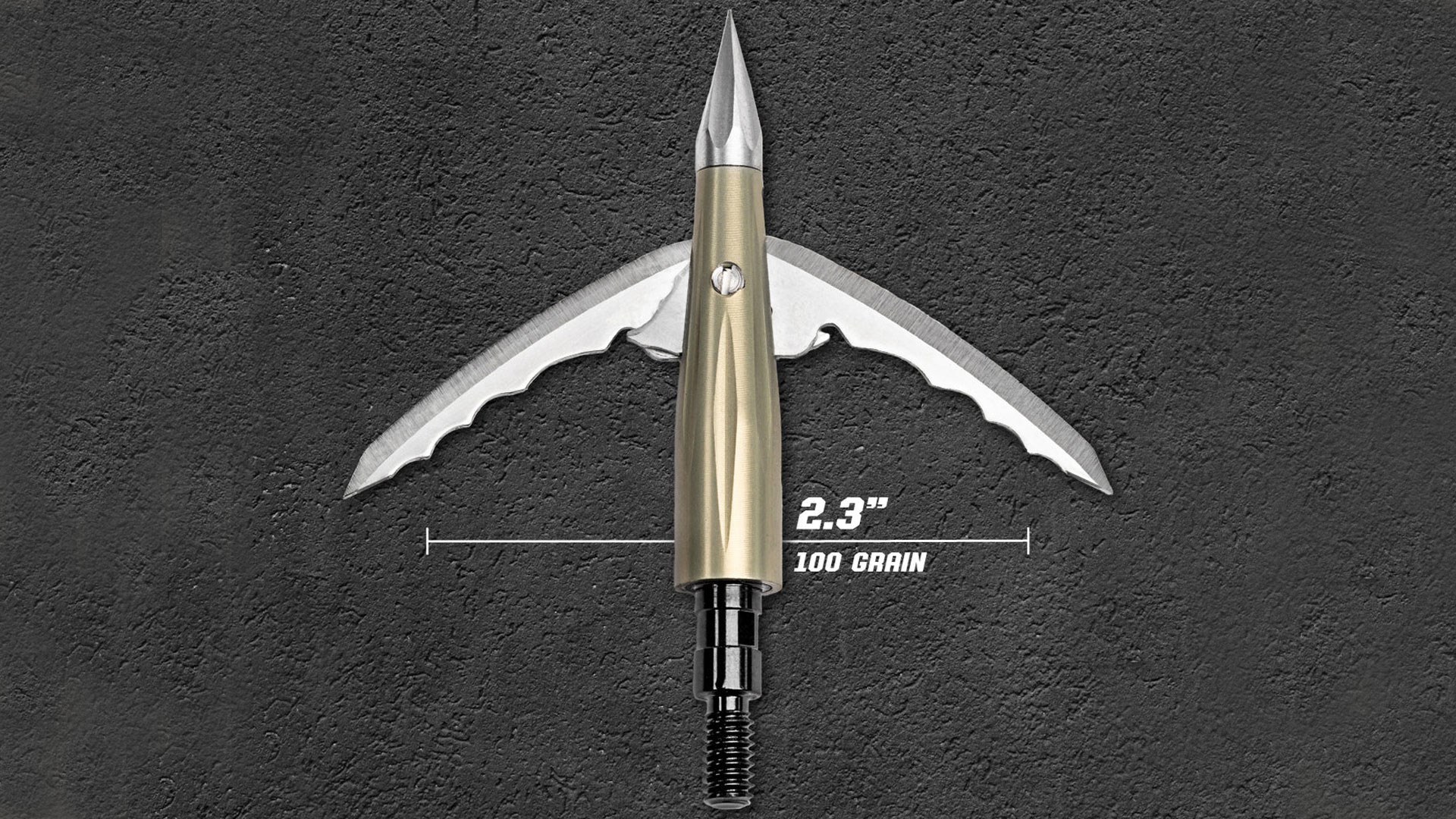
Beast Aluminum 2.3-Inch
I don’t shoot fixed-blade broadheads at big-game animals. I’ve run mechanicals through quartering toward elk, big horn sheep, bear, etc. Today’s mechanical broadhead builds are too accurate, too forgiving, and flat out kill. You can’t ignore them.
Going into the 2025 fall season, my quiver had arrows fitted with two different mechanicals—my two favorites—heads that continue to fill my freezer. Midway through the fall, I detected a new broadhead social media buzz. Beast was the name, and multiple bowhunters I respect were bragging on the broadheads’ downrange accuracy and terminal performance.
Available in Aluminum and Titanium, I saved myself a few bucks and opted for the Beast Aluminum 2.3. I wanted to see if the online hype was real. It was. In mid-October, I sent an Aluminum 2.3” through the lungs of an Oklahoma Pope & Young whitetail. The head blew through the buck, stuck four inches in the ground, and the deer traveled less than 50 yards before expiring; blood spewing for his sides as he made his death sprint. When I retrieved the arrow, I folded the non-damaged blades back into the ferrule.
Aside from the sharpness and edge retention of the German LUTZ blades, the big story of the Beast is its Engineered Propulsion In Core (E.P.I.C) technology. Requiring only 1.2 pounds of force, the blades blaze from the ferrule at a Beast-tested speed of 940 miles per hour via a spring-style system. Better news is that Beast Broadheads require no collars, O-rings, or bands, and I tested them out of fast compounds and even faster crossbows. Not once did I experience in-flight blade deployment. Beast Broadheads are field point accurate if your bow is properly tuned, and they kill like crazy. beastbroadheads.com
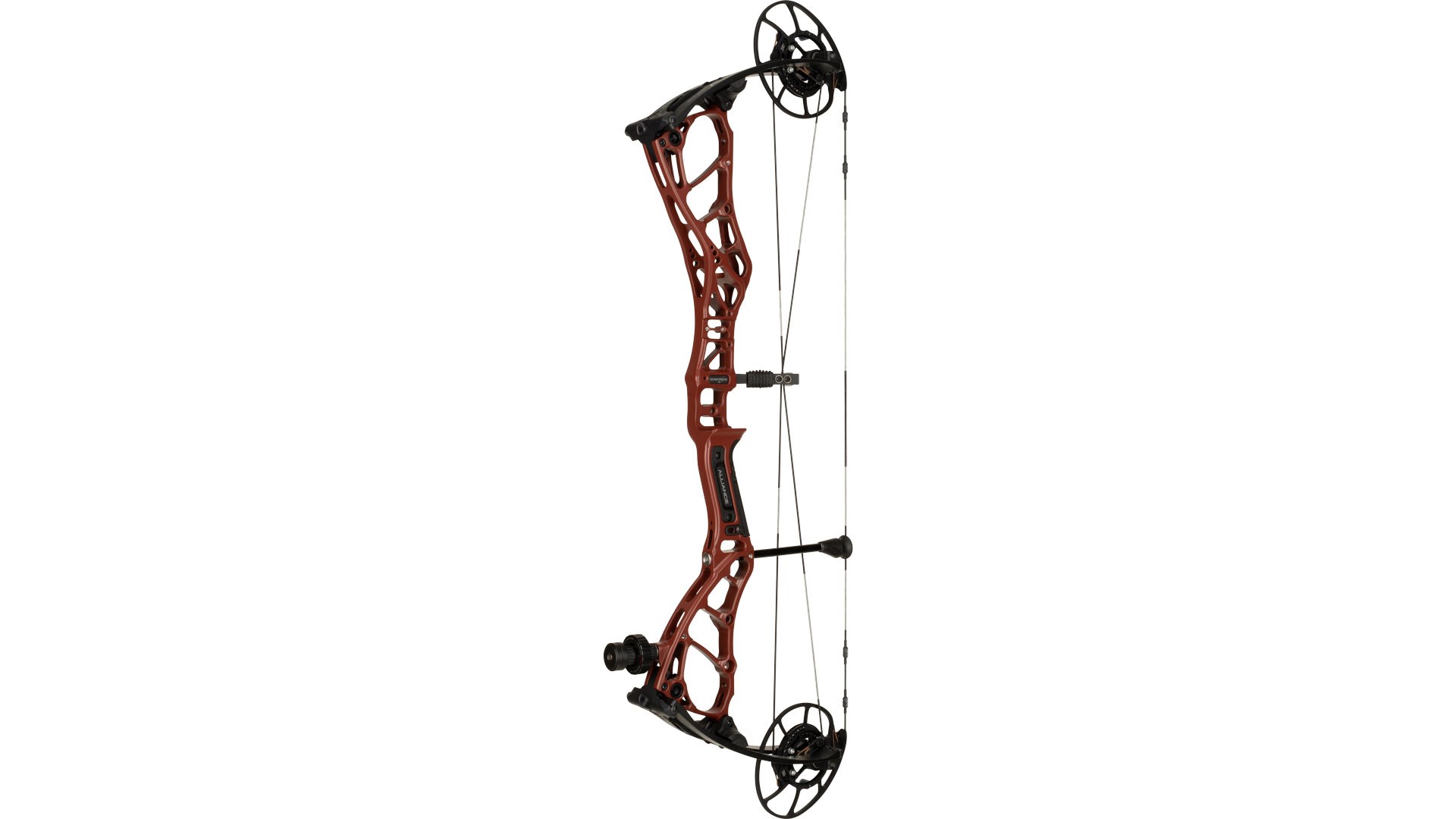
Bowtech Alliance
Though Bowtech offers its new-for-2026 Alliance in a 33-inch axle-to-axle model, I spent a month behind the riser of its 30-1/2-inch axle-to-axle, 4.09-pound, 6.43-inch brace height Alliance. If you’re into compact, reasonably light compounds that deliver a smooth draw, solid speed and repeatable shot-to-shot consistency, the Alliance is a great option.
Built for whitetail goers that spend their season 20 feet up a hardwood or huddled in a ground blind, the Alliance is highly maneuverable. The bow draws like butter, settles into a cable-stop backwall that creates a valley, allowing the shooter to pull hard into the backwall while driving their bow arm into the target. Though I found the Alliance a touch twangy at the string drop, it provided consistent accuracy between 10 and 50 yards. If you’re looking for a bow with increased balance at full draw designed to maximize long-range shooting ability, lean toward Bowtech’s Alliance 33.
Back but improved is Bowtech’s DeadLock Cam System. An on-bow tuning system that’s super easy to use, Bowtech refined the DeadLock Cam System to create an even more straightforward tuning experience. Now featuring double-locking security and larger locking and tuning screws, and easier-to-read laser-etched reference marks, you’ll be punching perfect holes—bare shaft and fletched—through paper in no time.
Bowtech’s adjustable GripLock is back for 2026, and while the grip still offers an adjustable plate via two set screws, Bowtech shaved weight from the riser in the grip and added a pair of sideplates. Bowtech also added a second stabilizer hole lower on the riser. The lower stab hole, combined with CenterMass technology, allows for inside-the-riser sight mounting. The duo distributes weight where it matters most to improve your aim and let you focus on the spot you want to hit without fighting a tipsy platform. bowtecharchery.com