No one wants to have to track an animal far—or at all for that matter. But, if you hunt and pull the trigger enough, you will eventually have to learn how to do a little tracking to recover your deer or elk. There are several things that hunters should do to make this job go quickly and efficiently, and end with success. Read on for the tips.
Before the Shot
Take note of the direction the animal is heading and what game paths may be in that direction. Be sure you know what is behind the animal and note its behavior as you are taking up the slack in the trigger. Mentally note where the animal is standing. Use a landmark such as a dead tree or brown patch of grass in the field. Is the animal nervous or is it oblivious? Are there other animals around that might stir up leaves or make tracks to disrupt any tracking you may have to do? Think about where you would guess the animal might run if it does not drop on the spot.
Follow Through
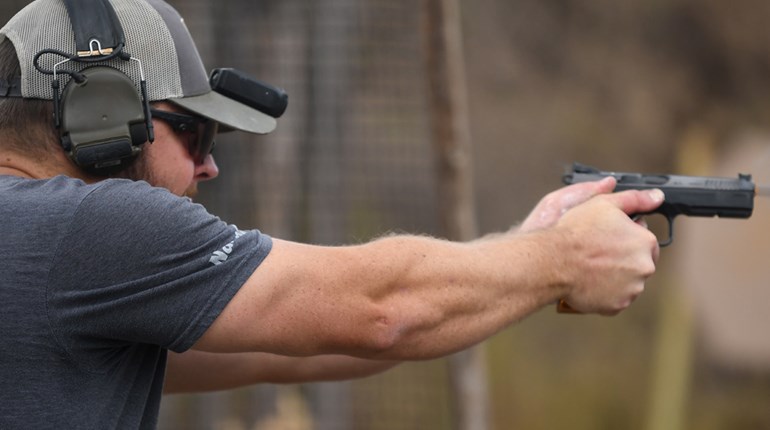
When you are shooting a deer or elk, it is important to remain as calm as you can and be sure to have a good sight picture, good trigger and breathing control, and press the trigger just as you do on the range. As the trigger breaks, do not yank your head away from the stock. Instead, remain on the stock and follow through. Ask yourself what you thought of the shot that you made. Did you pull it? Was it a good shot?
Immediately After the Shot
At this point, the bullet has gone downrange and there is nothing you can do about that. It is critical that you watch the animal and note its behavior. If it is a deer or elk, did it appear hit? If it tucks or “humps up” or wrenches its body oddly, it likely was hit. Was its tail up or down? Many times, a down tail indicates a hit but not always. Did it bound away freely and without a care? Where did it run? Did it stumble or switch direction suddenly or lurch? Mark the spot where it was last seen and note a tree or other landmark to help guide you to that spot once you leave the stand.
Besides watching, listen. Listen for the deer or elk to crash if it falls or stumbles. Sometimes we hear a crash and then things go silent, or we hear the crash and a bit of rustling, and then silence. This is a good indication that the animal is mortally wounded, perhaps already expired.
Collect Yourself
A lot just happened and it happened very quickly. Take a moment to relive the picture or video in your mind and double check what you saw and what you heard. Think about the details. Review, in your mind, where the animal left your sight and the manner in which it did so. Was it dragging a leg, lurching, stumbling or bounding oddly? Take a breath and sit for a few minutes. There is no big hurry. Let the animal expire. Some people suggest waiting a certain amount of time.
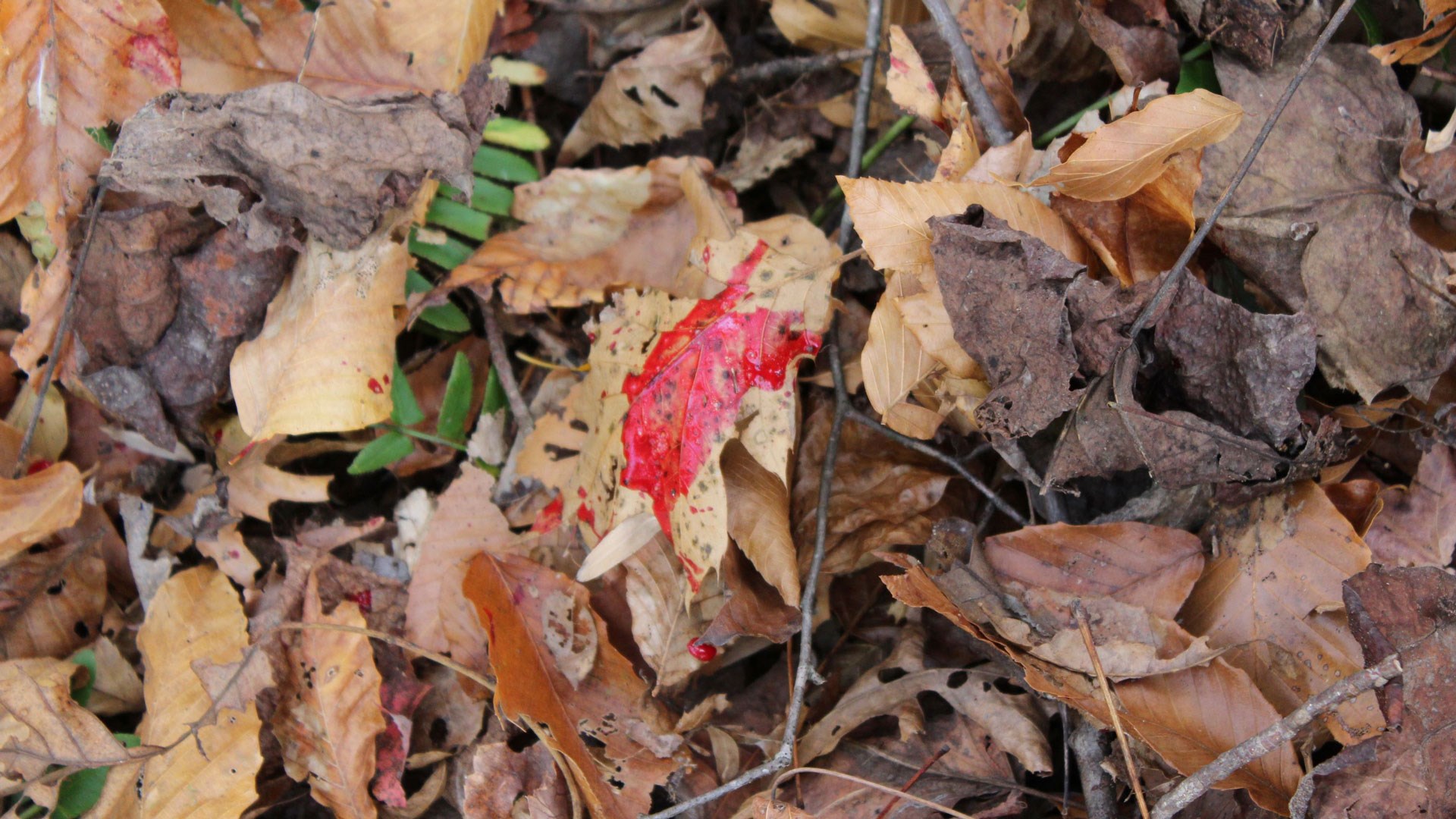 Bright red blood is a good sign of a solid hit.
Go Look
If you feel that the animal was hit squarely, a few minutes is probably enough to at least go to where it was standing when shot and take a look. Do this very quietly. Look for both blood and hair. Hair can be a good clue, as white underbelly hair is not necessarily a good thing unless the animal was at a steep enough angle that the bullet likely exited very low due to that angle.
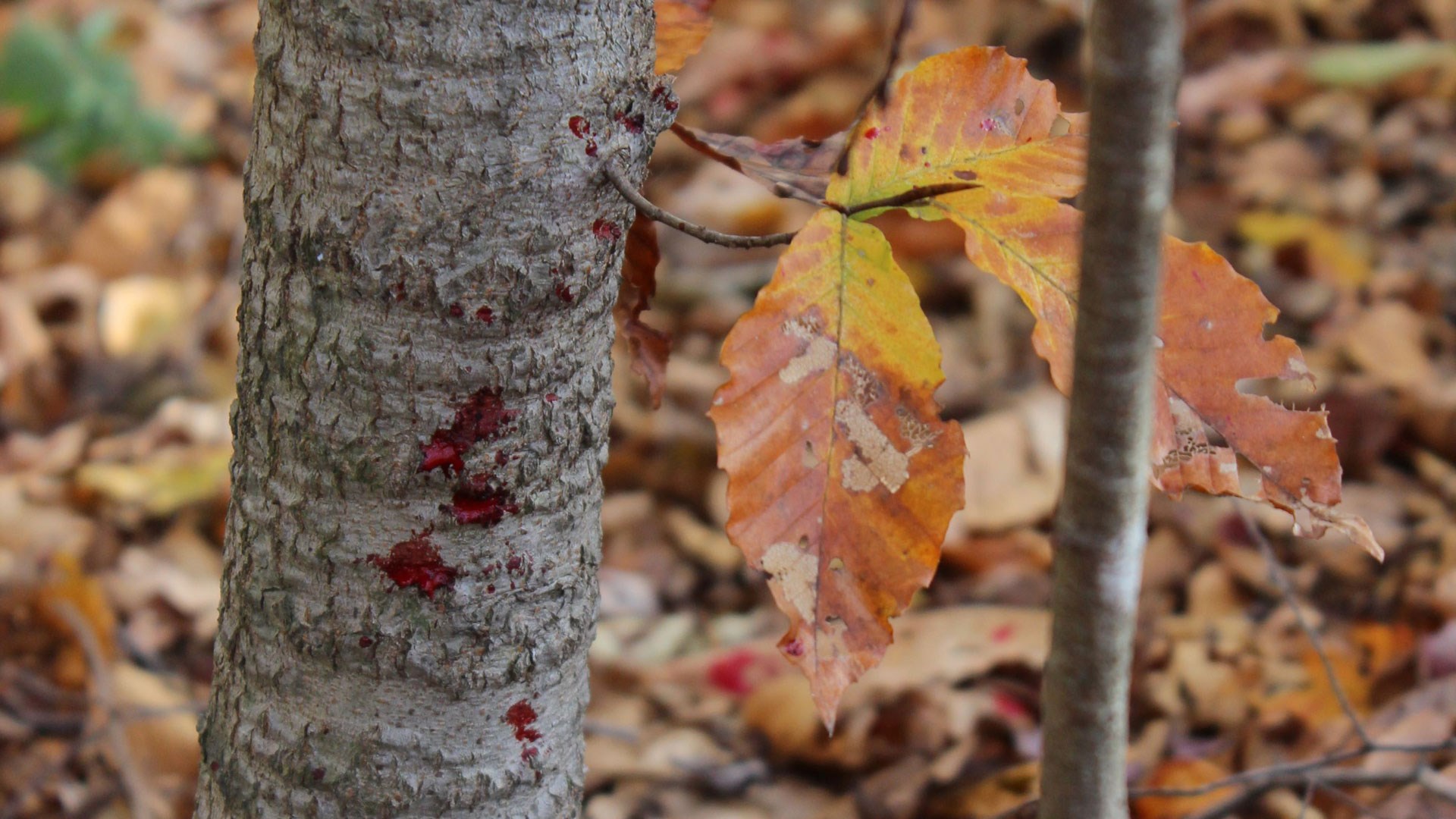 Check the sides of trees for blood as well.
Blood is very good evidence. Bright red blood is an indication of a good lung or heart hit if there is plenty of it. Frothy blood may indicate a lung shot. Dark purplish blood could be a liver shot which will be fatal, but the animal may go a little way before expiring. Lack of blood, stomach contents or slime with stomach contents or dark purplish blood should be interpreted as likely a poor shot requiring time for the animal to lay down and expire, and a very cautious approach while ready to deliver a fatal follow-up shot if necessary. Lack of blood could also indicate a high shot where the animal is not bleeding much yet because the body cavity is not full of blood enough to spill out.
If you feel it is OK to proceed, do so with caution and stealth and squat down every once in a while, to look ahead at the level a deer would be to get a better understanding of what the deer may be thinking in its quest to get away.
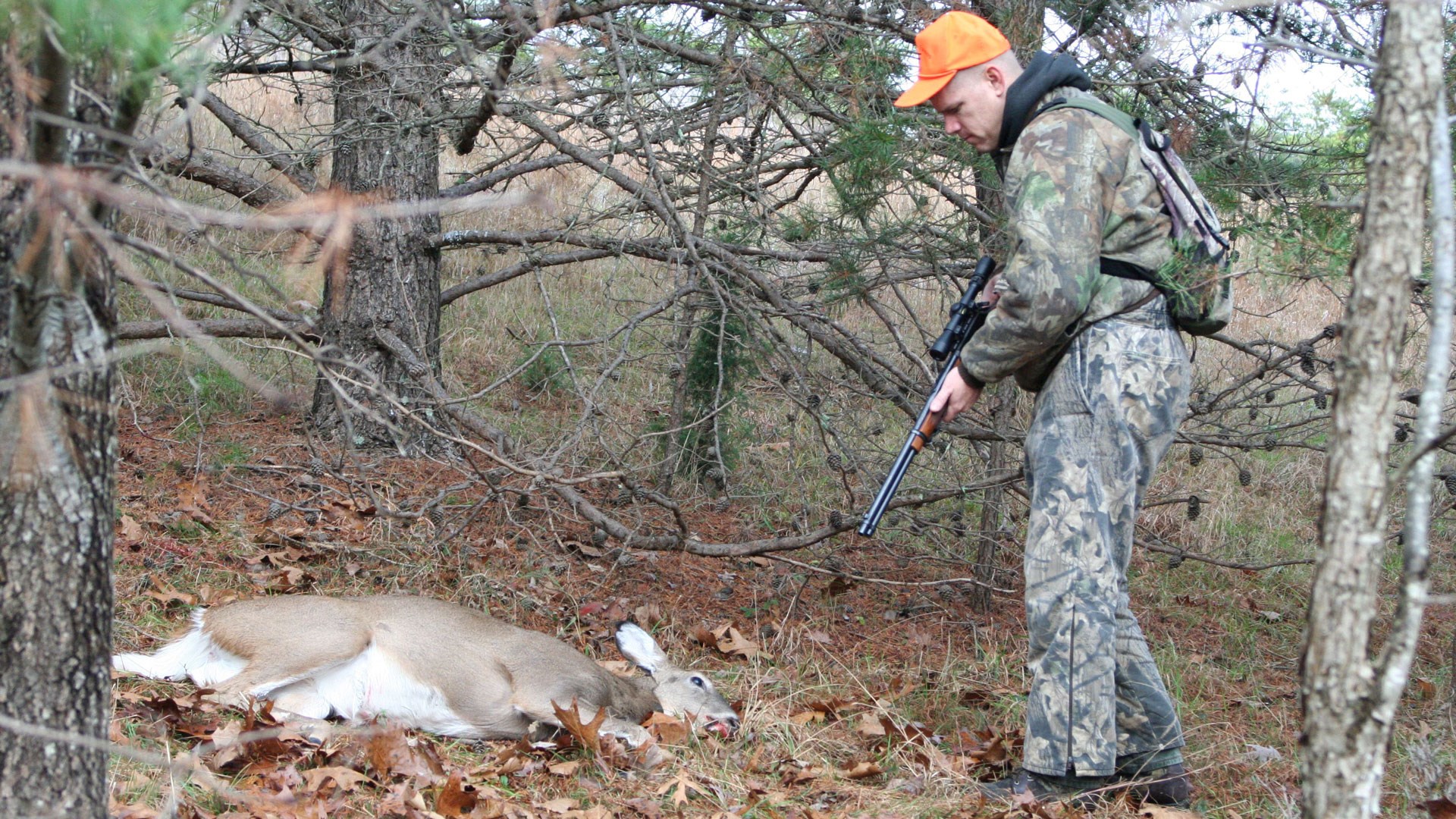
Tracking
While you are looking for blood, mark the spots you find blood unless you find lots of it and it is very easy to follow. Look at the sides of saplings, grass stalks, bushes and of course leaves. Sometimes a weak animal will lean on a tree or stumble on a log. Look at all these things while searching for blood. I use my boot to rake leaves away from a spot next to the last sign of blood if it appears I might have to track for a bit. I always try to stand clear of the blood trail in case I need to go back and reexamine blood and get a fresh perspective. Look back often to gauge the line of travel. Hurt animals are busy trying to go straight A to B to get away most of the time. Stoop down and get a feel for where you would go if hurt.
Look on both sides of logs, creeks or other obstacles as the effort to jump these areas often jars loose blood or leaves tracks. Sometimes you can circle out and stealthily stalk a bit and see if you see the animal moving along. Take caution not to push the animal too much. Mark all sparse amounts of blood so you can find them later if need be. Bring a good light and a backup light if you are hunting in the evening.
A good hunt app that has a topo map on it like OnX or HuntStand will help you determine where you are and where property boundaries are too. Plus, once you find the animal you can relay your position to friends that might come help you get the animal to the truck or allow you to beeline for the truck to get the ATV if you use one.
The best practice is to make a good clean shot and not rush it, so tracking is reduced or not even needed. However, we all end up tracking at some point. Take these tips into consideration to make the job a bit easier. Good hunting this season!