While bowhunting the last three seasons in Illinois, I saw more coyotes than trophy bucks. They ran aggressively in packs, and it is a fact where I hunted that if you leave a deer overnight to recover in the morning—something that’s often advisable—it’s not a question of if it will be eaten by coyotes—it will. There are that many of them. They are getting downright unruly. So I vowed to return in January to hunt them, and the outfitter (Richardson Farms) was all about it. For this task I chose an arm designed for it: Rock River’s Coyote Carbine AR-15.
I love a traditional, tack-driving bolt gun for most hunting applications because it is familiar and comfortable for me to carry in the woods, but for varmints and coyotes a properly rigged AR is likely the best choice for the job, period. Coyotes often come in two or more at a time, usually running, and follow-up shots are the norm. What’s more, no better caliber for coyotes has ever been turned than the .223 Rem. considering its range, accuracy, cost and available bullets.
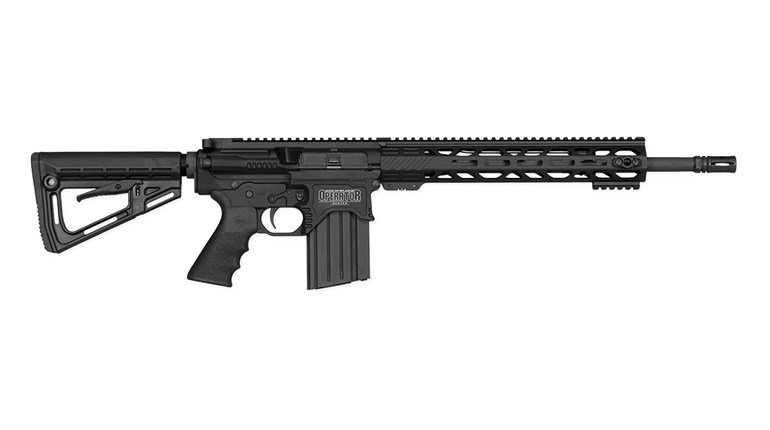
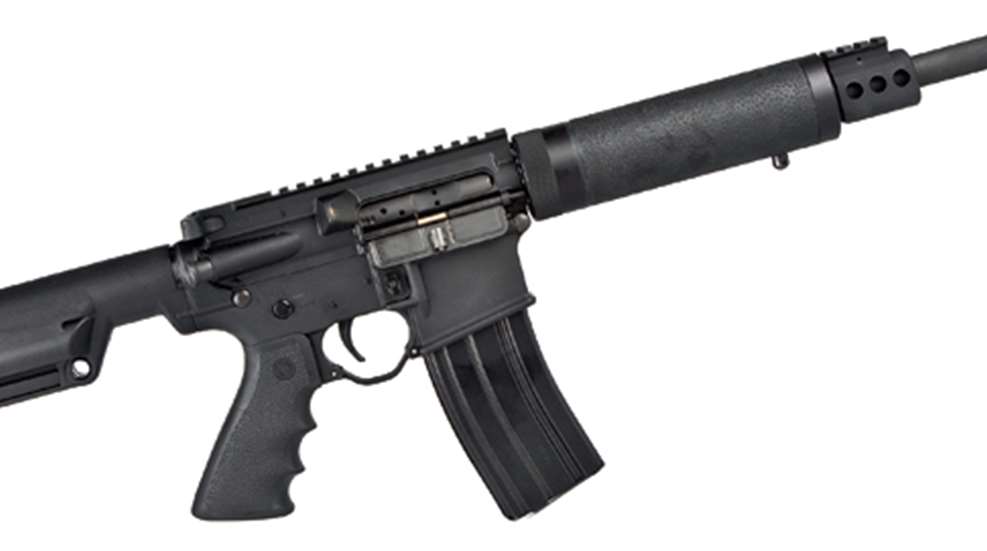
At first glance the Coyote Carbine looks like a regular AR—and in function it is—but the Colona, Ill., company makes custom-like rifles at production prices, and they assemble various parts to make rifles for specific applications. The Coyote utilizes the company’s forged A4 upper receiver. It’s a direct gas impingement system (like most ARs), with a forward assist plunger to clear stuck cases that can come in handy in the midst of quelling a coyote rebellion. Rock River’s decision to forego iron sights and integrate a Picattiny rail for easy optics mounting was the correct decision. (If you fall down a cliff and kill your scope while varmint hunting, unlike a soldier you have the option of calling it a day and heading back to bed.) An additional small Picatinny rail forward of the handguard allows for mounting a flashlight, or better yet, a Laser Genetics laser designator that makes your riflescope operable at night (where legal, of course).
The Coyote’s lower LAR 15 receiver has been fitted with a full-length Rock River (RR) A2 Operator stock. This stock has been skeletonized compared to a traditional A2 stock, but this one allows for a much more substantial cheek weld than a puny and uncomfortable collapsible stock. The buttplate is adjustable vertically.
For cold-weather hunting, the plastic cheek piece, the oversized “winter” trigger guard that accommodates gloves and the Hogue rubber-overmolded pistol grip and free-floated fore-end tube are the Coyote Carbine’s signature touches. The rubber-coated fore-end helps keep noise to a minimum when you rest the rifle on a crisp, calm day. This might sound ridiculous, but not to the keen ears of a ’yote.
The Coyote is available in a 16-inch barrel “carbine” model or 20-inch “rifle” model, but I chose the Coyote Carbine because it’s easier to wield in the woods. Even with only 16 inches of launch, the .223’s velocity averages 2900-3000 fps. The 1:9 twist, heavy barrel is chrome-moly lined and chambered for the 5.56mm NATO round, which accommodates both .223 Rem. ammo and military 5.56 without issues. The barrel comes with a Smith Vortex flash hider that might mitigate some muzzle blast, but what I know is that it certainly looks cool and could possibly cause coyotes and anti-gun neighbors to tremble at the mere sight of it.
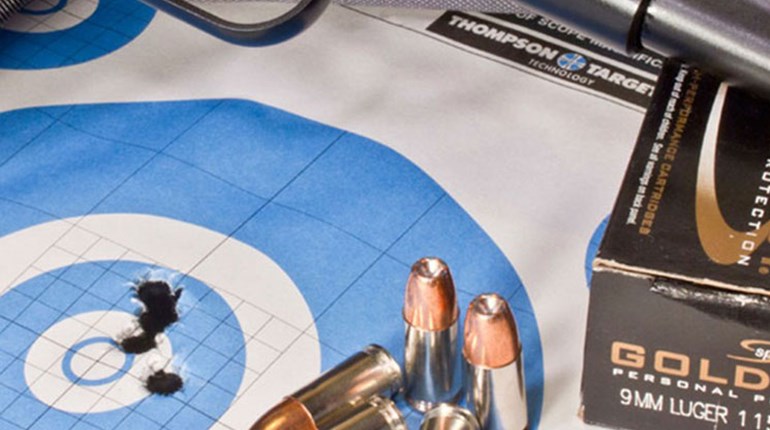
On a more tangible note, this rifle’s trigger is an excellent two-stage affair that breaks as crisp as burnt bacon at 3 pounds, 13 ounces. All of these things help deliver an accuracy guarantee of .75 inch at 100 yards. I was surprised with my test rifle, however, when I recorded one my best groups of all time. I used Hornady Superformance Varmint 53-grain Vmax ammo. It measured .37 inch and made my shooting partner sneer when it outshot his $2,500 custom AR.
Unfortunately I ran out of this ammo before I finished official testing, so this load was not included in the accuracy table shown. Contributing to my perpetual ammo shortage is the fact that the Coyote will accept any standard AR magazine (a 30-rounder is pictured here) although it comes with one 20-round magazine that does not extend below the grip. This is desirable in most hunting situations because it allows more options for resting the rifle and shooting from field positions.
So, confident and feeling like a coyote assassin, I journeyed to Illinois, only to find that the coyotes, of course, chose not to run directly into the teeth of a .223 each time I called. So I met up with Tim Wells of the outdoor TV show “Relentless Pursuit,” who’s a better coyote hunter than I am. After a few setups, we spotted one 1,000 yards away and jogging hungrily toward us.
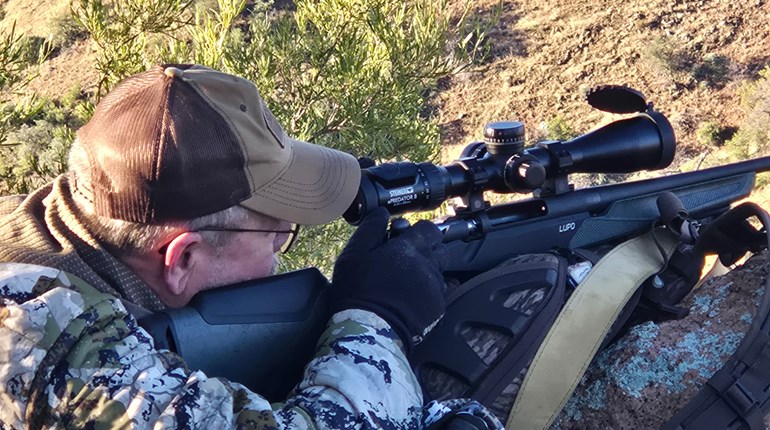
It traversed the frozen lake on a gallop, but at 400 yards became suspicious and paused. I took a seated rest with my knees pulled up and placed the VX-R’s illuminated crosshair on its chest and began the slow pull. I had 19 spare rounds in the magazine, but I only needed one.
While I didn’t do much to slow the burgeoning coyote population I did find a great excuse to buy a new rifle. This one will not be stowed away in the gun safe after the season with my bolt-actions.Nope, it will find handy harbor in my home and trunk for the off chance that any two-legged predators become overly aggressive or downright unruly.
Specs:
rockriverarms.com
Type: semi-automatic, centerfire rifle
Caliber: 5.56mm NATO; (.223 Rem.)
Barrel: 16", heavy, chrome-moly lined; 1:9" twist; Smith Vortex flash hider
Trigger: 2-stage; pull weight 3 lbs., 13 ozs.
Magazine: AR-15-style box; 20-rnd.
Sights: none; Picatinny rail
Safety: 2-position thumb lever
Stock: Rock River Operator A2 composite; length of pull 13.5"
Overall Length: 36"
Weight: 7 lbs.
Metal Finish: matte black
Accessories: case, one magazine
MSRP: $1,190