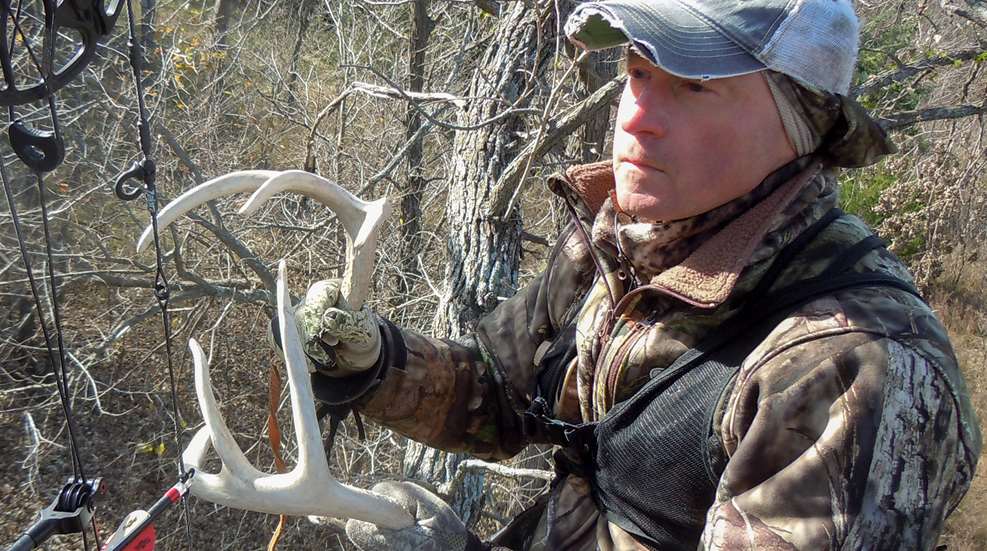
“Let’s tuck into the sorghum here and I’ll try rattling to get a buck to leave the thick stuff,” I whispered to my younger brother, crouched beside me with his new compound bow. Using a set of rattling horns my neighbor loaned me, I started banging them together like the nostalgic cymbal playing windup monkey toy. I even stood and crashed around a bit in the tall, dry cover to sound like deer chasing. Honestly, not believing the stunt would work in South Dakota, my brother and I were stunned when a buck busted from the tall sorghum and raced toward us at blinding speed looking for the fight. He paused along the edge, my brother missed and memories were made.
That event occurred nearly four decades ago. It cemented my love of calling whitetails, leading me into an endless classroom of discovery. Unlike quantitative sciences, rattling whitetails does not have a precise, calibrated structure. Even with a “gut-feeling” approach, you still need to keep a few factors in mind to pull off a ruse on Mother Nature’s finest detector of danger. Here is what I have learned.
A Time Schedule for Calling All Bucks
Whitetails have responded to my rattling from September through December. Curiosity, dominance hierarchy, all-out brawling and more spur bucks to action. Despite this large window of opportunity, I believe the pre-rut rocks as the best time to rattle away. Everything about the rut occurs due to photoperiod, all triggered by decreasing daylight hours in the fall. A buck’s testosterone begins to surge in October and by the end of the month, it is at full capacity. That event peaks approximately two weeks before most females begin estrus cycling.
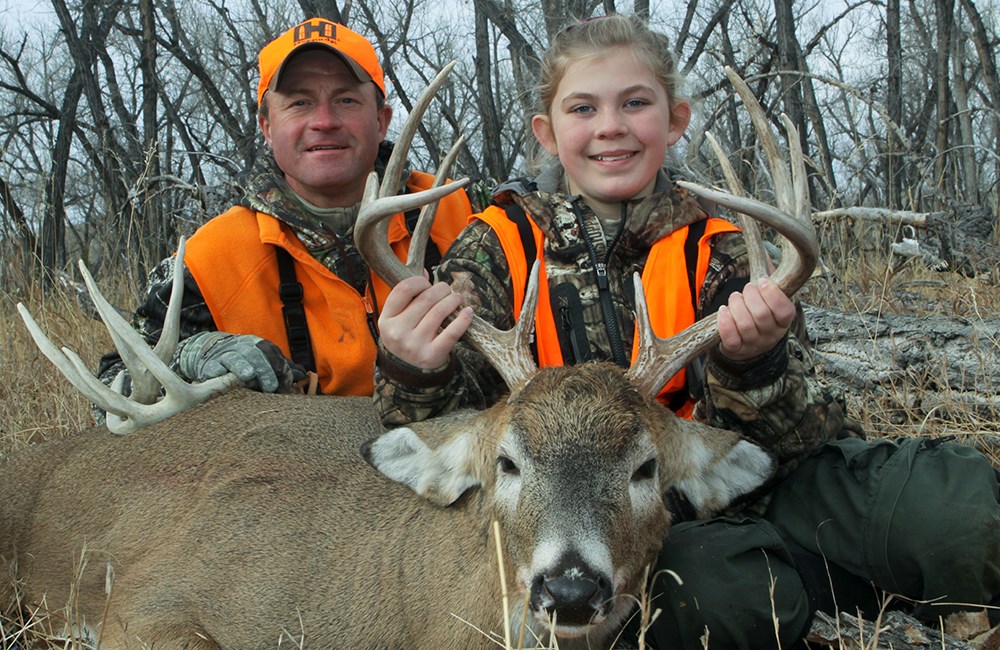
From late October into early November, testosterone-charged bucks pace their homelands waiting for does to come into heat. To burn off sexual aggression they rake trees, paw scrapes and set the pecking order with other bucks in the area. Sometimes this results in scuffles or clashing combat. Other nearby bucks may race in to see what the fuss is all about. Target your rattling to this window because it could be ignored once breeding begins, especially by mature bucks busy making babies.
Even with the pre-rut landing a top spot for rattling, do not forsake it throughout the rut and even into the post-rut. Bucks between ladies and those searching for one last hookup hold promise to also seek out the sounds of a hullabaloo.
Real or Manufactured
One visit to my home tells the tale of what I fall back on for rattling: antlers. As an antler addict, I have no plans for treatment. With thousands of antlers to choose from, in most situations, I use the real thing. Fresh antlers, not weathered, clash with a reverberating sound, resonate realism and echo authentic without alarm. Choose a set from an average-sized buck for your area (you don’t need a Boone and Crockett candidate) and crack them together. Think of it like listening to Morgan Wallen on your smartphone or at a live concert. Real stands out.
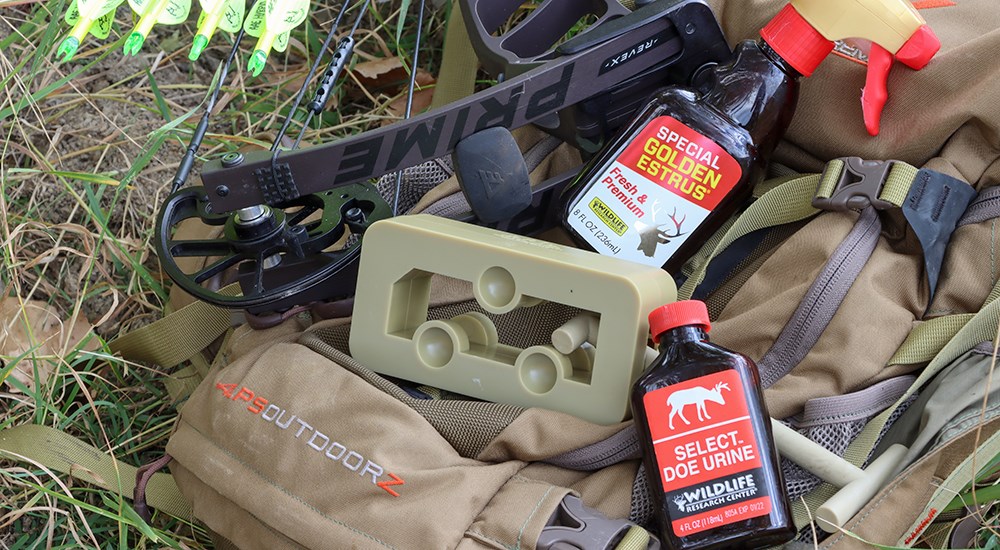
There is another option. Rely on a manufactured call. Some may not have a readily available supply of antlers to pull from, especially a set from a mature buck. Others appreciate the convenience of not packing awkwardly shaped objects in a pack. Antlers do not pack easily. When I have a backpack full of hunting layers, scents, a decoy and lunch (all-day type lunch), the convenient packaging of a manufactured call, like the Rocky Mountain Hunting Calls Mini Rattle Cage, makes perfect sense.
Rattling cages or rattling bags create a din deer also respond to. Plus, they will not gouge your fingers or spear your palm during a misguided thrashing, very common with antlers. Order them online instead of wearing out boots or spending time seeking a set at your local flea market.
Little or Lengthy
Should you choreograph a Hollywood, big screen fight (extended beating) or mimic a fast-paced UFC cage fight? Most buck battles do not last long. Typically, the contenders quickly evaluate each other and bow to the brawnier contestant. Rattling a minute or less sends a realistic message out. Nevertheless, long, drawn out fights occur when two mature bucks duke it out.
Follow this rule of thumb. Rattle for under a minute. Start it off with a resounding crack of the antlers, imitating the two crashing into each other. Then continue with clashing tines for up to a minute while keeping your eyes peeled for an eager arrival. The moment you set aside your rattling instruments, pick up your gun or bow and prepare for the shot. A zealous buck could be hiding behind a screen of brush and arrive while you are still rattling. On numerous occasions bucks arrived while I rattled on.
If nothing appears after a few minutes of waiting, rattle again. Bucks often take breaks, reassess and then resume the fight. Repeat a fight sequence two or three times, wait 30 minutes and rattle again. During the heat of the rut a new buck may amble into earshot anytime during the day.
Cloak the Chaos
Never rattle to a near deer unless you have some veil of cover between you. The loud sound allows deer to look your way with the possibility of pinpointing your location and detecting deception. Also, rattling from a tree to nearby deer could alert them to your scheme as they contemplate why those sounds have an elevated nature. I prefer to keep at least 100 yards between me and a buck when rattling to avoid alerting it.
Distant deer lose the ability to pinpoint sound, although they do a darn good job of showing up within a few feet of your location. Even when I spy a far-off buck, I try only to rattle to it when it walks behind cover, a batch of trees or behind a ridge to avoid it looking straight at my position. Once it takes the bait, I usually switch to soft grunts to direct it into the trap instead of risking rattling as it closes the distance gap.
Given my choices, I prefer to be on the ground while rattling, especially in thick cover. Over the years I have rattled bucks into point-blank distance on numerous occasions. On several rifle hunts I struggled to find bucks in my riflescope even on 4X because they were so close.
Decorate for Party Goers
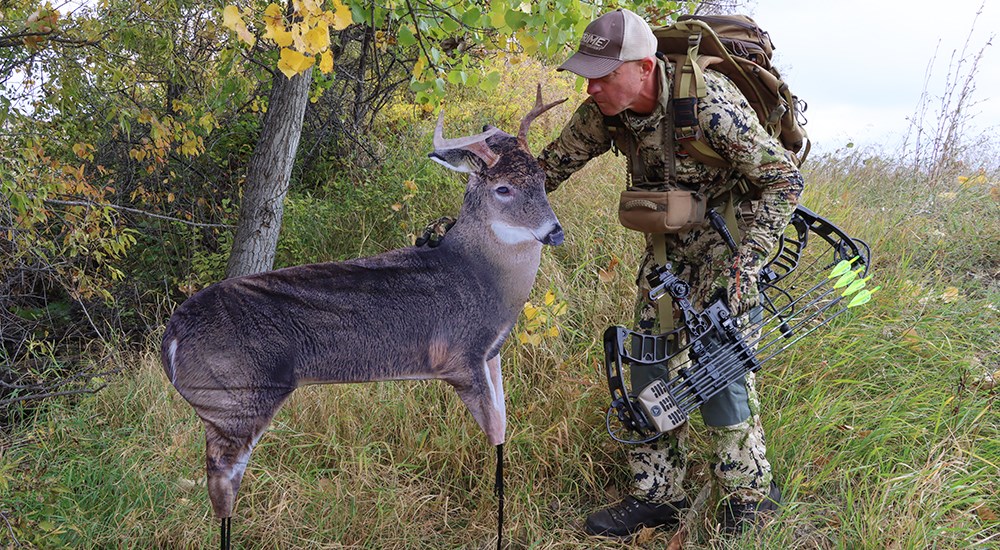
Lastly, the aroma of deer and the sight of other partygoers does wonders on bucks already high on testosterone. Deer arriving fast or in a lackadaisical fashion expect to see other deer. Add a decoy. The sight of another buck (best in the pre-rut) or a doe (later during breeding) has confidence-boosting abilities.
For a buck, position in a broadside fashion to your stand as they instinctively parallel walk other males to display dominance. Bucks approaching a doe do so from the rear—and a good dose of estrus scent helps seal the deal.
Decoy use should be limited to archery hunts only, and even rattling in a hunter-heavy area could result in someone stalking you. Be hunter aware and take appropriate safety measures.
Rattling for bucks is not a sure bet, but it is a sure bet you will not forget the experience like the sorghum field encounter of my youth long ago.