I had looked into the canyon several times before with trepid hesitation. It was a hellhole. The shear descent and shear ascent, plus scree slopes and icy grades added up to a calorie and muscle burning event. Putting on my big boy pants and lacing my Kenetreks tighter, I dove in. Since that first descent I have dived into dozens of canyons with similar makeup and the outcomes have fueled more and more of the same: antler discoveries and learning country that has no equal.
My fascination with shed antler hellholes kicked off and continues today in whitetail country. Not satisfied with the occasional shed antler found in stubble fields, hay grounds and open pastures, I turned my attention to the thickest, steepest and nastiest geography in the whitetail woods. From a handful of shed antlers found on open ground to another impressive tally from the wickedest waypoints around, my whitetail knowledge flourished. The learning curve and country is usually steep, but from whitetail woodlots to backcountry elk haunts, the hellholes always deliver. Here’s why you should consider putting on your big boy pants for a deep dive into the extremes for shed antler rewards.
Why?
When my mind fixates on a goal, I become obsessed. Antlers top my fixation ambitions. Navigating into terrain that tears clothing may not seem like the smartest decision, but even before shed antler hunting crossed the majority of the public’s mind as a spring activity, I simply wanted to increase my antler pile. Going where others wouldn’t made sense. Fewer weekenders or even pros wanted to burn the extra calories and grit their teeth to surmount the strain of bushwhacking for an extra antler. For me, that meant more antlers, new and old, from hellholes.
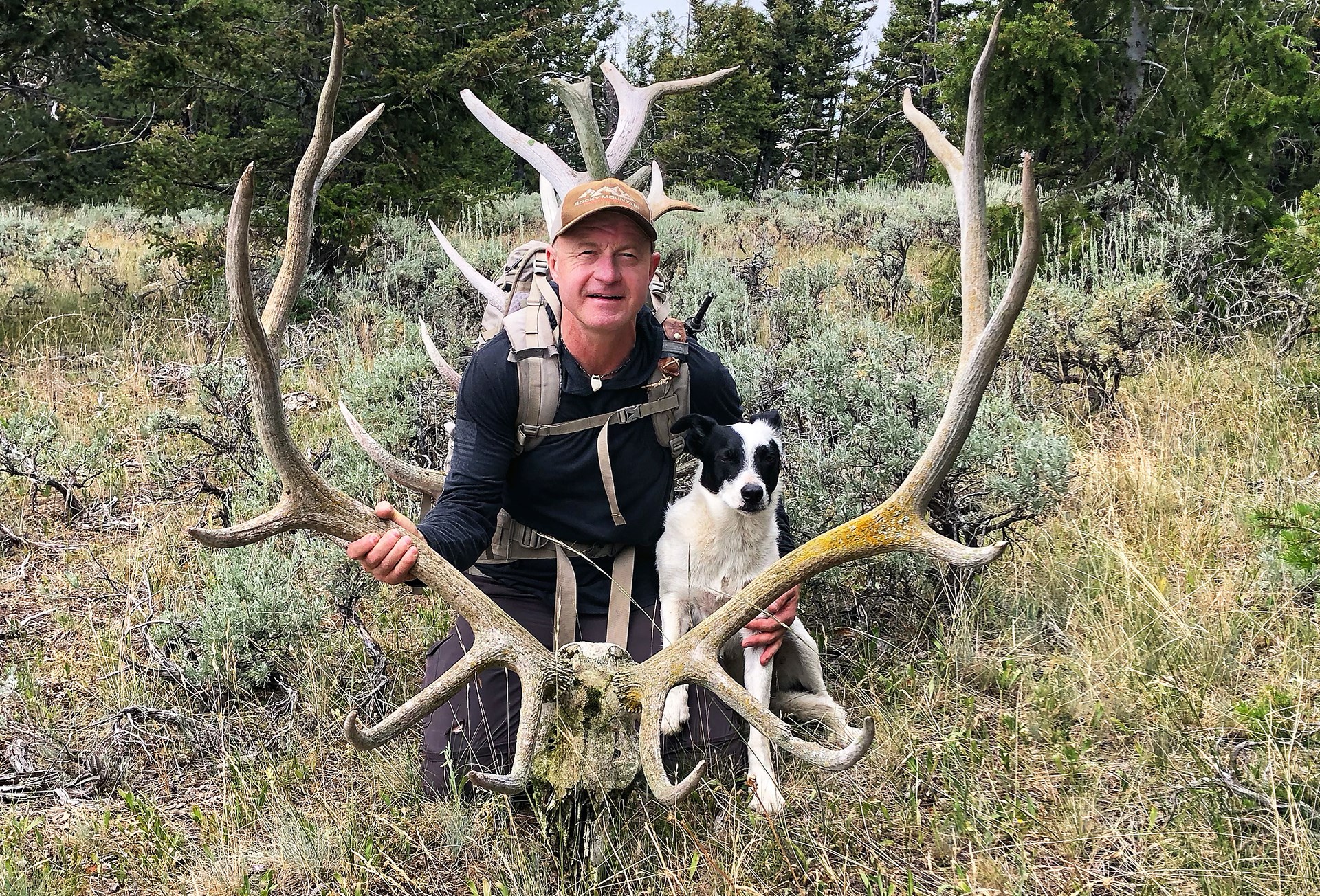
Whenever I begin to find shed antlers with a few years of exposure or even of a chalky nature, I know I’m in the right place despite the added pain and occasional ibuprofen boost. Today, more than ever, pressure from shed antler enthusiasts forces me into the worst for some of the best in shed antler finds. On a recent canyon incursion, I stumbled across the aged skull of a mature bull elk that had lain hidden for maybe up to a decade. I knew I was in the right place with that find and nearly a dozen other old shed antlers from bygone years.
Another major reason for my ventures into the unknown stems from my explorer side. I’m no Christopher Columbus, but it seems like when I look into a rocky, Midwest coulee or dark timber elk canyon, I have no brakes. This inner explorer fuels my addiction to add more antlers from locations deemed unnavigable or unknown. Few things excite me more than taking on new country and deciphering it with CSI precision. Shed antler finds and learning new country are the rewards.
How?
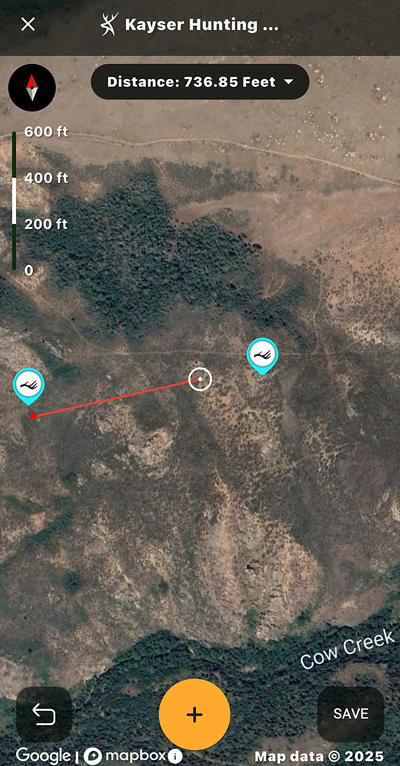
“Just do it” continues as a popular marketing slogan and that’s how I take on many of the more unforgiving landscapes I tackle for shed antler hunting. That approach kicks off the Easter egg hunt, but a more organized approach soon is adopted. Rugged country does not allow for the easy back-and-forth search awarded to you on a food plot or hay field. Still, you need to grid. On most hikes I use a combination of my HuntStand hunting app and visual cues to create a grid that affords me coverage in the steepest and thickest of any shed antler nether world. Dropping markers on my app, noting unique terrain features and even sitting skulls, or trash on limbs gives me the coordinates to crisscross a parcel without overlapping my last route. I’m sure others occasionally wander across my previous path and wonder how that deer skull made its way on an eye-level limb. Hmmm?
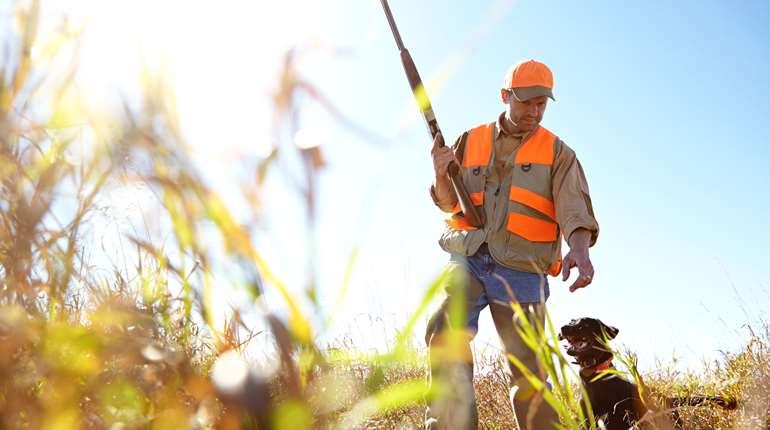
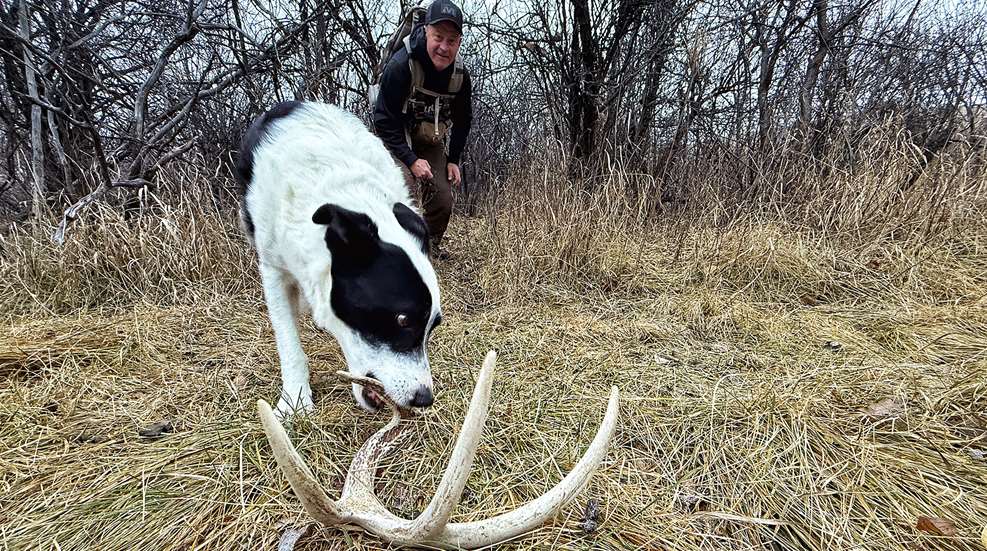
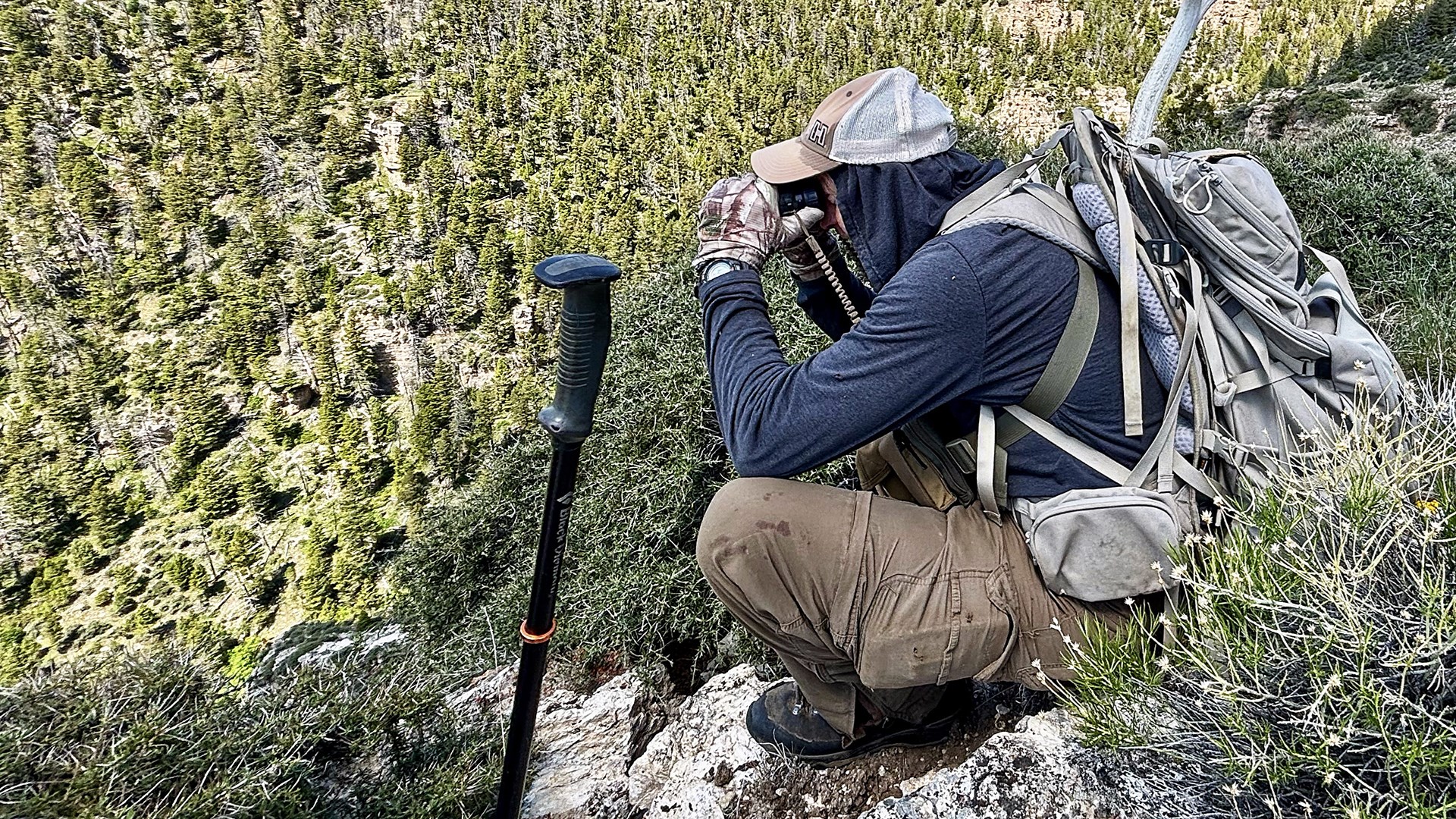
Binocular assistance goes with me everywhere. Whenever I clamber out onto a cliff, I have a view across a coulee or I spot something shiny 50 yards away in the thick stuff, my 10-power binocular comes into play. Some days (many), I locate at least 50 percent of my shed antlers with my binocular. And for added finds, I’ve trained my border collie to also hunt for antlers as a reward for an extra few minutes of ball throwing and retrievals during hikes.
Take precautions. Always let others know of your expedition whereabouts and include navigation, plus communication backups in addition to your smartphone. When the going gets brutal, my Garmin inReach Mini 2 serves as both. It’s also a good idea to carry a minimized first aid kit and survival gear. For extreme solo hikes my backpack always includes fire-starting materials, plus an emergency sleeping bag that weighs just ounces, but provides lifesaving comfort if required.
When?
Venturing into the nastiness of nature not only requires self-awareness for you regarding safety, but also being cognitive of stressing animals already stressed from the effects of a long winter. In whitetail country, especially the North Country, postpone your hikes into nasty cover until some semblance of spring arrives. Dense cover also doubles as winter cover in addition to bedding areas. At minimum, plan your trips into thick or rough whitetail country when deer may be away feeding, such as late afternoon, to avoid bumping them.
Do the same for elk country and assess areas to see if they hold huge wintering herds or merely scattered bachelor groups. The latter are easily navigated around if you glass ahead and plan routes accordingly.
Lessons Learned!
Besides understanding that a foot repair kit of moleskin and athletic tape should be added to your backpack, hellholes offer invaluable insight. First, they reveal sanctuary zones deer and elk utilize to escape you and other predators. Next, your hikes expose the trails used for accessing these sanctuaries and connecting routes to feed. Finally, remember to drop markers on your hunting app to highlight all possible ambush locations. New trail junctures, waterholes and canyon crossings could provide you with the shortcut to success on a future hunt. Your hellhole visit could result in your next big rack the following fall. I’ve capitalized from the hellhole blisters on many successful hunts.
To follow along for hunting tactics and adventures, join Mark on Instagram, @kaysermark, and Facebook, @markkayseroutdoors.
Most Popular