There is, of course, a raging debate as to which college football conference is best. Folks down around Tuscaloosa and Athens, for example, tend to think the SEC is the best in the land, while the folks closer to Ann Arbor and Columbus, Ohio, are fairly certain the Big 10 plays superior ball. Regardless of who’s right, the fact is the brand of football—the style of play—and therefore the tactics needed to win in each conference often differ.
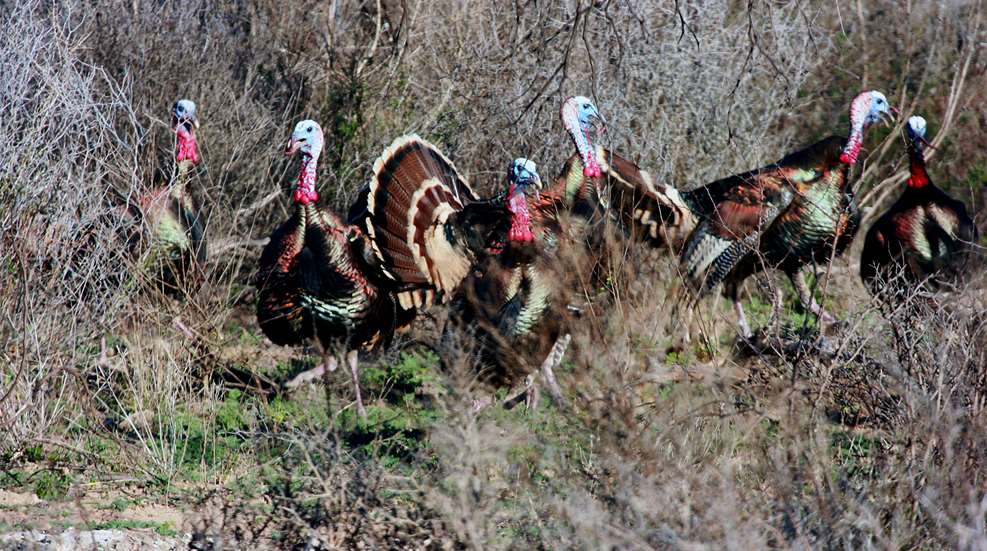
It’s similar for turkeys.
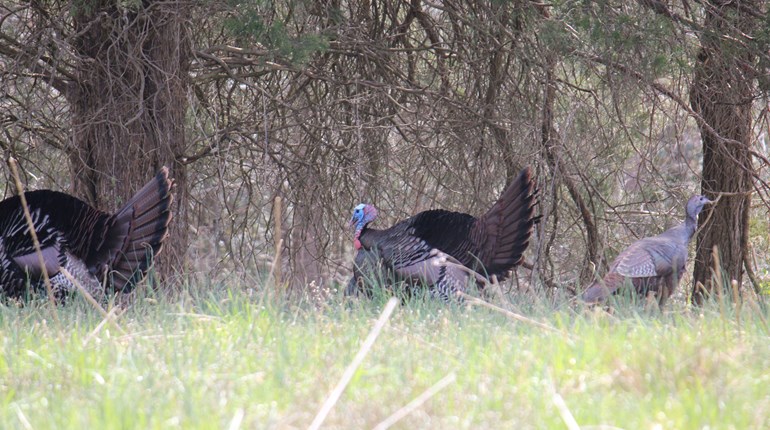
A few years ago a buddy and I were hunting Merriam’s turkeys in the semi-open, rolling foothills of South Dakota. While driving down a county-line road, we spotted a flock of birds about 400 yards away as they loafed on the sunny side of a hill. So, already having permission to hunt the piece of land, we kept on driving until the hill shielded us from the birds’ sight. Then we screeched to a stop, rolled out of the truck, racewalked the 350 or so yards to the hill then crawled up it as if we were ambushing ducks on a pond. But before cresting, my buddy whipped out a turkey fan from his vest and unfurled it in front of us so that it served as both a decoy and a shield. Peeking between two tailfeathers, I saw the biggest gobbler of the group face the fan, puff up and begin marching toward us. Twenty seconds later I shot the bird at 30 yards. Just 10 minutes prior, we didn’t know for sure if any turkeys were even on the property, and now we had one in the bag.
The point is, in parts of the West, Rio and Merriam’s turkeys may or may not be as challenging to hunt as the birds back East, but they certainly require different approaches. This isn’t due so much to wariness or IQ disparities among the subspecies but rather to the populations’ respective adaptations to vastly different environments.
If you’re a hunter who cut your teeth on hunting solitary Eastern longbeards in Southern swamps, paper company pine forests or endless hardwood hills, try sitting for most of the day under a cedar tree on a bluff in New Mexico, calling sparingly like your grandfather taught you, and see how successful you are. At the same time, if you’re a run-and-gunner from Wyoming who tries glassing the hilly forests of Indiana, Pennsylvania or Georgia in an attempt to spot a bird before planning your next move, don’t bother telling me how the hunt went. I already know, because you can’t see far in those woods!
Over the years I’ve been fortunate to hunt many regions around the country—and learn from experts in each. And while plenty of tactics overlap where terrain similarities also do, there are certainly styles of hunting that tend to yield better results in various regions. In a nutshell, Western hunting tends to be more dependent on the hunter’s vision to find birds, the use of obvious terrain features to move in on them and aggressive calling and decoying to get them into gun range, whereas successful Eastern hunters typically use their hearing, nuanced calling and an intimate knowledge of the land to consistently bag birds. Here are a few tactics and techniques more suited to heavy, hardwood cover that’s predominantly found east of the Mississippi.
Scouting
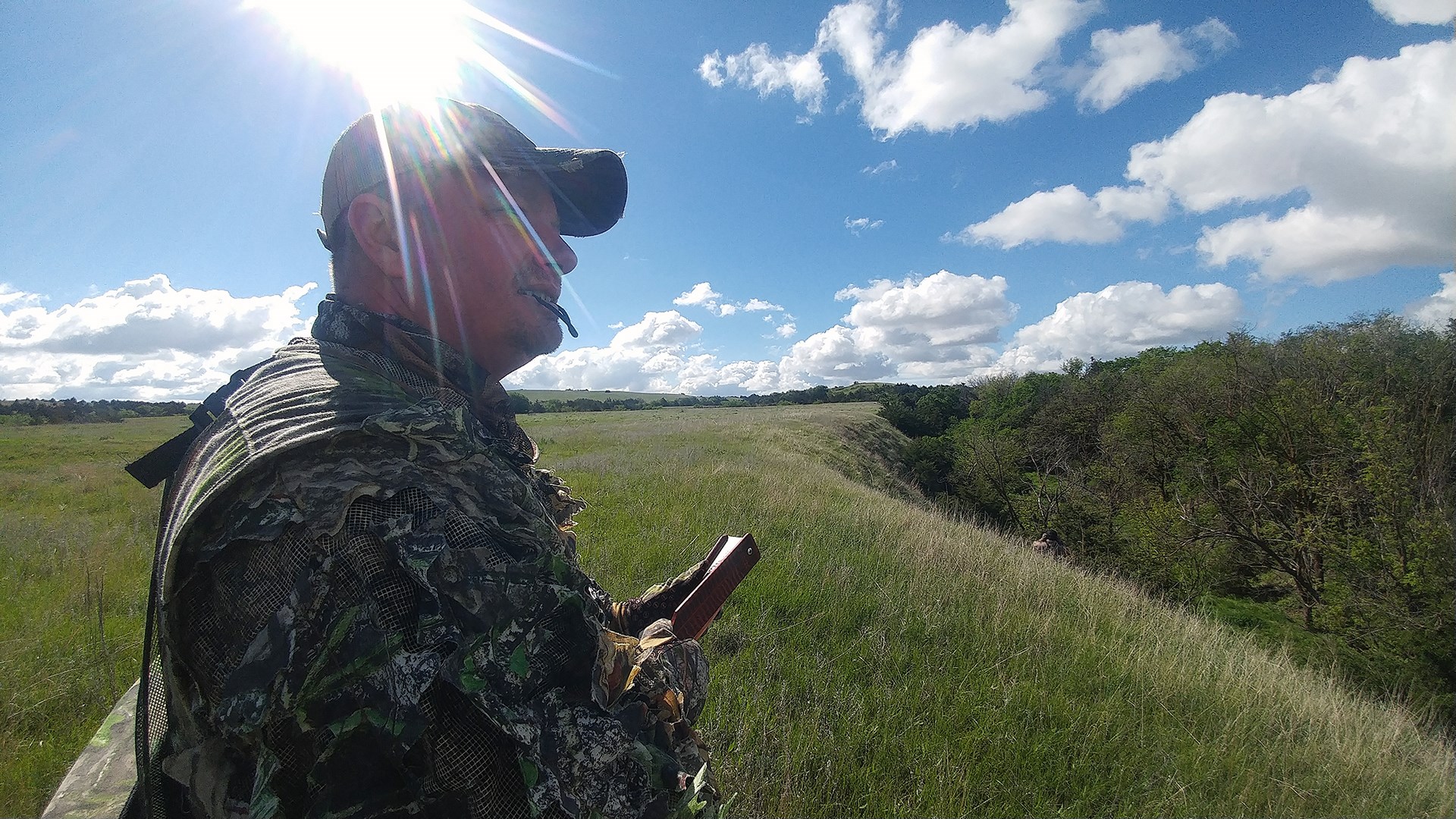
Thorough scouting is the No. 1 act hunters can perform to increase their chances of being successful. While it’s wonderful to have the championship calling skills of Michael Waddell, even Mike can’t kill a bird if there are no birds around to kill. So the first step is thorough scouting of potential areas, first to find huntable populations of birds; secondly, to discover where they like to roost, feed, loaf and travel; and third, to learn the terrain so you can move through it as undetected as possible. Of course these things are also important out West, but in the West where the country is more open, scouting on the fly (during the actual hunt) is easier. At any rate, scouting different terrain is best accomplished by different methods.
Know Property Boundaries and Terrain Features
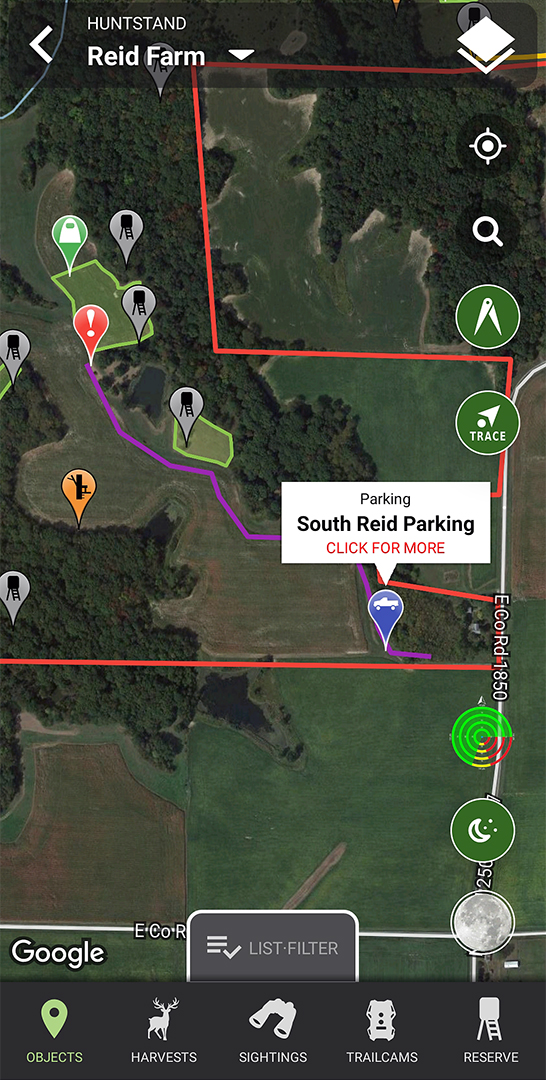
Of course this is important everywhere, but even more so east of the Mississippi where properties are generally smaller and where one gobbler can roost and feed on different properties during the same day. It’s especially important on a small property where if you hear a bird gobble, you need to be able to visualize where the tom is gobbling so that you can know the best way to get to him as stealthily as possible in the pre-dawn hour. It’s imperative to be aware of terrain features such as creeks, bluffs, fences and clear-cuts that could prevent a bird from coming to a call. Countless seasoned hunters have been confounded by a “hung-up” bird, only to realize hours later there was a creek between themselves and the bird. If they had crossed the creek before they started calling, they likely would have punched their tag. For whatever reason, gobblers don’t like to cross significant obstacles while coming to a call. So the easier you can make their path to you, the better. The key is knowing where these obstacles are before you begin working a bird, not after!
The good news is nowadays property scouting is easy via one of myriad downloadable apps such as OnX, HuntStand or Spartan Forge. There is an optional layer in each app that overlays boundaries and ownership information atop the satellite map. But if you aren’t a tech guy and really don’t want to be saddled with monthly fees, start by asking the property owner about his or her boundaries then walk them well before hunting.
Gather Current Turkey Intel
After determining that in fact turkeys inhabit a property, the next step is to zoom in. For plenty of hunters out West, this can be fairly easy: Look on a map to find where the big trees are—often cottonwoods—along the rivers. This is where turkeys will most likely roost. Are there any ag fields nearby? If so, even better. Then just walk or drive to a hill in the morning or evening and use a binocular to scan for flocks of turkeys as they move significant distances from areas of cover to fields to feed and loaf. Often toms will strut in open meadows, sunny hillsides and fields–essentially ending the Western hunter’s scouting process.
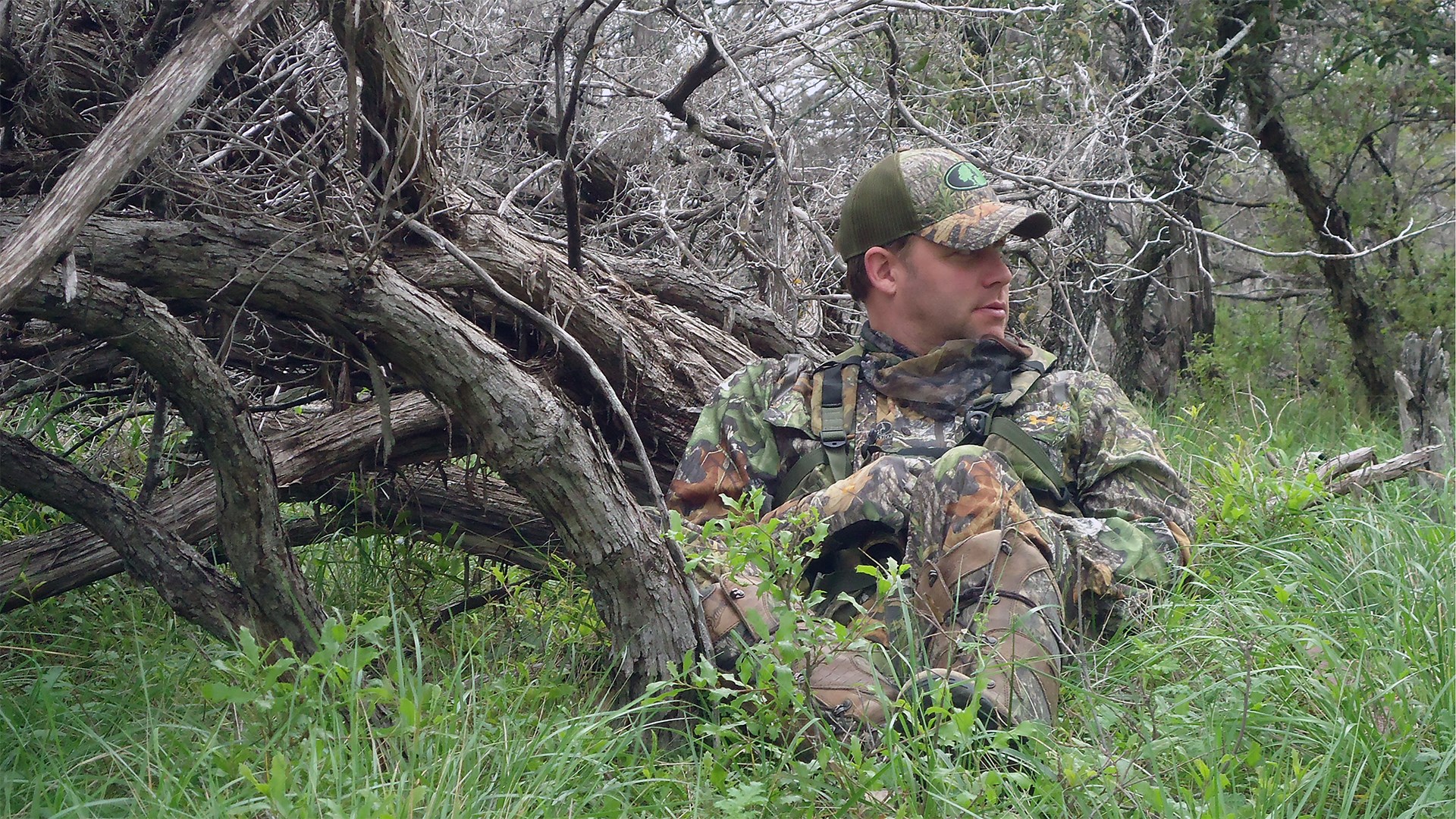
But for places where binoculars are useless—i.e, most of the East—thorough scouting is more tedious. Deep-woods hunters should look for actual turkey sign such as scratchings, tracks and specific roost trees indicated by droppings and turkey feathers. Currently, app-based maps can’t tell you this; but boots on the ground can. So get to a property before dawn to listen for gobbles. If you hear them, great, but either way, scout the property to find actual turkey sign before the season begins. For private land hunters, trail cams placed in likely places such as food plots and meadows can clue you in to how many birds are feeding there, and when.
Sometimes it’s not even that hard. Farmers, ranchers and those who live on or near the property can often tell you exactly where birds hang out. Sure, some folks don’t know a turkey from a buzzard, but most do. Talk to locals at length to feel them out first, but don’t discount any nuggets of knowledge they might reveal. If a farmer tells you a tom struts every day in a feedlot at 9 a.m., I’d be at that feedlot by at least 8!
Hunting Tactics
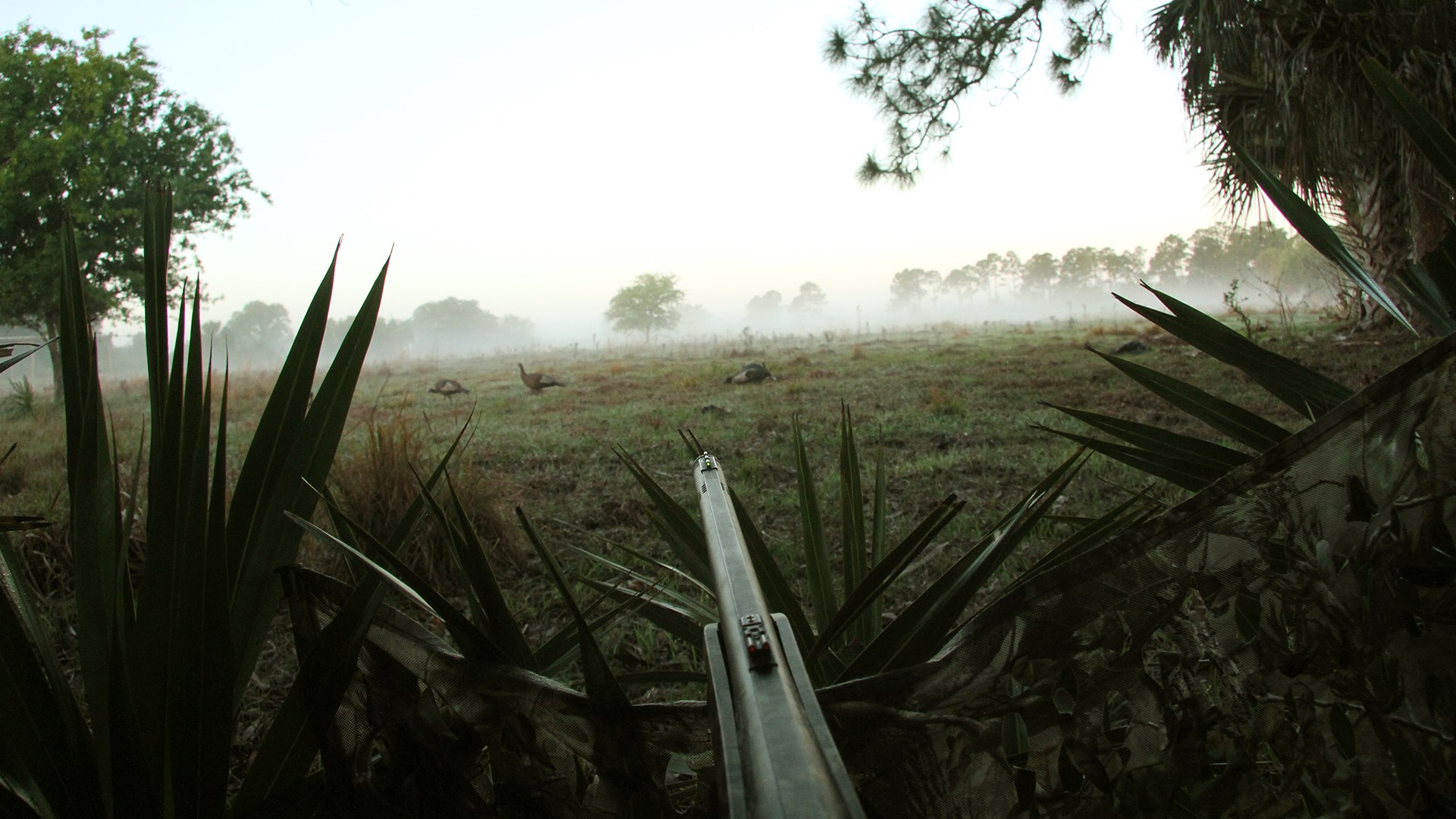
The actual tactics used to hunt Eastern turkeys often differ from the big flocks out West. While the name of the game in big country is to cover as much ground as possible to get eyes on distant birds before going in for the kill, Eastern deep-woods hunters in general are advised to do the opposite. If a hunter knows turkeys inhabit the property he’s hunting (found via scouting) and there’s minimal competition from other hunters, the best initial approach is one using great stealth and patience. This means slowing down, stopping often to call, scanning with the eyes, listening intently and repeating the process every 50 yards or so for the entire time in the woods. Sure, if there are logging roads, powerlines or other avenues that allow faster movement while remaining stealthy, a hunter can cover more ground, but the point is, because a hunter in the East can’t often see turkeys, he should assume they are nearby until he can prove otherwise. Of course, as the hunter learns both the land and the general patterns of turkeys there, he can become more aggressive with his tactics.
For example, if after four days of hunting I learn that each and every day the turkeys are roosting, strutting and feeding in a certain meadow, I can sneak directly to that meadow before dawn, set up there and get ready.
But familiarity with the land and whether it’s open are not the only factors that dictate using more conservative or aggressive tactics.
One time while scouting the North Platte River area of Nebraska, I counted 410 turkeys as they walked in a single-file line down a fenceline and into a cut cornfield. Out of 410, at least 100 of them were toms. This intel immediately told me that in this area, I could afford to move aggressively—what plenty of Eastern hunters would say was recklessly—in order to cut the distance to a particular gobbling bird. If I messed up and spooked it by being too aggressive, oh well, there were plenty more to go after. The point is, I could afford to be aggressive. And it quickly paid off.
But when hunting the smaller flocks of the East, there may be, for example, only two mature gobblers on a 100-acre property. So if I accidentally spook one of them, I’ve just reduced my odds by 50 percent that day. So, generally speaking, in the East you should sit more and move less, while being as stealthy as possible when you do decide to move.
After locating a bird by sound, the hunter is best served to mentally envision where that bird is on the property so he can devise a plan of attack and stick to it regardless of whether the bird can be seen or heard again. This is perhaps the greatest challenge for Western, sight-based hunters who visit the Eastern hardwoods: Sometimes they are not as accustomed to “hunting blind.” Indeed, the best deep-woods hunters learn to use and trust their ears as they mentally keep track of the positions and movements of multiple birds in their head simultaneously.
Calling
While plenty of guys from the South Carolina swamps, Eastern Missouri Ozarks and places in between vigorously argue that Eastern turkeys are most always spooked by loud and aggressive calling, I’m not entirely sure. But what I have found is this: In general, Western hunters need louder calls to reach greater distances and to cut through the ever-present wind, while Eastern hunters are usually best served with more finesse-type calling that isn’t as loud or aggressive. For this reason, my go-to call in the West is a box call, whereas it’s a slate and mouth call back East.
Aggressive or Subtle?
For years I’ve hunted in South Texas where giant groups of Rio Grande gobblers are bombarded by deafening winds and constant yelps of multiple flocks of hens. In the springtime it’s not unusual for a group of 30 jakes to race to every hen call they hear just after the morning flydown. All of them are listening for hens and all of them are gobbling. So I believe that this level of competition begs for more aggressive calling. Conversely, back East, when a historically smallish flock of 15 turkeys—consisting perhaps of several toms and 12 hens—gets blasted by the cuts and cackles of some strange bird the likes of which they’ve never heard, plenty of times the hens’ reaction is to move away from the competition (the hunter), thereby pulling the nearby gobblers with them. Therefore, in general, eastern hunters are advised to get in tight (within 100 yards, if possible) to a gobbler before calling, then call sparingly in the style of the hens around him. Often this means giving very soft clucks and purrs, rather than the constant hacking on a box call. Basically, it’s better to get aggressive later if needed than to run birds off right away.
Now, don’t get me wrong: Plenty of times aggressive calling works on even the cagiest of toms in the deepest of Eastern forests if the mood is right. But I believe that in the East it’s generally best to start out subtle until a gobbler lets you know he’s hot when he starts cutting off your calls with double- and triple-gobbles. This is when savvy hunters adjust accordingly by cranking up the temperature of their calls.
Locator Calls
I’m a huge proponent of using shock calls to locate Eastern turkeys, especially. Even if a turkey isn’t in a sexual mood, his dominant instincts will often make him “shock gobble” at any jarring sound, including a very loud hen call. But using a locator call has a huge advantage over using a hen call: That is, you can locate turkeys without allowing them to locate you. This is important because many times if a gobbler hears a hen call and answers it, he’ll either begin walking to it or he’ll at least lift his head and begin looking and listening for any sound in that direction. This means it will be tougher for you to cut the distance to the bird and get set up on your time frame, because you won’t know if he’s coming toward you. On the other hand, when a tom reflexively gobbles at an owl, he doesn’t think twice about it. He’s simply revealed his position, giving you the luxury of slipping closer to him without having to worry if he’s already en route—or if his hens are currently taking him away from you.
Finally, don’t just use an owl call. Plenty of times I have birds respond to a crow or woodpecker call when they will not do the same for an owl. I can’t explain it, but it happens often. In thick Eastern woods, I seldom slip more than 50 or 100 yards forward without first giving some type of locator call.
Decoys
Decoys can and do work everywhere, but because they are sight-based lures, they are best utilized out West where turkeys depend on their eyes for survival even more so than their ears. In hardwood forests, however, a decoy can divert attention from you and to the decoy so that you—or especially important, a new hunter—can get away with more movement than he otherwise could. And also, sometimes a spooky old bird can become alarmed by what he doesn’t see after he comes into a call. A decoy can assure him all is well.
Although I don’t always use a deke—especially in situations where I’m moving frequently while trying to locate a gobbler, one instance where I almost always employ one is when hunting ag fields and food plots that are so prevalent in the East. A well-placed, easily seen decoy can give ole Hook Heels the confidence to exit the safety of the surrounding woods and directly into the open field and the sights of your leveled shotgun.
Eastern Shotguns
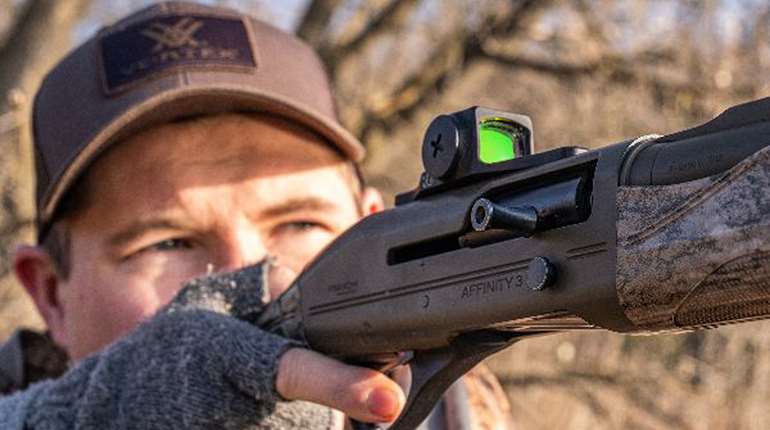
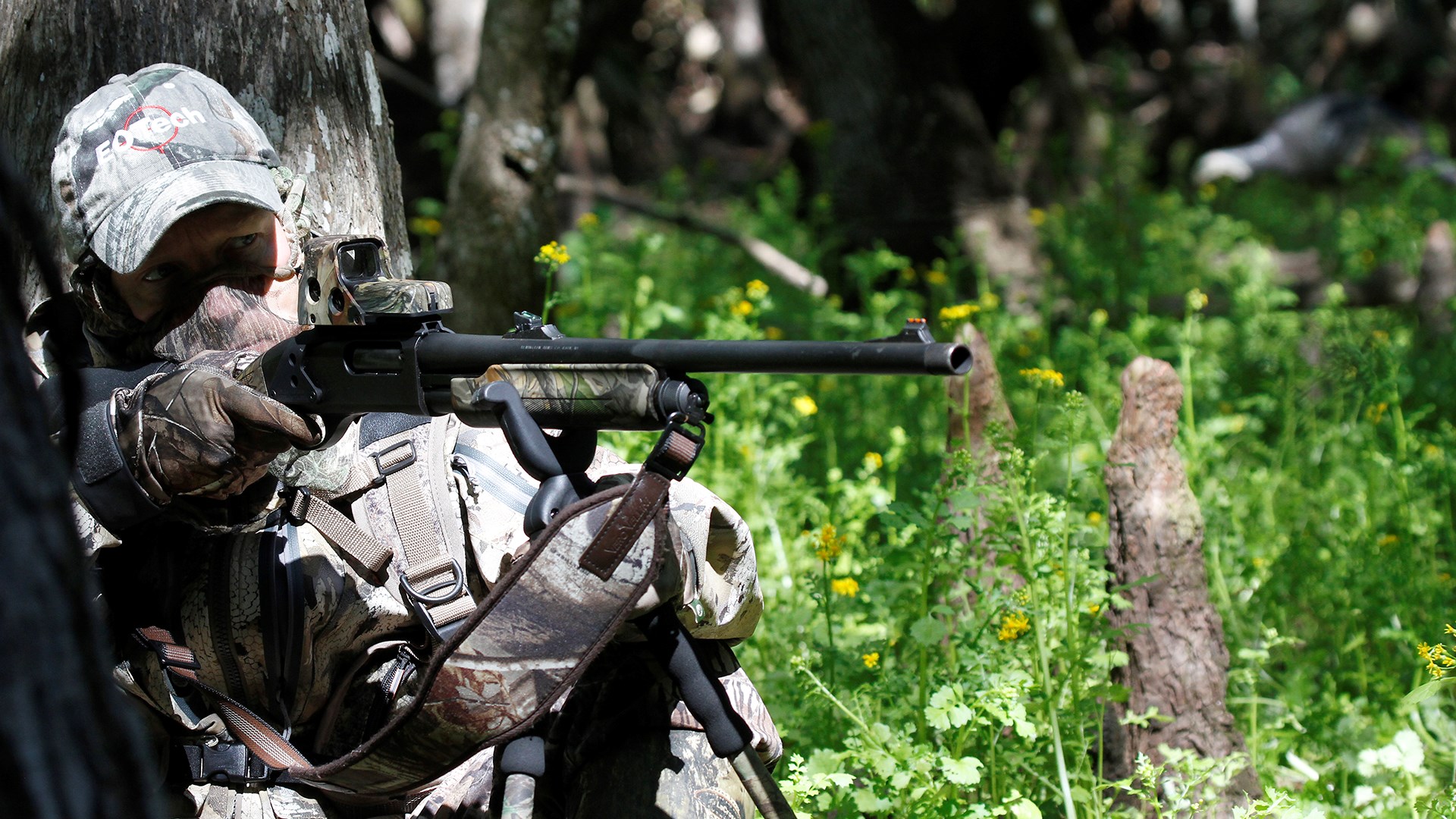
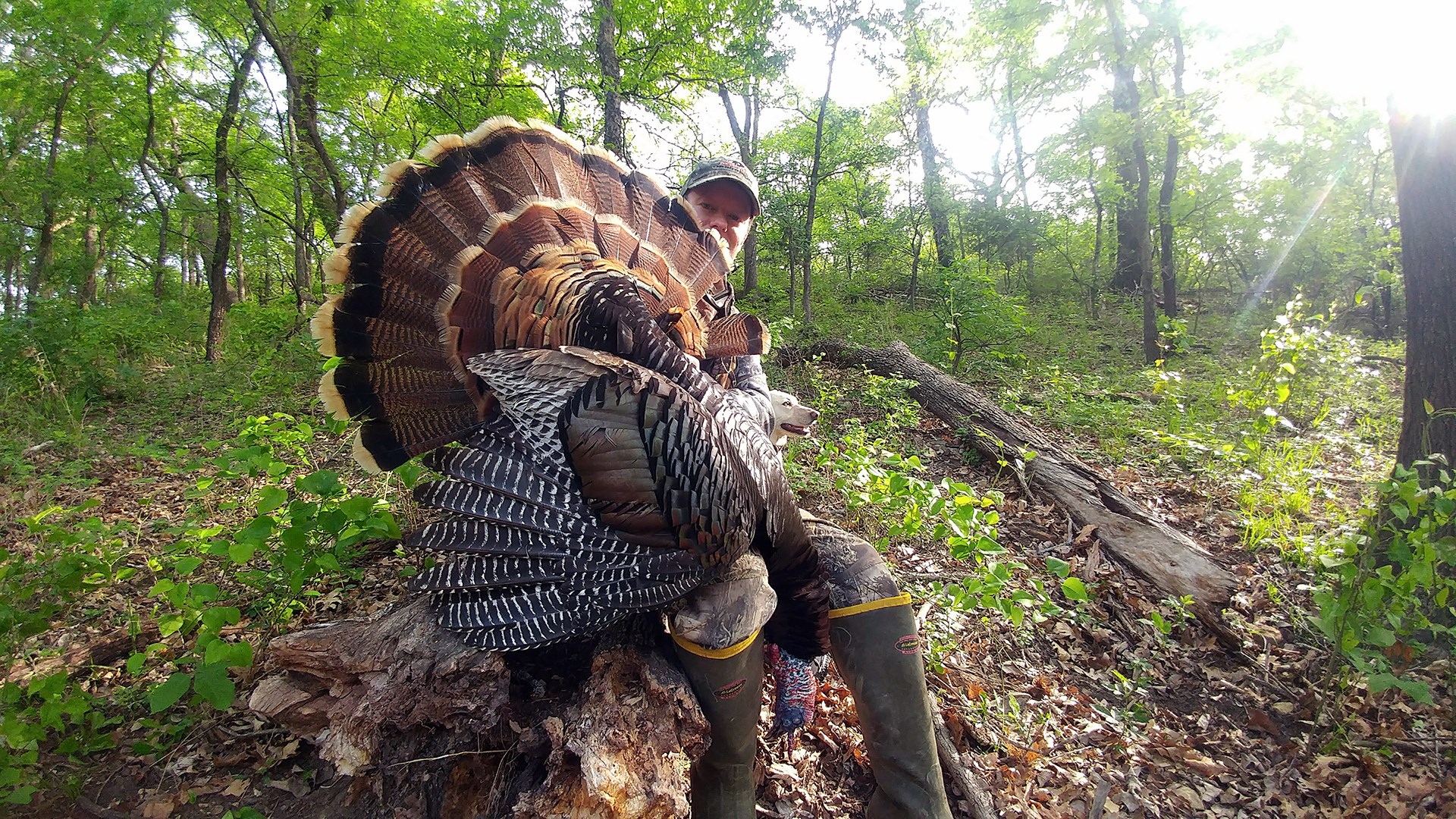
The thick, tangly Eastern hardwoods is where the modern turkey gun was born. Namely, it has a short, 18- or 20-inch barrel that can be more easily carried through the briars and pivoted on a knee as a bird walks in without smacking into a nearby sapling. I prefer a semi-auto mainly for its recoil-reduction properties, but a pump gun is all anyone needs for turkey hunting. Pumps are also significantly less expensive. While red-dot sights and extra-full chokes are all the rage, they are unnecessary. Red-dots need batteries, and chokes that are too tight make it all too easy to miss. A standard full choke, quality front and mid bead sights (those won’t break) combined with a premium No. 5 or No. 6, 3-inch magnum shotshell load is all anyone needs to consistently kill turkeys out to 50 yards and well beyond. There are dozens of great turkey guns on the market, but here are a few of my favorites in varying price ranges.
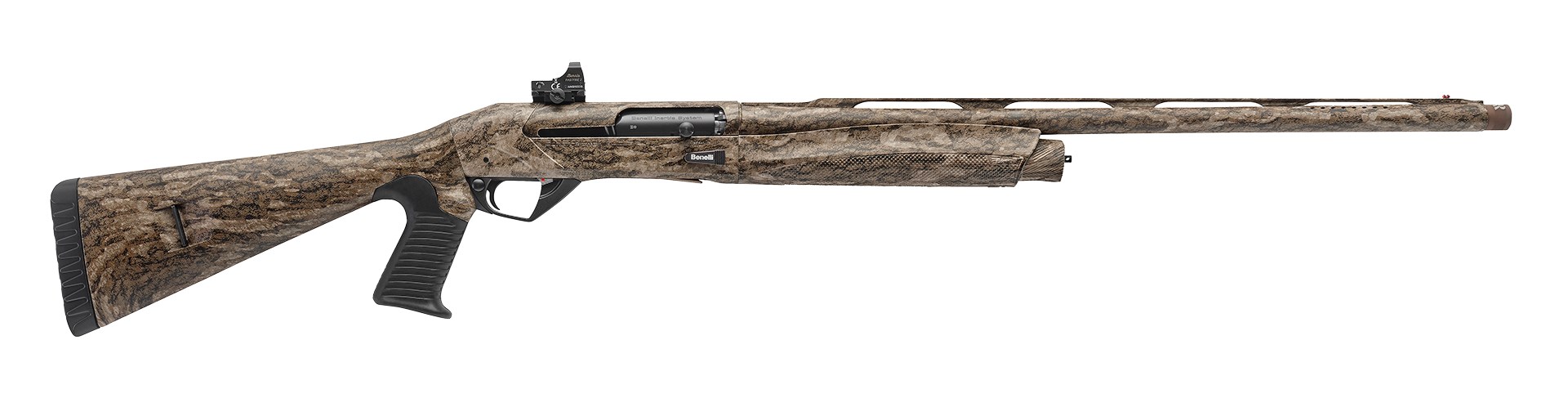
Benelli Super Black Eagle 3—This is the Cadillac of turkey guns. Its inertia action is as reliable as semi-autos get, which is to say about 99 percent reliable. The gun’s Comfort Tech cheekpiece mitigates recoil, while its pistol grip and 24-inch barrel (I’d really prefer shorter) make it easy to maneuver while holding the gun with one hand. Camo finish is overrated in most hunting situations, but turkey hunting isn’t one of them. The Benelli isn’t cheap, but it’s still great at around $2,300. benelliusa.com
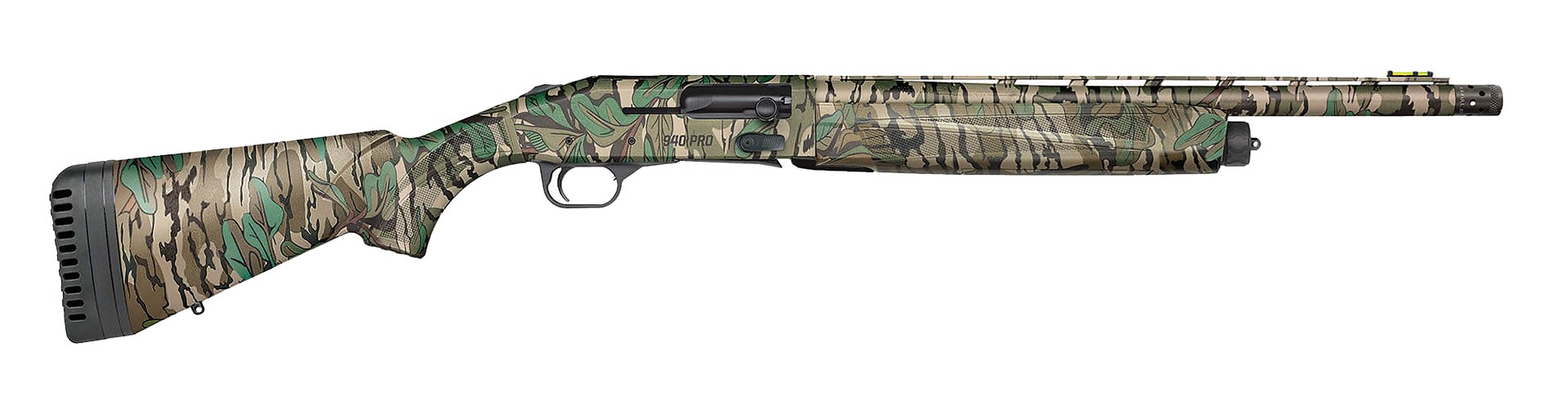
Mossberg 940 Pro Turkey—The company known for its pump shotguns has vastly improved its old 930 semi-auto with the 940. Namely, a totally redesigned gas system has made it more reliable. I love its stubby 18.5-inch barrel and oversized controls. Plenty of people—mainly lefties—covet its tang safety. It’s got a soft recoil pad, a naturally cushy gas action, a great camouflage finish and all the features a dedicated turkey hunter needs for around $1,200. mossberg.com
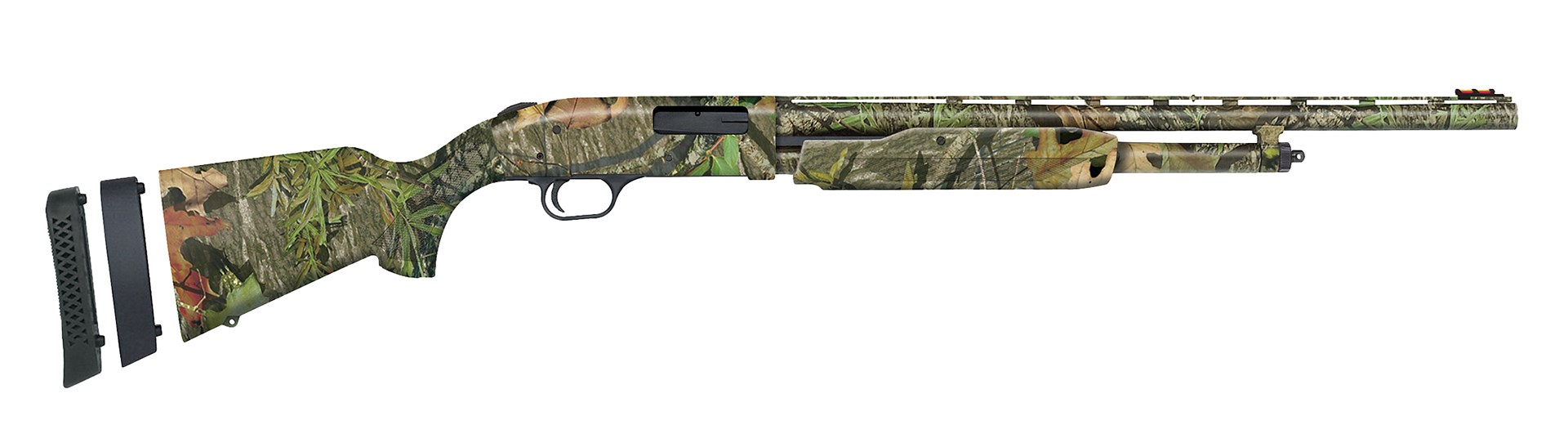
Mossberg 500 Super Bantam Turkey—Looking for a turkey gun for a kid, or just looking for a lighter, easier-to-carry shotgun for yourself? You can’t beat the Super Bantam Turkey, a 20-gauge pump gun with a 22-inch barrel that weighs just more than 5 pounds. Its got choke tubes, sling studs, camo finish and all the things. It’s a Mossy 500, so it’s not going to jam on its own. It sells for around $600. mossberg.com
Most Popular