Just when you think you’ve learned all the fundamental know-how about hunting, someone tells you about “scent shoes.” I was interviewing Justin Richins, a mule deer and elk guide in Utah and Wyoming, about tracking wounded deer with dogs. He explained that scent shoes strap to the bottoms of boots and have clamps that hold a deer’s hoof. These devices allow him to lay a cold track (no blood) for his dog to follow.
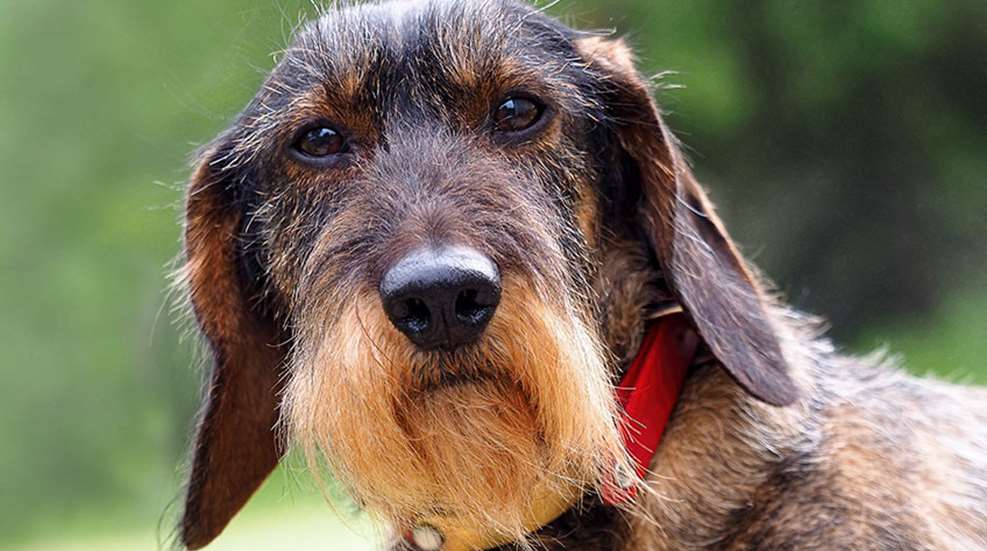
The learning curve for training a dog to track wounded deer isn’t severe, but there is specialized gear, training regiments and competing opinions on breeds. Richins found Born to Track, an upstate New York breeder that specializes in wirehaired dachshunds.
“These are small dogs,” said Richins. “I’ve found that big dogs tend to have their heads too high off the ground. They often hunt by sight too much. These dachshunds, however, stay right on the ground. Born to Track breeds and trains dogs specifically for tracking wounded deer.”
Richins started his pup on liver drags and heavy blood trails then made the blood trails sparser. As an outfitter, Richins has a lot of opportunities to put his dog on real tracks as well. He even insists on letting his dog find deer he knows are lethally hit.
Richins uses scent shoes to take training to another level. Deer have glands between their hooves that leave scent as they walk. A dog trained to trail this scent can track a deer that isn’t losing much blood; in fact, because the scent each deer leaves is unique, a dog can track a particular deer.
Richins’ dachshund is incredibly effective, but you can train your Labrador, golden retriever and other breeds to track wounded game. (First, check your state’s regulations to make sure tracking wounded game with a dog is legal.) A good source of training info is Tracking Dogs for Finding Wounded Deer by John Jeanneney of Born to Track.
“The biggest thing I’ve learned,” said Richins, “is to trust my dog. Many times I’ve had hunters tell me my dog was off the trail, as they’d watched the deer run away. So I took my dog back to the start and watched him go right back to the same place. Then I let him work it out. Each time I found the dog was right.”