Fact is, layout blinds are awesome tools for hiding away from weed lines and fencerows where ducks and geese feel more secure about landing, but out-of-the-box they’re in no condition to hunt. Here’s how to make them hunt ready.
1. Layouts are made with Cordura, which needs to be dulled so the material’s shine won’t flare birds. Start by roughing up the fibers with a wire brush. This will remove some of the shine and will prime the blind for painting and mudding.
2. Lightly spray Krylon Camouflage Ultra-Flat Khaki paint over the entire exterior from about 2 feet away. This will stick to the roughed-up material and dull the Cordura while still letting the camo pattern show. Let the paint dry completely. Using dirt you’ve collected from the area you hunt, mix up some mud and rub it thoroughly into the Cordura; allow it to dry, then shake off the excess so the blind won’t shed dirt into your eyes when hunting.
3. If you hunt plain-dirt fields as well as stubble and pasture, a camo pattern isn’t necessarily desirable; instead, after applying a wire brush to the blind, spray 3M 77 Adhesive Spray to the exterior and cover it with dry dirt. Apply as many layers as necessary to completely obscure the Cordura’s shine and you’ll blend into dirt fields. (Apply patches of gray textured paint if you hunt gravel bars.)
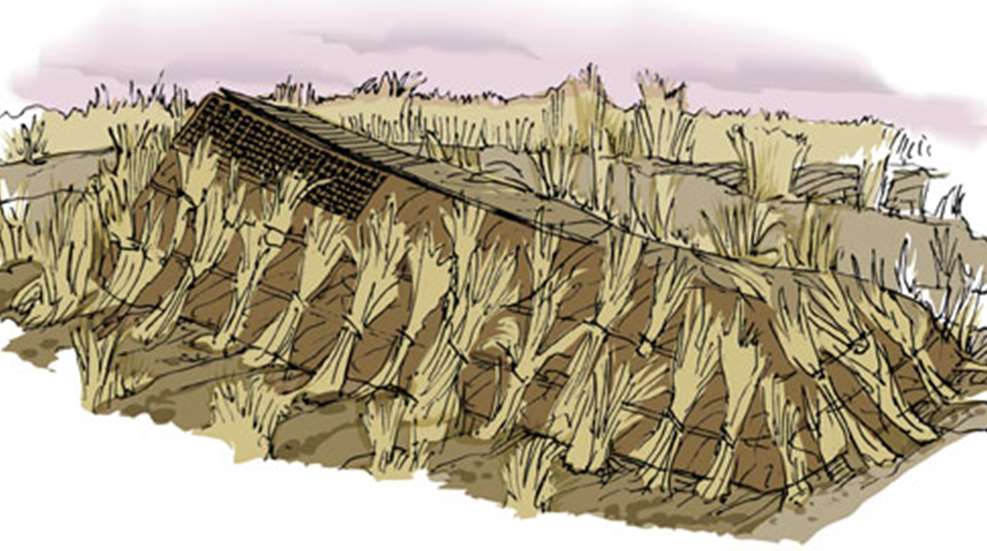
4. To hide in various cultivated fields, you’ll need to make up batches of fake vegetation. You can purchase raffia at arts-and-craft stores or you can buy ready-made materials, such as KillerWeed from Avery Outdoors. For wheat stubble, Avery’s Tyson Keller uses Golden Harvest KillerWeed. He cuts strands into 8- to 12-inch sections and zip-ties them vertically onto the blind’s stubble straps so they stand up like real stubble. This makes the blind literally disappear. If you want to have your blind be more versatile and blend into other types of fields, simply zip-tie up enough “wheat-stubble” bundles to conceal your blind. To attach them you can use plastic snap swivels from your local hardware store.
5. For pastures, zip-tie on generous bundles of raffia, then use Krylon’s Ultra-Flat spray-on paint (black and khaki are the most useful) and any other flat paint with the colors you need to match grass samples you’ve collected. To make the raffia look like weathered, dead grass, lightly mist it with black so that you can see individual flecks of black. Add reddish brown, khaki or yellow as needed and in the same fashion. Store these bundles separately from your stubble.
6. For hiding in winter wheat, use one of Avery’s KillerWeed Concealment Kits. Spray it lightly with flat green paint to match the exact color. Consider packing a few cans of Avery’s Real Snow Spray in case it snows. You now have a complete layout-blind concealment system that will work anywhere you hunt.
Most Popular