Hauck: Do Bells Really Spook Pheasants?

by
posted on December 31, 2013
** When you buy products through the links on our site, we may earn a commission that supports NRA's mission to protect, preserve and defend the Second Amendment. **
dogs_ah2015_fs.jpg (51)

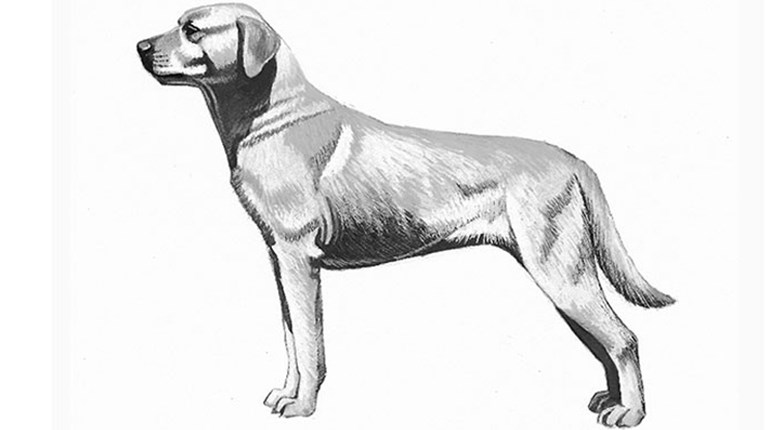
From the time I gingerly shut my truck door to the moment I unleash my springer, I've always tried to hunt pheasants as quietly as possible. Given that the birds tend to run or flush wild, I figure, wouldn't stealth equate to more flushes, not to mention more flushes within shotgun range? And I've wondered whether the common practice of placing bells on bird dogs to track them afield might spook birds. Anthony Hauck of Pheasants Forever recently delved into this very topic, writing:

"I don’t use an e-collar on my English cocker spaniel, as, the occasional straight-line runner notwithstanding, she’s usually in gun range. I’ve ran her with a bell this entire season, on public and private land, areas with great pheasant numbers, areas with so-so pheasant numbers and areas with just a bird or two. I realize it’s my own two eyes and a small sample size, but I honestly haven’t seen anything that would lead me to believe her bell is causing birds to bust out early."

Hauck goes on to provide further evidence—although he admits to its anecdotal nature—that a bell likely has little effect on pheasants. His blog entry is worth the full read.

Perhaps a bell, like a gently applied whistle, can be tolerated by roosters far more greatly than, for instance, the human voice. In any event, Hauck has no plans to discontinue using one:

I’ve actually come to enjoy the bell, its addition a soothing sound to the hunt. And if it’s use really does cost me a bird here or there? Well, at least I know where my pup is at all times. Because the thought of anything happening to her on a hunt other than flushing and retrieving is spooky enough.

Do you hunt with a bell and, regardless, do you think its ringing is disruptive to pheasants?

Latest

Remington 700 Clone Chassis Rifle

The 4 Classic Hunting Platforms

Andi Bogard takes a look at the classic actions and platforms that laid the foundation for today’s hunting rifles.

Conservation Partners Launch Novel Turkey Nesting Research

Predator populations—nest raiders and full-feathered turkey killers alike—are growing across the United States. To determine if their increasing numbers are a leading cause of wild turkey population declines, Turkeys For Tomorrow (TFT) has announced a groundbreaking study on predator impacts on nesting and poult-rearing success.

Muleys The Old Way: Traditional Muzzleloading

Aram von Benedikt and his son took part in one of the oldest American traditions there is: muzzleloading for deer with a traditional smokepole. Read on for more about their adventure.

MSU Deer Lab Celebrates 50 Years

For 50 years the Mississippi State University (MSU) Deer Lab—a partnership between the university’s Forest and Wildlife Research Center (FWRC) and MSU Extension Service in Starkville, Miss.—has delivered nationally recognized research on deer biology, habitat management and land stewardship.

#SundayGunday: Our Top 5 in 2025

Sitting on your couch in an eggnog stupor, wrapping paper still draped off every chair in sight? Still procrastinating getting up, cleaning, up or any sort of behavior that could be remotely described as productive? Here's something to keep you further occupied in your sedentary state. Read on, to check out our Top 5 #SundayGundays of 2025, as selected by you, our audience.

How to Make Woodstove Jerky

Homemade jerky is a staple with a lot of hunters. Deer, antelope, moose and elk all make excellent jerky. Surprisingly, geese do too. In fact, most any game animal will make palatable jerky. Here's how to make it with nothing but a woodstove, a knife and maybe some shears.

Interests


Get the best of American Hunter delivered to your inbox.