Though E.R. Shaw is a rising star in rifle manufacturing, the company has actually been an industry mainstay for 60 years, operating out of the same modest shop on the outskirts of Pittsburgh all that time. Until recently Shaw focused on custom and OEM barrels for many American firearm brands, including some of the biggest, and so chances are good that a rifle or shotgun you’ve owned carries a Shaw barrel. Now their emerging line of bolt-action and modern sporting rifles merits attention too.
Some months back I took advantage of an invitation to visit Shaw, and along with learning how they produce their coveted button-rifled barrels, I got a firsthand look at the rifles, and was especially impressed by the top-of-the-line Mk. X turnbolt.

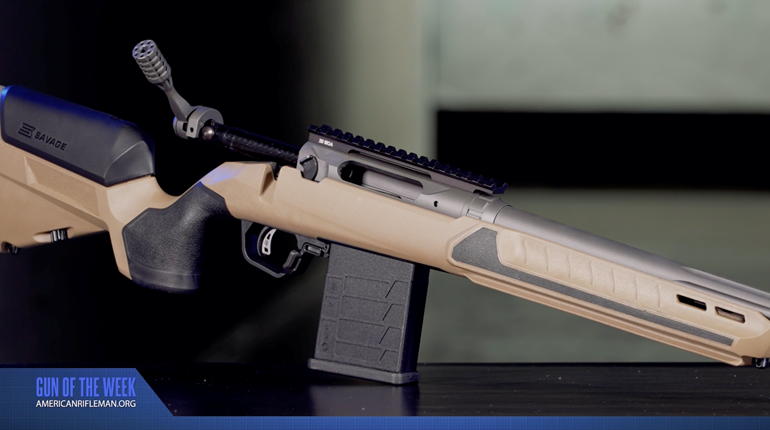
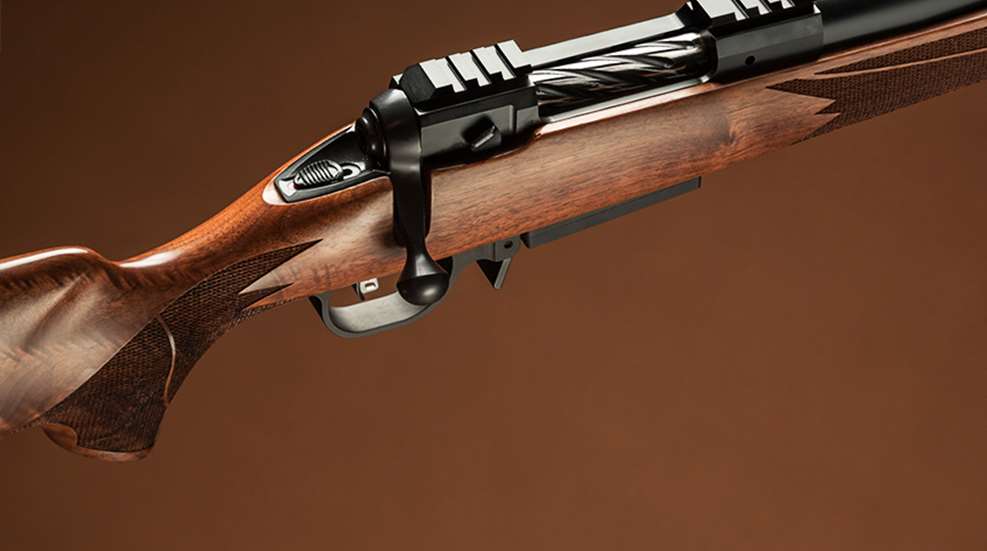
Shaw’s second bolt model after the Mk. VII, the Mk. X is likewise built on an upgraded Savage 110 receiver. Though possessing a round bottom, the receiver’s slab sides and integral top Picatinny rail provide stiffness often lacking in circular designs. Regardless of the action, everyone agrees that rigidity helps. Lacking the telltale Savage barrel-nut, the barrel threads neatly into the receiver, for a streamlined look. The machining also includes a .250-inch-thick forward recoil lug, as opposed to sandwiching a separate lug into the assembly. Present are familiar Savage controls like the tang-mounted thumb safety, a righthand bolt release that doubles as a cocking indicator and a "triple-honed" AccuTrigger.
The Savage design gets credit for proper head-spacing, but beyond that, the Mk. X's hand-fitted actions are blueprinted, with precision-cut chambers and lapped bolt lugs. All that echoes the care devoted to producing Shaw barrels, which are button-rifled in a proprietary procedure developed to minimize stressing the steel, including use of a World War II-era honing machine that relies on gravitational force rather than mechanical pressure.
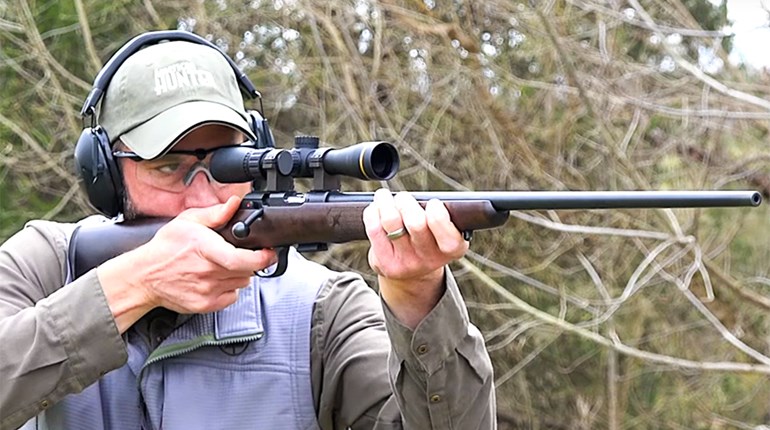
The barreled-action components thus comprise an accuracy dream-team, at least on paper. During the visit I got a glimpse of real-world performance at a nearby 100-yard range. With a dozen or more rifles and shooters, it was a decidedly informal session involving bench and position firing. As was the case all around, I kept an eye on my groups and enjoyed hitting the metal gongs, then really got in on the fun as one of two shooters who fired a one-hole, five-shot group with one particular Mk. X in 6.5 Creedmoor. Mind you, it was a light-sporter rifle firing factory loads, so the deck wasn’t exactly stacked for such a stellar result, though let’s note those were merely two random groups.
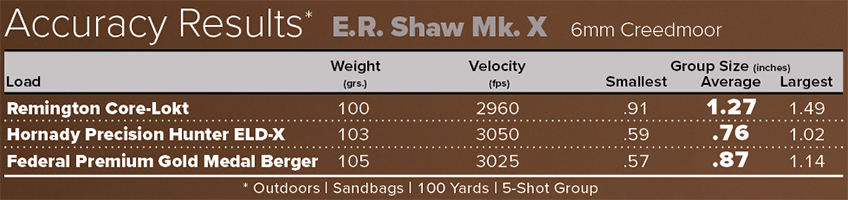
For testing and evaluation, we received two Mk. X's, one in 6mm Creedmoor and another in 6.5mm Creedmoor. While there were no more one-holers, several groups printed inside an inch. The 6mm Creedmoor showed a preference for Hornady's 103-grain ELD-X, but shot all loads satisfactorily.
Sub-MOA groups aren’t the only thing to like. Via the company’s online portal customers design their own rifles, with myriad options for crafting a purchase to your specs, tastes and budget.
You simply click on succeeding parts—barrel, receiver, stock and extras—and up pops a menu of choices. Some include: chrome-moly vs. stainless steel; polished vs. matte metal finish; caliber; barrel contour, length and fluting. There are just three stock choices—Grade 5 walnut and two laminates—and one can order muzzle threading along with a thread protector.
The number of menu options is mind-boggling: notably, more than 80 chamberings that run the gamut from varmint numbers to big thumpers like .375 RUM and .416 Ruger. If you hanker for the unique, Shaw’s list includes many you’ll never find in name brands. And after deciding on a caliber, you also get to pick its rifling twist rate—unheard of in production guns. Barrel contours—sporter, varmint and heavy varmint—are fairly standard, but available lengths run 16 to 26 inches depending on caliber. Fluting is a Shaw specialty, and its helical (spiral) pattern is protected by an exclusive patent.
I’m no walnut expert, but can’t argue with the Grade 5 rating on one of our sample rifles. Its marble figure is dramatic, and the overall look is enhanced by generous panels of fine checkering. At the same time, it’s an example of how tastes have changed. Formerly, the prominent receiver rail and the non-flush five-round magazine would have been frowned on, but today’s generation likely sees the functional value of such features. Laminate stocks come in the reddish-brown Nutmeg and gray Pepper patterns that match the walnut model’s lines. Both types are glass-bedded at the receiver bridge, and aluminum pillars house the action screws.
Naturally the options affect the pricing, but the differences aren’t huge. Fancy walnut is $130 more than you’d pay for laminate, while barrel fluting adds $130 (straight) or $160 (helical). Stainless steel barrels up the tab about 18 percent over chrome-moly. Cursory surfing showed a price spread from $1,285 to $1,770, well over production levels but far less than most comparably equipped custom rifles. Shaw says current build time is four to five months.
Lately there’s been a Renaissance in the bolt-action category. Manufacturers have pushed the introduction of serviceable, under-$500 offerings, while continuing to spin off variants of their flagship models. More competition has come from brands originally devoted to making AR-type semi-autos, as well as from a plethora of custom and semi-custom shops.
The point is, whatever your interest, there’s never been a better time to buy a bolt gun. Because of its quality, customization and value, the E.R. Shaw Mk. X is one rifle worth sorting out of the field.
Technical Specifications
• Type: bolt-action centerfire rifle
• Caliber: 6mm Creedmoor (tested)
• Barrel: 24″; button-rifled; chrome-moly steel; varmint contour (#3); 1:7″ RH twist; threaded; helical fluting
• Magazine: AI-pattern detachable box; 3-rnd. capacity
• Trigger: single-stage; adjustable triple-honed Savage AccuTrigger; 3.5 lbs.; Timney trigger upgrade available
• Sights: none, bases machined directly into the receiver for mounting optics
• Safety: 3-position tang
• Stock: English buttstock with Monte Carlo cheekpiece, walnut; 13.25″ LOP
• Metal Finish: matte
• Overall Length: 44″
• Weight: 8 lbs.
• MSRP: $1,630; shawcustombarrels.com
Most Popular